
By Kristin Hugo
Science Writer
0
Share
Newsweek is a Trust Project member
See more of our trusted coverage when you search.Prefer Newsweek on Googleto see more of our trusted coverage when you search.
Sharks have been making headlines recently after a 2016 report of a Greenland shark that was around 512 years old resurfaced this week. In November, a dinosaur-era frilled shark was on our minds. The ocean's deadliest sharp-toothed predators are both loved and feared. They are also an incredibly diverse and successful group, appearing in the fossil records millions of years before dinosaurs and even insects.
Here are just a few of the most terrifying examples of sharks from across time.
...
Read More on Science
Megalodon
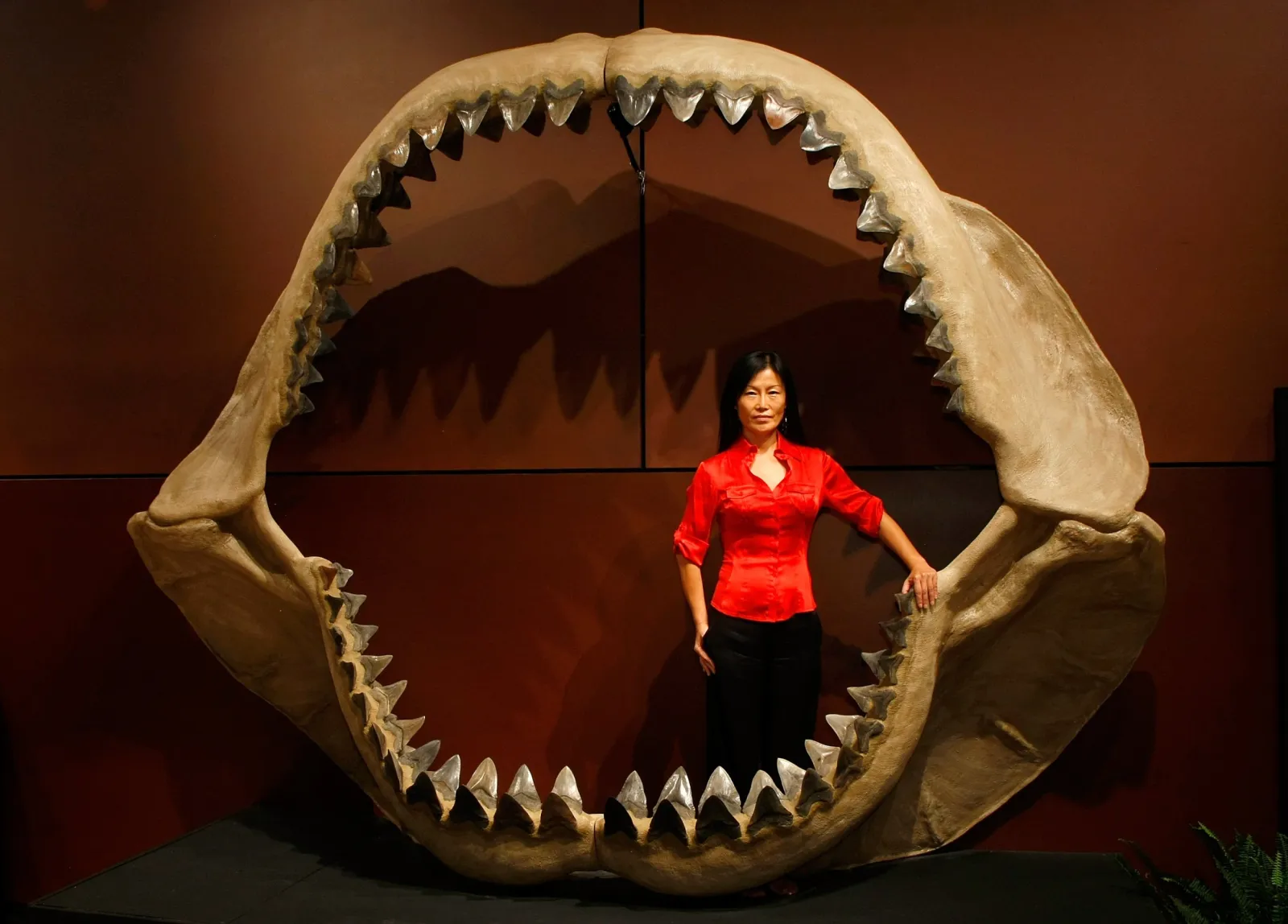
Carcharocles megalodon is the star of such B thrillers as Shark Attack 3: Megalodon, Megashark vs. Mechashark, and Attack of the Jurassic Shark. Before its movie days, real megalodons lived all over the world in the Miocene and Pliocene epochs.
Megalodon would have put the shark in Jaws to shame, with teeth as big as your hand and a body as long as a bowling lane. Sixty feet of shark is nothing to mess with, and it probably ate whales.

...
Helicoprion
Though not technically a shark, this shark-like ratfish had an unforgettable maw. Scientists first found this animal's teeth in a bizarre spiral, and for years, they could only speculate as to how the teeth actually fit in its mouth.
Luckily for swimmers, it lived and died 270 million years ago.

...
Whip-Tailed Shark
Also known as a common-thresher, Zorro thresher shark, swiveltail, and slasher, this modern shark makes the list for its odd hunting style. This shark swims toward schools of fish, then at the last minute, whips its bizarrely long tail at its prey to stun or kill them.

...
Whale Shark
You would think that the largest living shark would be the most terrifying. This monster can weigh 20 tons and grow 18-32 feet long. But these wide-mouthed creatures, with spots on their backs resembling constellations in the night sky, have very small teeth and eat only plankton.
A post shared by Julius (@juniel85) on Oct 29, 2017 at 2:52pm PDT
512-Year-Old Greenland Shark
In 2016, scientists documented the world's oldest living vertebrate: a Greenland shark that had been alive for 512 years, give or take. While other long-lived animals have been discovered, a shark that has lived for half of a millennium takes the cake for incredible survival skills.
Frilled Shark
The frilled shark is even older than megalodon, having evolved 80 million years ago. But the especially concerning thing about the frilled shark is that they still exist.
Fortunately frilled sharks live deep in the ocean and aren't known to attack humans. If they did, their rows of extremely-sharp teeth would be sure to leave a mark.
View 0 Comments
Submit Correction
View Editorial & AI Guidelines