...

By Lucy Notarantonio
Senior Reporter
0
Share
Newsweek is a Trust Project member
See more of our trusted coverage when you search.Prefer Newsweek on Googleto see more of our trusted coverage when you search.
A 45-year-old woman undergoing long-term dialysis was left stunned after doctors discovered a 50cm-long medical wire had been left inside her body after a routine hospital procedure—with the error only picked up three months later.
The woman’s case has been published in a report by a team led by Abdul Qadir Nawabi, a cardiovascular researcher at the Mellat Medical Institute in Kabul, Afghanistan.
The case report details how the woman—who has lived with uncontrolled high blood pressure for more than a decade and has end‑stage kidney disease—had been receiving regular hemodialysis to remove excess waste and fluids from the bloodm when an X‑ray revealed the unexpected finding.
Read More on Life
According to the Centers for Disease Control and Prevention (CDC), nearly half of adults have high blood pressure, a condition which puts you at risk for heart disease, stroke and chronic kidney disease (CKD).
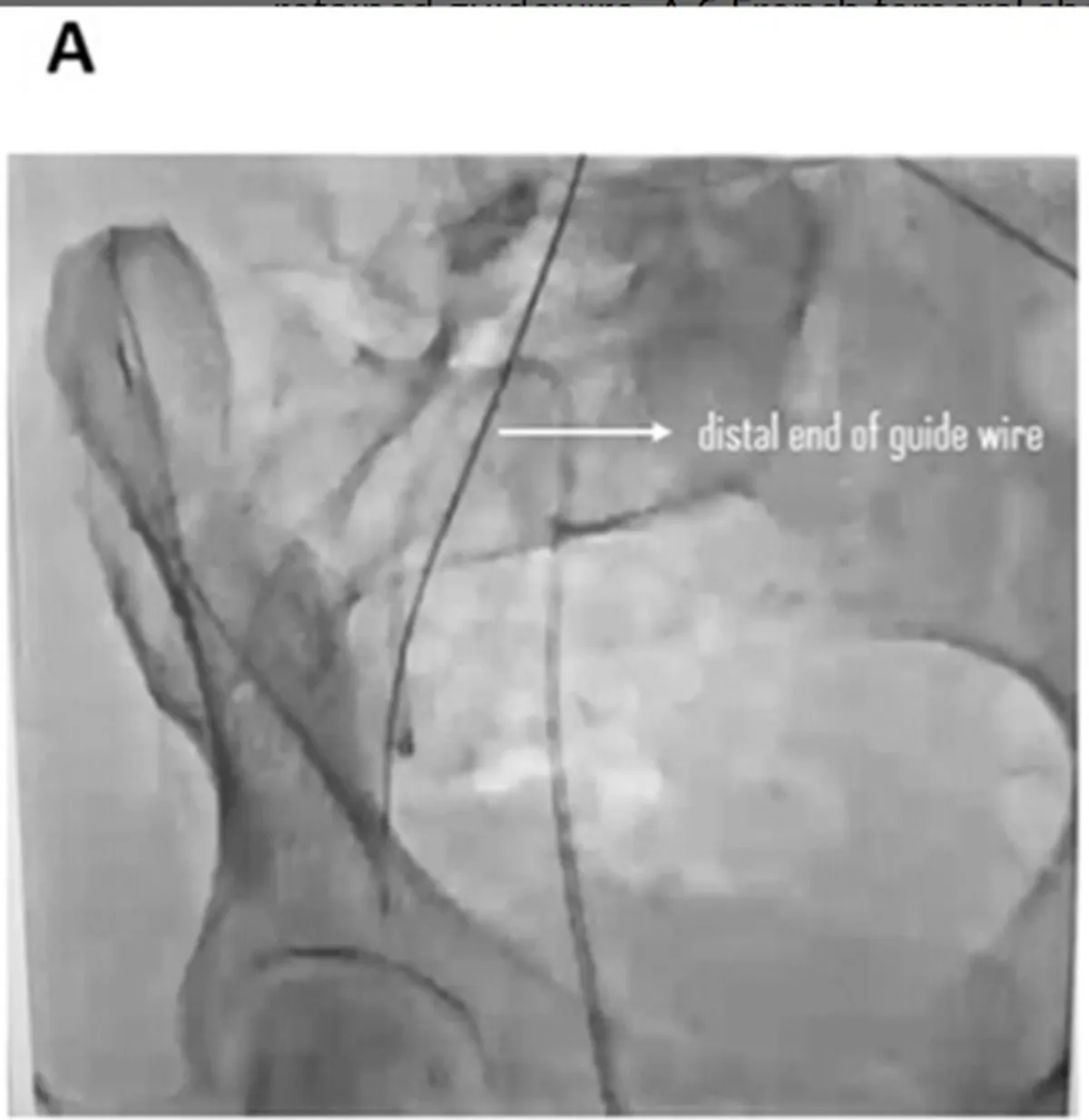
The X-ray imaging revealed that a thin guidewire used to help place a catheter into a vein had been accidentally left inside the woman's body during a procedure carried out at another hospital.

...

...

...
1 of 3
How the Wire Was Left Behind
Central venous catheters are commonly used in patients who require dialysis and allow doctors to access large veins safely.
During the procedure, a guidewire is used to help position the catheter correctly, before—ordinarily—being removed. In rare cases, however, the wire can be mistakenly left behind—a potentially serious medical error.
Newsweek spoke to Sushil K. Mehandru, the chief of nephrology and hemodialysis in Hackensack Meridian Jersey Shore University Medical Center based in New Jersey, who was not involved in the case.
He said: “A retained guidewire, a rare but serious complication of central venous catheterization, may go unnoticed in asymptomatic dialysis patients for extended periods.”
No Symptoms
Despite the prolonged presence of the guidewire, the patient remained asymptomatic. She continued attending routine hemodialysis sessions and experienced no complications relating to the cathether insertion procedure during the three month period before the wire was discovered.
“The absence of pain, discomfort, or functional problems with the dialysis catheter can lead to a delayed diagnosis," Mehandru explained.
The woman had a 13-year history of uncontrolled hypertension, or high blood pressure, and end-stage renal disease. She had been receiving long-term hemodialysis.
She was referred to the cardiology department after a chest X-ray incidentally revealed the retained guidewire.
Wire Successfully Removed
Further imaging showed that the retained device was a 50 centimeter-long "J tip" guidewire, and that it extended from the internal iliac vein to the right internal jugular vein.
With the patient's consent, an operation was undertaken to remove the guidewire. Subsequent scans confirmed that the procedure was a complete success.
The patient was discharged in stable condition and experienced no complications during follow up.
What This Case Means for Dialysis Access Safety
According to Mehandru, this case highlights how a retained guidewire can have serious consequences if not identified promptly. Potential complications associated with retained intravascular guidewires include:
- Vascular perforation — an injury to a blood vessel resulting in a breach that can lead to further complications such as the leaking of blood from veins into the surrounding tissue, an outcome often also caused by the advancement of medical equipment like balloons or wires during procedures.
- Cardiac arrhythmias — an abnormal heart rhythm, which can range in seriousness from harmless to life-threatening.
- Blood clot formation — the formation of a clot within the blood vessels, restricting flow.
Mehandru concluded: “Ultimately, this case serves as a stark reminder that even routine procedures carry risks and that continuous efforts to refine safety measures are essential to protect vulnerable patient populations like those on dialysis.”
Do you have a tip on a health story that Newsweek should be covering? Do you have a question about dialysis? Let us know via health@newsweek.com.
Reference
Qadir Nawabi, A., Jamal, N. A., Lalzada, W., Rezaie, A. J., & Israr, A. (2026). Silent Retention: Endovascular Retrieval of a Guidewire Undetected for Three Months in an ESRD Patient: A Case Report. Clinical Case Reports, 14(3). https://doi.org/10.1002/ccr3.72140
View 0 Comments
Submit Correction
View Editorial & AI Guidelines