...

By Hugh Cameron
Reporter
0
Share
Newsweek is a Trust Project member
See more of our trusted coverage when you search.Prefer Newsweek on Googleto see more of our trusted coverage when you search.
Hundreds of thousands of Maine residents could be receiving $300 checks as part of the outgoing governor’s last-ditch push to provide “affordability relief” to the state.
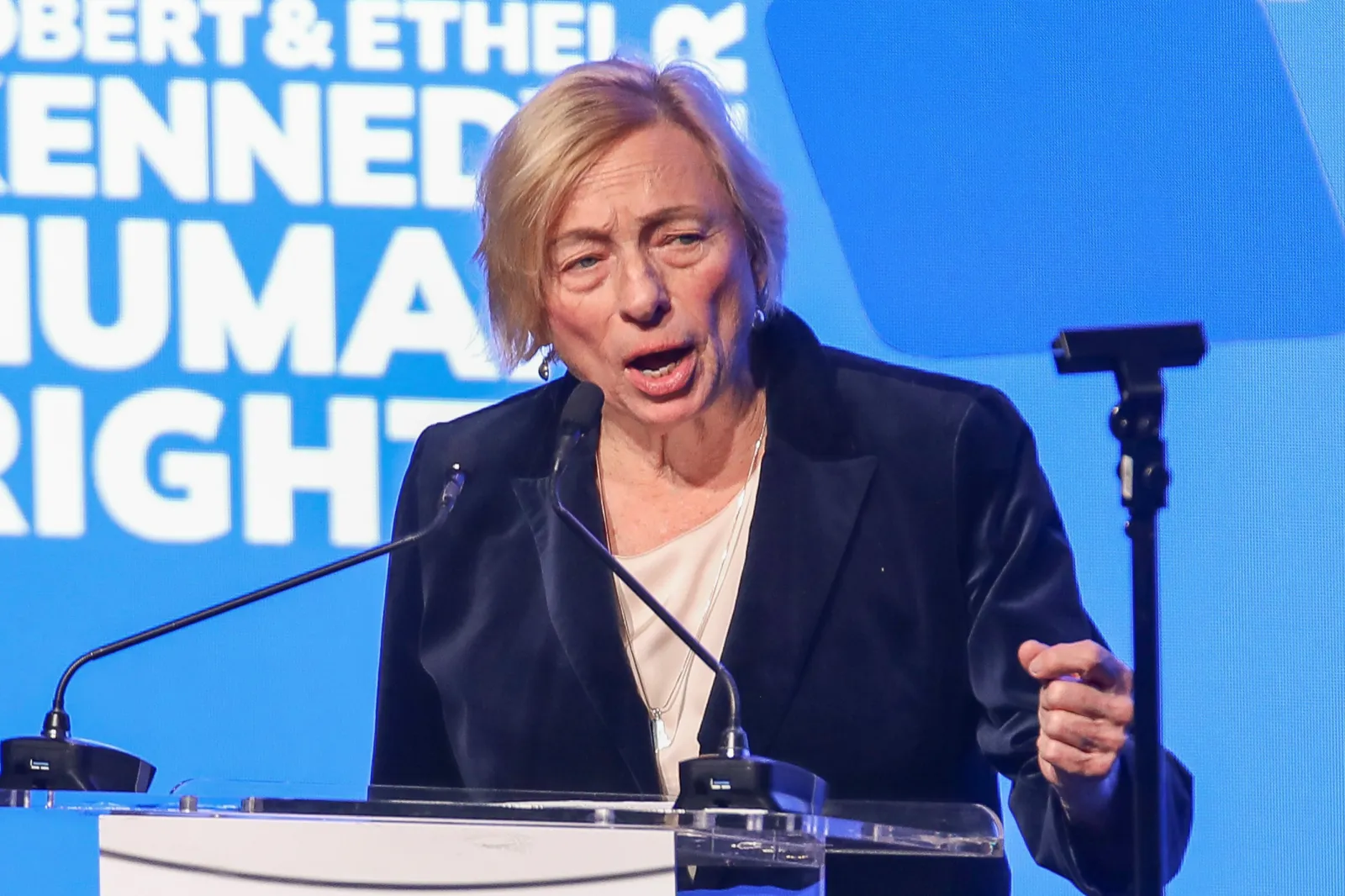
“Tonight, I propose that we help Maine people breathe a little easier with what we can, where we can; by sending them an Affordability Relief check for $300 each,” Governor Janet Mills said on Tuesday, in the final State of the State address of her tenure. Mills, a Democrat, added that this would “offset in some small way the cost of goods and groceries that are increasing because of tariffs and other circumstances beyond our state’s control.”
Newsweek reached out to Mills' office via phone for comment.
Read More on U.S.
Why It Matters
Over the past year, Maine, like much of the United States, has grappled with affordability pressures, including rising living expenses, health care costs, and now record-high home prices, according to the Maine Association of Realtors. Amid these nationwide challenges, President Donald Trump has floated several policies aimed at reducing Americans’ financial burden, but many warn that the affordability issue could cost his party in this year’s midterm elections.
What To Know
Mills said that the checks would be for Mainers making under $75,000 a year for single filers, $112,500 for heads of households or $150,000 for married couples filing jointly. This means an estimated 725,000 people could be eligible for the “affordability relief” checks, according to Mills, implying that the proposal could cost around $218 million.
“We’re putting tax dollars back in your pockets, and you will have the freedom to decide what to do with it,” Mills said on Tuesday.
The governor said that the proposal could be financed with the state’s Budget Stabilization—or “Rainy Day”—Fund. This state account is designed to ensure Maine can navigate economic downturns or sudden shortfalls and is primarily financed with budget surpluses, currently sitting at its statutory limit of over $1 billion, thanks to what Mills said was “good bipartisan work of the legislature.”
“The fund is in a strong position, sufficient for us to draw upon it to meet some of the immediate needs of Maine people,” Mills said, before asking Maine’s bicameral legislature to “promptly approve this measure.”
Democrats hold a slim majority in Maine’s House of Representatives and outnumber Republicans 20 to 14 in the state’s 35-seat Senate, with Rick Bennett serving as the sole independent.
...
“Right now $300 could go a long way for families who are struggling to stretch a dollar. But we’re going to need more than a one time handout," Angus King III, a businessman running as a Democrat in Maine's 2026 gubernatorial election, told Newsweek.
"We need to do things in a fundamentally different way to actually bring down costs so people can afford heat, housing and health care," he said. "We need to create an economy that delivers higher wages."
Senator Bennett, an independent candidate in the upcoming election, called the proposal a “campaign gimmick that only serves to drain the rainy day fund at a time of fiscal uncertainty,” and told Newsweek this will do “nothing to solve the underlying problem: life in Maine has become too expensive and too many families are falling behind.”
And Republican gubernatorial candidate Robert Wessels said he appreciated that Mills was "finally acknowledging what Mainers all over the state have been telling me for 2.5 years, the cost of living in Maine is WAY too high."
However, he said that the $300 would do little to the wide-ranging affordability issues in the state, which he blamed on "costly regulations" championed by Democrats, and likewise told Newsweek that he believes the proposal is aimed at drumming up support for the governor's run for Senate later this year.
Mills, who will step down as governor in early 2027 after taking office in 2019, used her State of the State address to propose several other affordability-focused measures. These include funding to support reproductive health care providers impacted by last year’s tax bill cuts, making Maine’s community college program permanently tuition-free, and launching new pilot programs to boost housing construction.
What People Are Saying
Governor Janet Mills said in her State of the State address on Tuesday: “Like every other state, we have a fair share of hills to climb. One of the biggest obstacles for many people today, whether you're a new college grad, a young parent, or an older person on a fixed income, is the high cost of living. From health care to housing and utilities, to the price of a pickup truck, groceries, and life-saving medicines, costs are too high. And Maine people, like millions of people across the country, are feeling it. Well, tonight, I propose we do something about it.”
Democratic gubernatorial candidate and former president of the Maine Senate Troy Jackson told Newsweek: "I support putting $300 in the pockets of squeezed Mainers. But I don't love gimmicks. We passed a proposal like this during the heating oil crisis, but the costs we face today are structural. $300 doesn’t cover half the cost of a tank of heating oil.”
"Where are the energy projects to create good-paying jobs and bring costs down? And where are the programs to give working-class Mainers and retirees real tax relief? We need real solutions—not one time handouts,” he added.
Republican candidate Owen McCarthy told Newsweek: “Janet Mills doesn't get it. Maine is unaffordable because, after seven years of one-party rule, state taxes are too high and costly regulations, resulting from policy decisions, making everything, especially housing and energy, more expensive. Mills’ one-time 'bonus' does absolutely nothing to fix these fundamental problems impacting the hard-working Mainers like those I grew up around who struggle every day, play by the rules and still can’t get ahead.”
The Sentinel Action Fund, a D.C.-based conservative super PAC, responded to Mills’ proposal on X: “Gov. Janet Mills is responsible for high prices and high taxes in Maine. Her solution to the problem? Sending out $300 relief checks. Maine residents need real affordability solutions, not hush money.”
What Happens Next
Mill’s gubernatorial election is scheduled for early November, with the primary in June. The winner will take office in January 2027, when Mills’ second term ends.
Update 1/29/26 8:36 a.m. ET: This article has been updated with additional comments from gubernatorial candidates Troy Jackson and Owen McCarthy.
In a polarized era, the center is dismissed as bland. At Newsweek, ours is different: The Courageous Center—it's not "both sides," it's sharp, challenging and alive with ideas. We follow facts, not factions. If that sounds like the kind of journalism you want to see thrive, we need you.
When you become a Newsweek Member, you support a mission to keep the center strong and vibrant. Members enjoy: Ad-free browsing, exclusive content and editor conversations. Help keep the center courageous. Join today.


View 0 Comments
Submit Correction
View Editorial & AI Guidelines