
By Aristos Georgiou
Science and Health Reporter
0
Share
Newsweek is a Trust Project member
See more of our trusted coverage when you search.Prefer Newsweek on Googleto see more of our trusted coverage when you search.
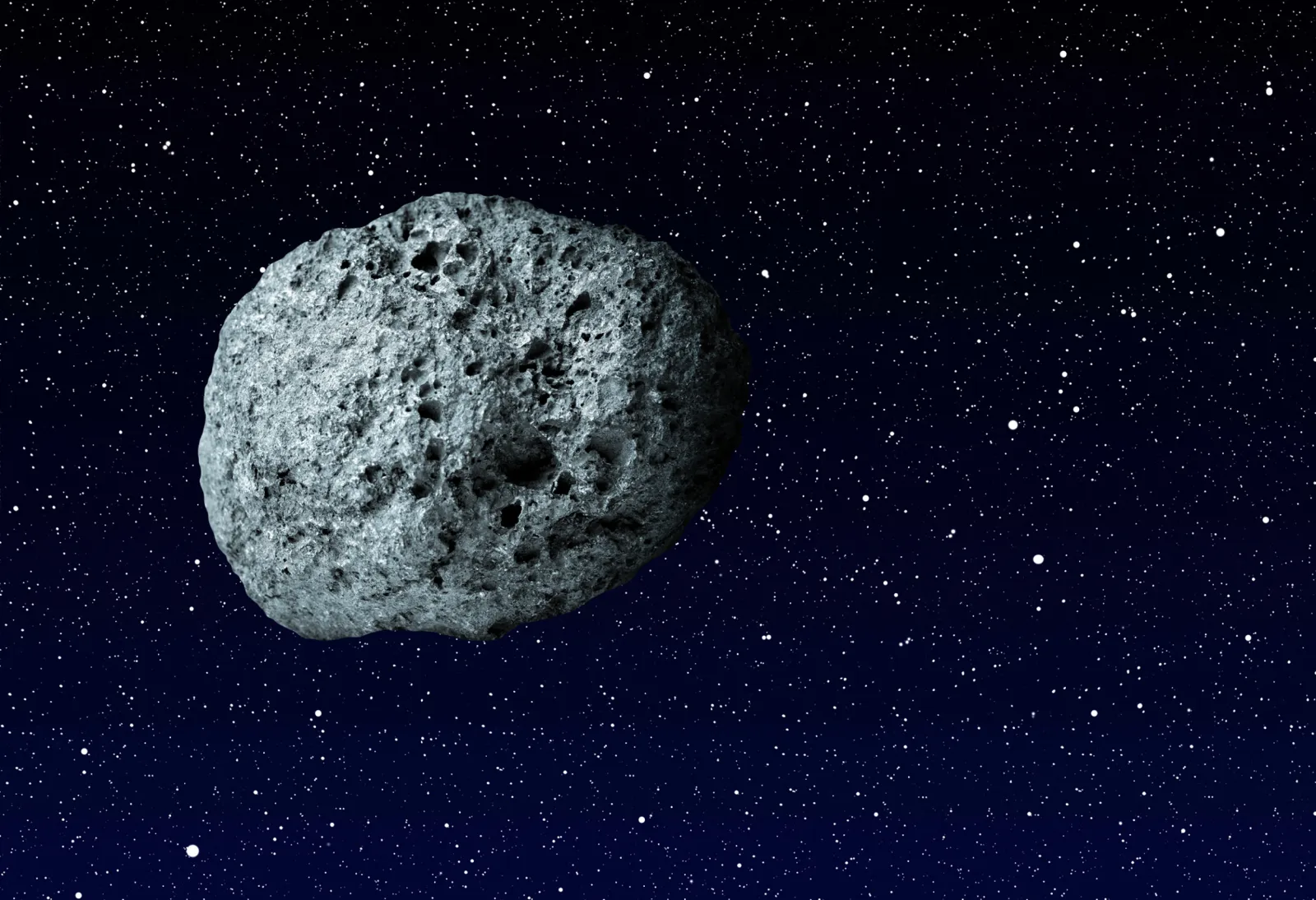
An enormous asteroid is set to sail past Earth later on this month, NASA data shows. The space rock—known as 481394 (2006 SF6)—will make a close approach to our planet on November 20 when it will come within 0.02886 astronomical units (around 2.7 million miles) of us at 7:01 pm EDT.
This is about 11 times the distance between the Earth and the Moon, according to NASA's Center for Near Earth Object Studies.
The asteroid is thought to measure between 919 and 2,034 feet in diameter. This potentially makes it larger than the Sears Tower in Chicago, which stands at a height of 1,729 feet.
Read More
NASA and the ESA Are Teaming up to Find Ways to Deflect an Asteroid the Size of Egypt’s Great Pyramid4 min read

Edscottite: Mineral Never Seen in Nature Before Discovered Inside Meteorite from the Molten Core of Long Destroyed Planet3 min read

Hygiea: Enormous Asteroid Is Actually a Tiny Dwarf Planet, Scientists Say4 min read

2006 SF6 will fly past at a staggering speed of around 17,800 miles per hour relative to the Earth, which is about twenty times as fast as the speed of sound.
The space rock was first discovered on September 17, 2006 by the Catalina Sky Survey—an astronomical project designed to look for asteroids and comets, which is conducted by scientists at the Steward Observatory near Tucson, Arizona.
The space rock's last close approach to Earth took place in February this year. And the next one will take place in November 2020 as 2006 SF6 orbits around the sun.
But according to NASA projections, there won't be another approach as close as the one on November 20 over the course of the next two centuries.
Any comet or asteroid whose orbit takes it within 121 million miles of the star and 30 million miles of our planet's orbit—like 481394 (2006 SF6)—is described as a near-Earth object (NEO.)
Furthermore, 2006 SF6 is also categorized as "potentially hazardous" because it is projected to come within 0.05 astronomical units (4,647,790 miles) of Earth at some point in the future and is estimated to measure more than 460 feet in diameter. However, the projections show that the space rock has no chance of colliding with our planet in the next two centuries.
...
This is lucky for us because if an asteroid of this size did strike the Earth, the impact would cause devastation across a wide region and the global climate could be affected.
At the moment, scientists have identified more than 20,000 NEOs—the vast majority of which are asteroids—and around 40 new ones are being discovered every week. Of the known NEOs, around 5,000 of these are classed as "potentially hazardous."
Experts are not currently aware of any NEOs that have a significant chance of striking Earth in the next two centuries. However, the odds are that a collision will happen at some point in the future.
View 0 Comments
Submit Correction
View Editorial & AI Guidelines