10
Loading video...

By Jesus Mesa
Reporter
0
Share
Newsweek is a Trust Project member
See more of our trusted coverage when you search.Prefer Newsweek on Googleto see more of our trusted coverage when you search.
Ahead of the November midterms, Democrats will settle a fight this week in Florida, a state that President Donald Trump now calls home, that the rest of the party has been having all summer.
Three insurgent candidates are on the ballot in Florida’s August 18 primary, each challenging a better-funded establishment Democrat. All three are making a similar argument: that “electability” has become a way for the Democratic Party to decide which candidates are viable before voters get a chance to choose.
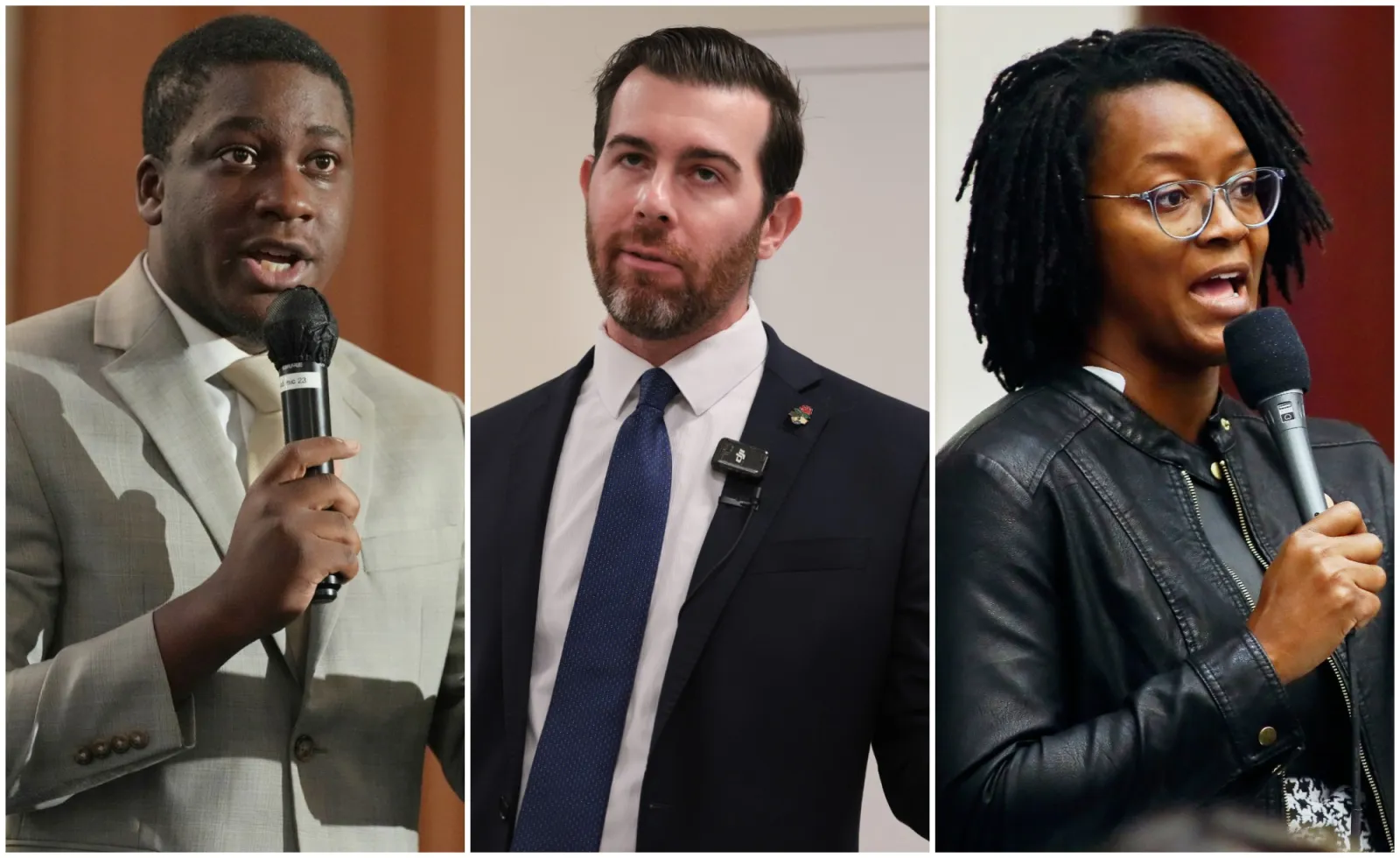
Oliver Larkin is challenging U.S. Representative Jared Moskowitz in the 25th Congressional District. Elijah Manley is one of several candidates running against U.S. Representative Debbie Wasserman Schultz in the redrawn 20th District. Florida state Representative Angie Nixon is running for the Democratic nomination in the special U.S. Senate election against retired U.S. Army Lieutenant Colonel Alexander Vindman.
Read More on Politics
Michigan Representative Rashida Tlaib, a member of the Democratic Socialists of America (DSA), was scheduled to appear at a Fort Lauderdale rally Friday to support all three candidates, according to organizers. The event, called “Chomp the Oligarchy,” was hosted by Miami DSA, Broward County DSA, Gen Z for Change and the Florida Youth Justice Coalition. The original venue canceled after local Democrats objected, so organizers moved the event.
Florida Republican Representative Randy Fine criticized the congresswoman's visit, telling Fox News Digital it was "no coincidence" Tlaib, the only Palestinian American currently serving in Congress, was campaigning against two of the chamber's remaining Jewish Democrats.
The three candidates do not all describe themselves the same way. Larkin openly identifies as a democratic socialist while Manley calls himself a progressive and economic populist. His endorsements this cycle have come from California Representative Ro Khanna, a Democrat, the Progressive Change Campaign Committee, Florida Rising and Dream Defenders, rather than the national DSA. Conservative outlets covering Tlaib’s visit including Fox News and The Washington Examiner have described both men as socialists.
In a previous statement to Newsweek, White House spokesperson Allison Schuster said that “the Democrats’ full-blown embrace of socialism and communism is a mortal threat to American liberty," adding that "President Trump will never allow America to become a socialist or communist country.”
Newsweek has contacted Nixon, Wasserman Schultz, and Moskowitz for comment via email.
...
The Electability Fight
In separate interviews with Newsweek, Larkin and Manley made nearly identical cases against the standard the party applies to candidates like them.
"The electability argument, the how electable a candidate is being directly tied in with how many corporate PAC donations or how moderate they are on issues, I think that's just gone completely out the window after the 2024 election, losing a second nationwide election to Donald Trump," Larkin said. He pointed to the top of that ticket. "Kamala Harris lost every single swing state in the country in 2024."
Manley said Democrats have turned “electability” and “viability” into standards that are used to shut out progressive candidates.
"Electability has been kind of weaponized in a way to progressives against Democrats in general," he said. "And it's not just the word electability; it's the word viability too. The only way you can determine whether or not somebody is electable is when an election is held."
Manley argued the standard is applied unevenly. "People tend to use the word electability and viability against candidates of color the most," he said. "And against women, against candidates of color, Black candidates specifically."
He named Nixon directly. "People say that Angie Nixon is unelectable. I disagree."
Both candidates rejected the idea that the party's path runs through moderate voters. "There's this myth of the middle, this myth that there's a voter in the middle that can be wooed over," Manley said. He argued Democratic voters stay home rather than defect. "Why would I vote for a Republican light when I could just have the Republican? If I'm going to go for a Coke and someone says, do you want a Diet Coke? I'm going to say no."
Larkin framed the same point as arithmetic.
"Electoralism is a game of addition, not subtraction," he said.
Related Story

Socialists Surge: Leftists in Congress Poised to Double After Midterm
What the Polls and the Markets Say
The numbers do not favor them.
Prediction markets give Moskowitz roughly 88 to 90 percent odds of winning the nomination, with Larkin in the low double digits. In District 20, markets price Wasserman Schultz around 91 percent. On Polymarket, Vindman has traded near 94 percent in the Senate primary, with Nixon at 6 percent.
Polling has been less settled. An EMC Research survey commissioned by the Wasserman Schultz campaign in early May found her taking 52 percent of likely primary voters in a field of eight. A separate Listener Group poll conducted from May 29 to June 1 found her at 39 percent on an initial ballot with Manley at 21 percent, then showed Manley moving from an 18-point deficit to a 9-point lead once voters heard biographical information about the candidates. That poll also found Manley beating Wasserman Schultz 63 percent to 37 percent in a head-to-head matchup.
Manley cited that gap as evidence against reading early surveys as verdicts.
"Polls are a snapshot into a moment," he said. "They don't tell the full story."
Larkin, meanwhile, said his own race has tightened. "We're still the underdog, but we are closing at a very rapid pace," he said, citing roughly 40,000 doors knocked and more than a quarter million voter contact attempts. He said he has been outspent by $650,000 from two super PACs.
Nixon offers the clearest data point on the electability question, and it cuts both ways.
A University of North Florida Public Opinion Research Lab survey of 848 likely midterm voters, released in July, found Republican Senator Ashley Moody leading Nixon 50 percent to 42 percent. Moody led Vindman by an even wider margin, 50 percent to 40 percent. Nixon ran two points closer despite a massive fundraising disadvantage.
A competing Change Research poll, conducted July 9–11 for Freedom Project USA, a group aligned with Vindman, showed a very different race. It found Vindman leading Nixon 39 percent to 24 percent, with 36 percent of voters undecided.
The fundraising gap is stark. Vindman has reported raising $16.7 million, while Nixon has raised just over $625,000 and had about $118,000 cash on hand at the end of June.
Nixon has said she is not worried about appealing to Florida's independent and no-party-affiliation voters. She is endorsed by Representative Rashida Tlaib, Representative Ilhan Omar, the Working Families Party, and four local chapters of the Service Employees International Union. In May, the Florida House Rules and Ethics Committee reprimanded her after she used a megaphone during a protest that disrupted a vote on the state's new congressional maps.
“We are not going to leave any stone unturned at all,” Nixon told Jacksonville Today. “This campaign is not about politics as usual. It's about returning the power back into the hands of the people.”
Vindman's campaign, which has been endorsed by the American Federation of Government Workers, the Communications Workers of America in Florida, the Southern Regional Council of Carpenters, and SEIU Local 1991, said it has attracted 235,000 unique donors, with an average contribution of less than $40. It said 98 percent of donations were under $200 and that Vindman does not accept corporate PAC money.
“The choice is clear: if you want an outsider who is ready to disrupt the status quo, I'm your guy,” Vindman said in a statement to Newsweek. He pointed to his “Florida First Agenda,” which includes lowering homeowners' insurance, gas and housing costs, and banning congressional stock trading.
The National Wave
The Florida races arrive at the end of what some on the left have called "hot DSA summer."
DSA-endorsed candidates have unseated three sitting House Democrats this cycle in New York, Colorado and Michigan. Melat Kiros defeated Colorado Representative Diana DeGette, a moderate Democrat first elected in 1997, while Donavan McKinney defeated Michigan Representative Shri Thanedar. In New York, insurgents Claire Valdez and Darializa Avila Chevalier also won their primaries, while Chris Rabb won an open seat in the Philadelphia area.
Abdul El-Sayed, a progressive who does not identify as a democratic socialist, defeated Michigan Representative Haley Stevens for the Democratic Senate nomination.
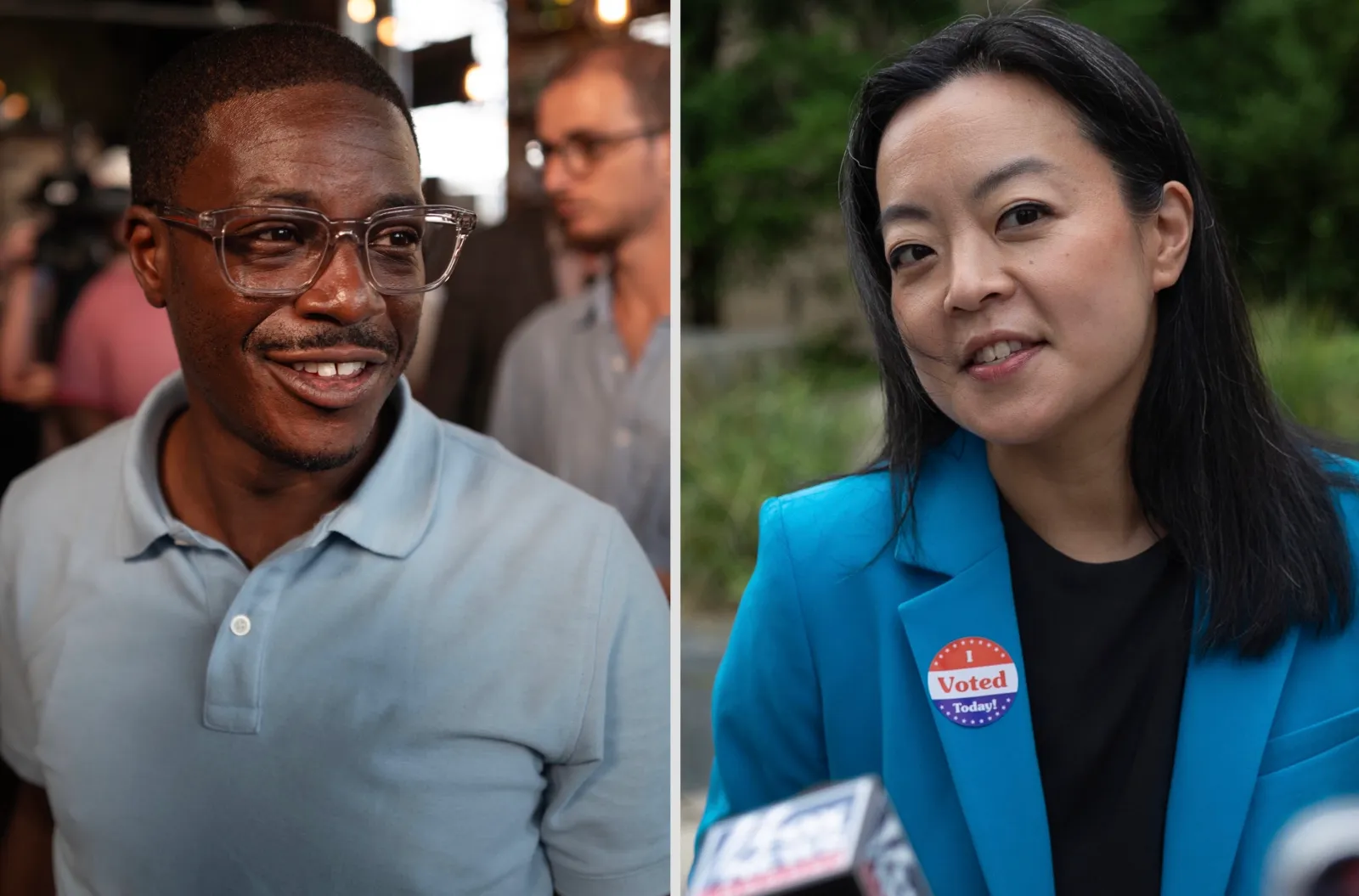
The streak broke last week in Wisconsin, where democratic socialist Francesca Hong narrowly lost the gubernatorial primary to David Crowley.
The Democratic establishment saw it as a limitation, but Manley saw it differently.

...
"She barely lost," he said. "She lost by like 2,000, 3,000 votes out of hundreds of thousands cast. That's not a movement they can just throw to the side."
Hong has become the party establishment's reference point in the days since, cited as evidence that democratic socialists cannot close the deal outside safe urban seats. CNN reported the result was met with relief by top Democrats who had feared she would drag down the ticket in a state the party needs in November.
Manley said the comparison does not hold.
"I think it's the wrong pitch. It's the wrong assumption, because the neighboring state just picked Abdul El-Sayed to be the nominee," he said. "They can't just point to one race."
He also said the label attached to Hong is the same one he is fighting. "We just saw this in Wisconsin with Francesca Hong," he said. "Maybe that's a situation where it may or may not have been true, but people tend to use the word electability and viability against candidates of color the most. Voters are not hive minds."
Related Story
David Crowley Beats Francesca Hong in Shock Loss for Progressives
The Socialism Problem in South Florida
Florida is a tougher test than New York or Denver, in part because of the state's political history and the views of its large Latino electorate.
The state is home to roughly 1.9 million Cuban Americans, at least 900,000 of them in Miami-Dade County, along with large Venezuelan and Nicaraguan populations. A 2021 Equis Research report found that four in 10 Latino voters in 2020 were concerned that Democrats were embracing socialism, including 30 percent of those who voted for Joe Biden.
NBC News/Telemundo polling has also found that a plurality of Latino voters view socialism negatively, though views vary by age and ideology.
Nationally, Gallup found that positive views of capitalism fell to 54 percent last August, the lowest level since 2010. Views of socialism have changed little over the past 15 years, with 39 percent viewing it positively and 57 percent negatively.
Larkin argued that the national party has misread Florida entirely.
"Florida is one of the most elastic states in the country," he said. "The national media and the Democratic Party has been very quick to drop Florida like a hot potato, like it's just written off."
Manley pointed to the party's closest recent statewide race as evidence.
"The closest we ever got to winning statewide was with Andrew Gillum, a Black progressive candidate," he said. "He came 30,000 votes within beating Ron DeSantis. Since then, since we haven't had the progressive statewide candidate, we have lost by huge margins."
What Democrats Fear About November
Republicans have been explicit about wanting the matchup.
"Democrats want voters to believe the DSA is a Los Angeles or a Brooklyn problem, confined to urban enclaves, harmless beyond big cities," Republican strategist Matt Klink told Newsweek. "The problem is that DSA-aligned candidates are now winning primaries in non-urban districts, which hands Republicans a ready-made argument that extends well beyond the coasts and straight into November."
Jim Kessler of the centrist Democratic group Third Way argued that progressive Democrats have yet to prove they can win outside heavily Democratic districts, and that their support can erode when their positions on issues like crime come under scrutiny.
"They have not yet shown the ability to win general elections except in very blue places. And for the most part, when they managed to win their popularity has fallen as their radical views on issues like crime come back to haunt them," Kessler told Newsweek.
When asked what he would tell conservative voters who see positions like his call to abolish the Senate as extreme, Larkin pointed to the cost of living.
"I'm running to address people's concerns right now, lowering the cost of living, expanding Social Security, making the billionaires and ultra wealthy pay their fair share into the taxation system," he said. "I'm not trying to take anything away from people. I'm trying to improve their material conditions."
The party also has an unresolved dispute over race. House Minority Leader Hakeem Jeffries has declined to endorse Wasserman Schultz, a plurality-Black district, after Black officials objected to her decision to run there.
"This seat is going to be a catalyst," Manley said. "If she wins, it's going to be the catalyst for other people across the country in our party to take away Black representation."
Larkin said he would back the winner regardless. "I'll support the Democratic nominee," he said. "Electing a Republican in this seat is unacceptable," adding that Moskowitz has not made the same commitment publicly.
Early voting ends Sunday. Polls close Tuesday.
Contact Newsweek editors for this story: Jason Lemon and Anthony Murray.
View 0 Comments
Submit Correction
View Editorial & AI Guidelines