...

By Andrew Stanton
Reporter
0
Share
Newsweek is a Trust Project member
See more of our trusted coverage when you search.Prefer Newsweek on Googleto see more of our trusted coverage when you search.
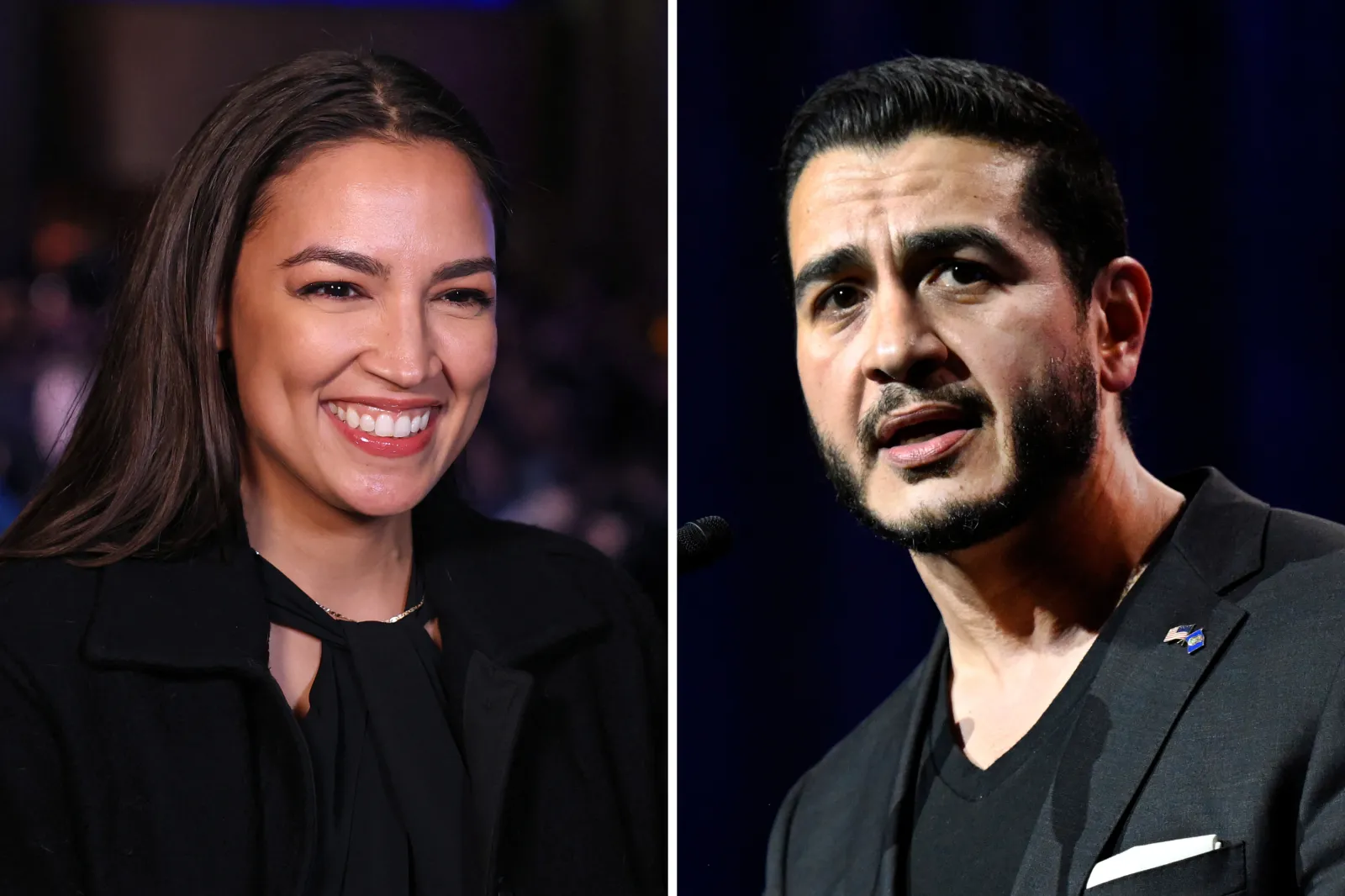
Representative Alexandria Ocasio-Cortez has endorsed progressive Abdul El-Sayed in Michigan’s Senate race, a must-win seat for Democrats hoping to flip control of the chamber, as polls show a tight race against Republican Mike Rogers in November.
Progressive Democrats are riding high after a series of primary victories in New York and Colorado over the past few weeks, but the Michigan Senate race will be a major test for the left. El-Sayed’s candidacy will gauge whether progressives can win statewide in a competitive, purple state carried by President Donald Trump in the 2024 election—or whether the so-called Democratic Tea Party is confined to safer seats.
The Michigan Senate race will also be high-stakes for Ocasio-Cortez, a New York Democrat who has been floated as a potential 2028 presidential candidate. If El-Sayed, a public health official, wins in November, that could bolster her possible aspirations for higher office and signal that the left can do well in swing states. But a defeat could call into question her political influence.
Read More on Politics
Midterm elections are generally viewed as a referendum on the sitting president, and the president's party historically loses seats in the midterms. Some Democrats have expressed concern about whether El-Sayed is too progressive for a state Trump won, though. His supporters, however, contend that he will be able to win back key voters and hold the state for Democrats.
What To Know
- Ocasio-Cortez endorsed Abdul El‑Sayed in Michigan’s must‑win Senate race, framing the moment as “existential” for Democrats and boosting a longtime progressive ally ahead of the August primary.
- El‑Sayed currently leads the Democratic field in multiple polls, with recent surveys showing him ahead of Haley Stevens and Mallory McMorrow. However, a sizable group of undecided voters could still shift the race.
- General election polling shows a razor-thin matchup against Republican Mike Rogers, raising the stakes for Democrats’ hopes of flipping the Senate.
...
AOC Endorses Abdul El-Sayed in Michigan Senate Race
Ocasio-Cortez revealed her endorsement of El-Sayed in an interview with The New York Times published on Thursday.
“Despite our ideological differences and whatever disagreements there are in the party, every single one of us sees this moment as existential. And I think many people are willing to put aside differences in order to give us the best chance at winning. And I think that Abdul gives us that right now,” the congresswoman told the newspaper.
El-Sayed touted the endorsement in a post on X.
“AOC has spent her career taking on the powerful on behalf of everyday people, and she has shown all of us what courageous, smart, values-driven leadership looks like. I'm deeply honored to earn her endorsement. Onward to victory,” he wrote.
Ocasio-Cortez and El-Sayed are longtime political allies who have both been part of the party’s progressive movement. Ocasio-Cortez endorsed El-Sayed when he ran for governor in 2018, though he ultimately lost the Democratic primary to now-Governor Gretchen Whitmer.
They have been aligned on issues including Medicare for All, the Green New Deal and criticism of Israel. Both also supported Senator Bernie Sanders’ 2020 presidential bid, and have been closely aligned with the Vermont independent. Sanders has also backed El-Sayed.
But El-Sayed is still set to face a competitive primary in August against Representative Haley Stevens, who has occupied the more centrist lane in the race, and state Senator Mallory McMorrow, who is viewed as more liberal than Stevens but less progressive than El-Sayed. All three entered the race after incumbent Democratic Senator Gary Peters announced his retirement.
Whoever wins the primary will face off against former Representative Mike Rogers, the presumptive GOP nominee, in what is expected to be one of the closest races of the 2026 midterm elections.
Newsweek reached out to the El-Sayed, McMorrow, Rogers and Stevens campaigns for comment via email.
Related Story
AOC’s Chances of Beating JD Vance in Possible 2028 Matchup: Poll
Abdul El-Sayed’s Polls in Democratic Primary
The primary is viewed as competitive, but several recent polls have shown El-Sayed leading his more moderate opponents.
A Quantus Insights poll released on Wednesday showed him with 41 percent support among Democratic primary voters, compared to Stevens’ 35.6 percent and McMorrow’s 7.5 percent. But an additional 15.9 percent are still undecided about who they would support, and those voters will likely be critical to the eventual outcome of this race.
It was conducted from June 29 to 30, 2026, among 947 likely voters with a margin of error of plus or minus 3.3 percentage points.
Another new poll from Tulchin Research gave him a more comfortable lead with 46 percent compared to Stevens’ 27 percent and McMorrow’s 17 percent. Nine percent were undecided in that poll, which surveyed 500 likely Democratic voters from June 24 to 28 and had a margin of error of plus or minus 4.38 percentage points.
A recent Mitchell Research & Communications poll showed El-Sayed with 42 percent, compared to Stevens’ 33 percent and McMorrow’s 6 percent. It polled 409 likely voters from June 11-13, 2026. That marks a shift from November 2025, when the pollster found Stevens up with 27 percent, compared to McMorrow’s 24 percent and El-Sayed’s 16 percent.
David Dulio, a political science professor and director of the Center for Civic Engagement at Oakland University, told Newsweek Ocasio-Cortez’s endorsement could help El-Sayed.
“I think that there is energy in the progressive wing of the Democratic Party, and this will help him capitalize on it,” he said.
However, Michigan is “not New York” and is a more “pragmatic, 50-50 state,” Dulio said, noting that its electorate differs from that of states where progressive or DSA candidates have done well so far in the primaries.
“I wonder how he holds the middle in a general election. I’m sure campaign has an answer to that, but even in a year like 2026 where Democrats are poised to have good year because of of turnout, who is turning out and enthusiasm, i’s a tougher path for a candidate like him in a state like Michigan,” he said.
Marjorie Sarbaugh-Thompson, a Wayne State University political scientist, told Newsweek that Ocasio-Cortez’s endorsement could help “a little,” but noted that there has “already been a lot of coverage about Bernie’s endorsement and others outside the state.”
Both El-Sayed and Stevens face electability concerns, she said, noting that some of El-Sayed’s voters could sit the election out if Stevens wins the nomination, and that some of Stevens’ voters may vote for Rogers against El-Sayed.
“People who are canvassing report that their supporters are unlikely to support the other. In other words, both of them repel parts of the Democrats’ coalition,” she said. “McMorrow probably stands a better chance of holding more of the coalition together.”
What Polls Show About El-Sayed’s Chances Against Mike Rogers in Michigan Senate Race
Electability remains a critical question Democratic voters face ahead of the primary, as polling points to a very close race in Michigan, a critical battleground state.
The Quantus poll gave narrow leads to both El-Sayed and Stevens. Stevens led Rogers by 1.4 points, with 45.1 percent support to the Republican candidate’s 43.7 percent, while El-Sayed led by 1.1 points. His support stood at 45.2 percent compared to Rogers’ 44.1 percent.
Rogers, however, led McMorrow by just under a single point with 45.3 percent to the Democrat’s 44.4 percent.
Another recent poll from Zenith Research favors Democrats—against Rogers, Stevens was up 43 percent to 42 percent, McMorrow ahead 44 percent to 42 percent, and El-Sayed led 45 percent to 42 percent. It surveyed 602 likely voters from June 11 to 14.
A recent Mitchell Research & Communications poll showed El-Sayed with a 5-point lead in the general election, with 47 percent to Rogers’ 42 percent. Rogers, however, led Stevens by 4 points with 45 percent to the Democrat’s 41 percent. McMorrow received 41 percent to Rogers’ 47 percent in the poll, which surveyed 827 likely voters from June 11-13.
What Do Prediction Markets Show?
El-Sayed’s chances of winning the Democratic primary have surged over recent months, with his chances standing at 88 percent on Kalshi and 86 percent on Polymarket as of Thursday morning.
Prior to late April, Kalshi’s prediction market favored McMorrow for months, giving her nearly a 64 percent chance of winning on April 11. But in the weeks that followed, traders shifted their confidence toward El-Sayed, whose chances have steadily grown since then.
In the general election, Democrats have long been favored in prediction markets. Kalshi gives Democrats a 70 percent chance, while their chances of holding the seat stood at 72 percent on Polymarket.
Prediction markets allow traders to buy and sell contracts tied to political outcomes and current events, aggregating real‑money wagers into probability estimates. Prices fluctuate as traders react to polling, fundraising, candidate developments and broader political trends. They measure trader sentiment at a given moment but do not always accurately predict the future.
El-Sayed Asked About Israel's Right to Exist
El-Sayed was asked whether he believes Israel has a right to exist during a CNN interview Thursday. Israel has been a major sticking point between candidates, with El-Sayed being the most vocal critic of its government.
Stevens has cast herself as a more staunch supporter of Israel. Michigan has both notable Arab American and Jewish communities, so the eventual nominee will have to walk a fine line on the issue to avoid alienating either group.
“I’m not going to play this gotcha game about whether or not it has a right to exist,” El-Sayed said.
“I think the question we all ought to ask is, does everybody have equal rights to peace dignity and self-determination?” he said. “That's Jewish Israelis and Palestinians, and to me the folks who should answer what the ultimate peace there looks like should be Jewish Israelis and Palestinians.”
The issue of whether Israel has the right to exist is “secondary to whether or not they have a right to our tax dollars,” he said.
Swing State Michigan Is Must-Win for Democrats
Michigan became an electoral battleground over the past decade. Former President Barack Obama easily won the state in both of his runs—by more than 16 points in 2008 and by just under 10 points in 2012. But Trump flipped it in 2016, carrying it by less than half a percentage point.
Trump made gains across the state due to his strong showing among white voters in rural areas who backed Obama. He lost ground in the suburbs around Detroit and Grand Rapids, but rural gains made up for it. Democrats struggled to win back those voters in significant numbers in recent cycles but continued to make gains in the suburbs.
Michigan flipped back to Democrats in 2020, when former President Joe Biden carried it by just under 2 points. But Trump won it again in 2024 by about 1.4 points—the strongest showing for a Republican presidential candidate since 1988.
At the same time, Democratic Senator Elissa Slotkin won an open seat by less than half a percentage point in 2024.
Michigan was particularly tricky for Democrats in 2024. Former Vice President Kamala Harris lost significant ground among Michigan’s large Arab American community, many of whom declined to support her due to the Biden administration’s strong support for Israel amid the conflict in Gaza.
Winning back those voters will be a critical task for whichever Democrat emerges from the Senate primary, as Democrats cannot afford to lose Michigan.
Democrats’ Chances of Flipping the Senate
Democrats anticipate a favorable national environment amid Trump’s declining national approval rating, which has tumbled amid economic concerns tied to the cost of living and higher gas prices. But Michigan’s Senate race is still viewed as highly competitive for both parties.
Republicans hold a 53-47 majority, so Democrats must flip four seats to win control.
Democrats are defending a seat in another Trump-won state. Senator John Ossoff is running for reelection in Georgia, a race deemed Lean Democrat by the Cook Political Report. They view GOP-held states in Maine, which Trump lost by 7 points, and North Carolina, which he won by just 3 points, as top flip opportunities.
But there are no other Senate races in Harris-won or single-digit Trump states, meaning Democrats have to expand the Senate battleground and compete in more conservative areas if they want to win a majority. They are targeting GOP-held seats in Alaska, Iowa, Ohio and Texas as potential states to flip.
Prediction markets favor Republicans to win the Senate. The GOP had a 61 percent chance on both Kalshi and a 57 percent chance on Polymarket of holding on to its majority as of Thursday.
Is AOC Democrats’ New Kingmaker?
Ocasio-Cortez’s endorsement has critical implications for her future influence over the party. She has pushed for a more progressive vision for the Democrats, despite some in the party’s establishment warning that the party has lost ground as voters view it as too left. But an El-Sayed victory could defy that conventional logic and deliver a major win for progressives in a critical swing state.
Ocasio-Cortez has had some wins in competitive primaries. She endorsed Chris Rabb, who is aligned with the Democratic Socialists of America and won a primary in a safely Democratic seat in Philadelphia, as well as Adam Hamawy, who won a primary for an open House seat in New Jersey
She also backed Sam Forstag, who won a primary for a competitive Montana House district.
However, she has been a bit selective in her endorsements and has declined to support insurgent candidates challenging incumbent members of the House. She did not endorse Brad Lander, who unseated Representative Dan Goldman; Darializa Avila Chevalier, who defeated Representative Adriano Espaillat; or Melat Kiros, who defeated Representative Diana DeGette this week.
She also declined to endorse Claire Valdez, who won an open seat in New York City.
What Happens Next
Michigan’s primary is set for August 4, 2026, so candidates still have more than a month to make their cases to voters and convince their supporters to vote. Polls will continue to be watched as a critical gauge of the electorate’s mood.
Contact Newsweek editors on this story: Steve Mollman and Sam Wilson.
View 0 Comments
Submit Correction
View Editorial & AI Guidelines