10
Loading video...

By Jesus Mesa
Reporter
0
Share
Newsweek is a Trust Project member
See more of our trusted coverage when you search.Prefer Newsweek on Googleto see more of our trusted coverage when you search.
A new poll released just days before Michigan's Democratic Senate primary shows Abdul El-Sayed opening a double-digit lead over Representative Haley Stevens, the latest sign of a late swing in a race where polling shows Stevens performing more strongly against Republican Mike Rogers in November.
Two surveys conducted July 26 and 27 by Tavern Research and sponsored directly by the El-Sayed campaign found El-Sayed leading Stevens 48 percent to 37 percent in one and 46 percent to 36 percent in the other, days before Tuesday's primary. The two polls mark the largest margins El-Sayed has posted in any survey released so far in the race.
What Other Polls Have Shown
The polling has steadily shifted in El-Sayed's favor over the past month, although much of that movement comes from surveys commissioned by Democratic-aligned groups.
Read More on Politics
A Tavern Research poll conducted July 6 and 7 showed El-Sayed, the former director of the Department of Health, Human, and Veterans Services of Wayne County, leading Stevens 41 percent to 38 percent.
A Data for Progress survey sponsored by American Priorities found him ahead 54 percent to 41 percent between July 10 and 14, while a Tulchin Research poll commissioned by Fighting for Michigan PAC put him up 56 percent to 40 percent between July 13 and 15.
The only independent poll released during that period told a different story. A Glengariff Group survey commissioned by The Detroit News and WDIV-TV, conducted July 8 to 11 without a campaign or advocacy sponsor, found Stevens leading El-Sayed 48 percent to 41 percent. No independent poll has been released since then to show whether the gains in campaign-backed surveys reflect a broader shift among Democratic primary voters.
The general election polling largely favors Stevens over Republican Mike Rogers. A Glengariff Group survey conducted for the Michigan Education Association and Business Leaders for Michigan found Stevens leading Rogers 47 percent to 45 percent among likely November voters, while El-Sayed trailed Rogers 48 percent to 41 percent.
Another Glengariff poll, conducted for the Detroit Regional Chamber, gave Stevens a narrow 45.2 percent to 43.8 percent edge over Rogers, while El-Sayed trailed 46.9 percent to 40.1 percent. A Mitchell Research survey for the Michigan Information and Research Service similarly found Rogers ahead of El-Sayed 41 percent to 38 percent, with Stevens the only Democrat running close enough to make the race competitive.
One exception came from a Data for Progress memo prepared for the Working Families Party. It found El-Sayed narrowly leading Rogers 47 percent to 46 percent, while Stevens trailed Rogers 46 percent to 45 percent. The poll also found El-Sayed with stronger favorability ratings than Stevens and suggested he was more resilient to negative messaging.
Related Story
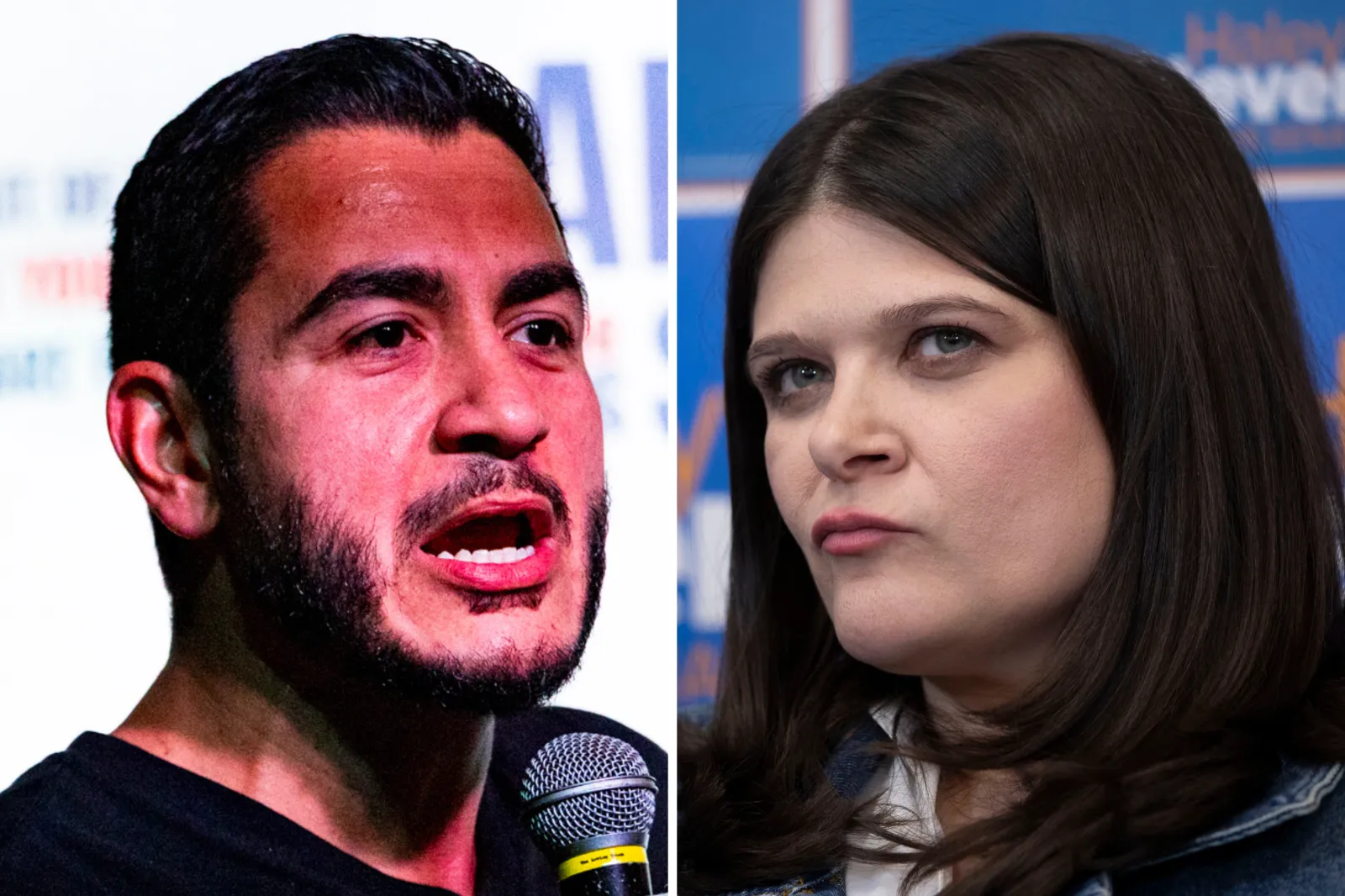
El-Sayed’s Chances Against Stevens in Michigan Primary After Debate
AIPAC Spending Becomes a Flashpoint
El-Sayed's apparent gains have come even as groups aligned with the American Israel Public Affairs Committee have poured historic sums into the race on Stevens' behalf. The AIPAC-affiliated United Democracy Project has spent nearly $30 million supporting Stevens and opposing El-Sayed, its largest investment in a single race, according to the ad-tracking firm AdImpact.
Total outside spending in the primary has surpassed $41 million, with more than half benefiting Stevens or targeting El-Sayed, according to federal campaign finance disclosures.
El-Sayed has made that spending a centerpiece of his closing argument. During Monday's debate in Southfield, hosted by Fox 2 Detroit, he told Stevens the "difference between us is $46 million of AIPAC spending," linking the figure to her opposition to cutting U.S. aid to Israel.
"They've set a record in this race to help elect my opponent because they know that she'll be a reliable vote," El-Sayed said.
Stevens has largely avoided addressing AIPAC by name. Asked during the debate whether outside spending would influence her votes in the Senate, she replied, "Absolutely not."

...
Instead, Stevens has emphasized her support from the Democratic establishment, including endorsements from Michigan Governor Gretchen Whitmer and retiring Senator Gary Peters. She has argued that primary voters should focus on which Democrat is best positioned to win in November.
"This is about putting Michigan first, and I've got the receipts to do that, which is why Governor Whitmer and so many others are joining my campaign to win in November," Stevens said.
El-Sayed, who ran unsuccessfully for governor in 2018, has emerged as the race's leading progressive candidate, winning endorsements from Senator Bernie Sanders, Representative Alexandria Ocasio-Cortez and the United Auto Workers. This week, he secured an endorsement from Massachusetts Senator Elizabeth Warren.
If elected, El-Sayed would be the first Muslim U.S. senator. His previous role as the director of the Department of Health, Human, and Veterans Services of Wayne County has informed his platform of Medicare for All.
A Polling Environment Under Scrutiny
The wide variation in recent polling has drawn skepticism from outside the race. Former Michigan Representative Justin Amash, a Republican-turned-independent who lost to Rogers in the 2024 GOP Senate primary, wrote on X that he had no stake in the Democratic contest but questioned the credibility of one of the latest surveys.
"I don't have a dog in this fight, but I will say that if you believe this obviously bogus poll, then you simply don't understand elections," Amash wrote. He did not specify which poll he was referring to.
El-Sayed has also questioned recent polling. He told reporters in July that one survey showing him trailing Stevens appeared to be tied to AIPAC, a claim the polling firm denied, and independent fact-checkers found no evidence to support.
Michigan's unpredictable voting patterns have made the race especially difficult to forecast. Whitt Kilburn, a political science professor at Grand Valley State University, told Newsweek, “Regarding the conventional wisdom on Michigan voters, all bets are off.”
Republicans, meanwhile, face little uncertainty heading into the fall. Rogers, who narrowly lost to Senator Elissa Slotkin in 2024, cleared his primary without a serious challenger and is the party's nominee to replace the retiring Gary Peters. The nonpartisan Cook Political Report rates the general election as a toss-up, with both parties viewing the Michigan seat as critical to Senate control.
The Electability Debate
The central divide in the race has become electability. Democratic leaders argue that Stevens, who flipped a Republican-held House seat in 2018, is better positioned to win independents and moderate Republicans in November.
Senate Minority Leader Chuck Schumer told Punchbowl News earlier this summer that Stevens "has the best chance to win" and keep the seat in Democratic hands. Retiring Senator Gary Peters and former Senator Debbie Stabenow have echoed that argument, with Peters saying Stevens' experience and record make her the strongest candidate in a battleground state.
Stevens' campaign has leaned heavily into that case. A campaign spokesperson told Newsweek that she has "a proven ability to earn support from Democrats, Independents, and swing voters," adding that Republicans would rather face El-Sayed because they believe he would give GOP nominee Mike Rogers a better chance of winning.
Some Democratic leaders have also expressed concern that El-Sayed's support for Medicare for All and other progressive policies could make him more vulnerable with moderate and independent voters.

...
Progressives reject that argument, contending Democrats have underperformed by failing to energize younger voters and the party's base. They argue El-Sayed's grassroots campaign is better suited to rebuilding that coalition, a message echoed by a growing list of national progressive leaders.
Warren endorsed El-Sayed, calling him the "only candidate in this race not taking corporate money" and arguing he could build the grassroots movement needed to win in November. Maryland Senator Chris Van Hollen similarly called El-Sayed the party's "strongest" candidate and praised his willingness to challenge both the Trump administration and the Democratic establishment.
Ocasio-Cortez has also argued El-Sayed offers Democrats their best path to victory, saying at a July rally in Lansing that winning requires showing voters "we're not in cahoots with the people hurting us," while criticizing corporate and outside spending in the race.
Progressives also believe El-Sayed is better positioned to win back Arab American voters, particularly in Dearborn, where dissatisfaction with the Biden administration's handling of the war in Gaza fueled the "uncommitted" movement during the 2024 Democratic presidential primary.
More than 100,000 Michigan Democrats cast uncommitted ballots, highlighting divisions over U.S. policy toward Israel before Trump narrowly carried the state in the general election.
Contact Newsweek editors on this story: Jason Lemon and Sam Wilson.
View 0 Comments
Submit Correction
View Editorial & AI Guidelines