10
Loading video...

By Daniella Gray
Reporter
0
Share
Newsweek is a Trust Project member
See more of our trusted coverage when you search.Prefer Newsweek on Googleto see more of our trusted coverage when you search.
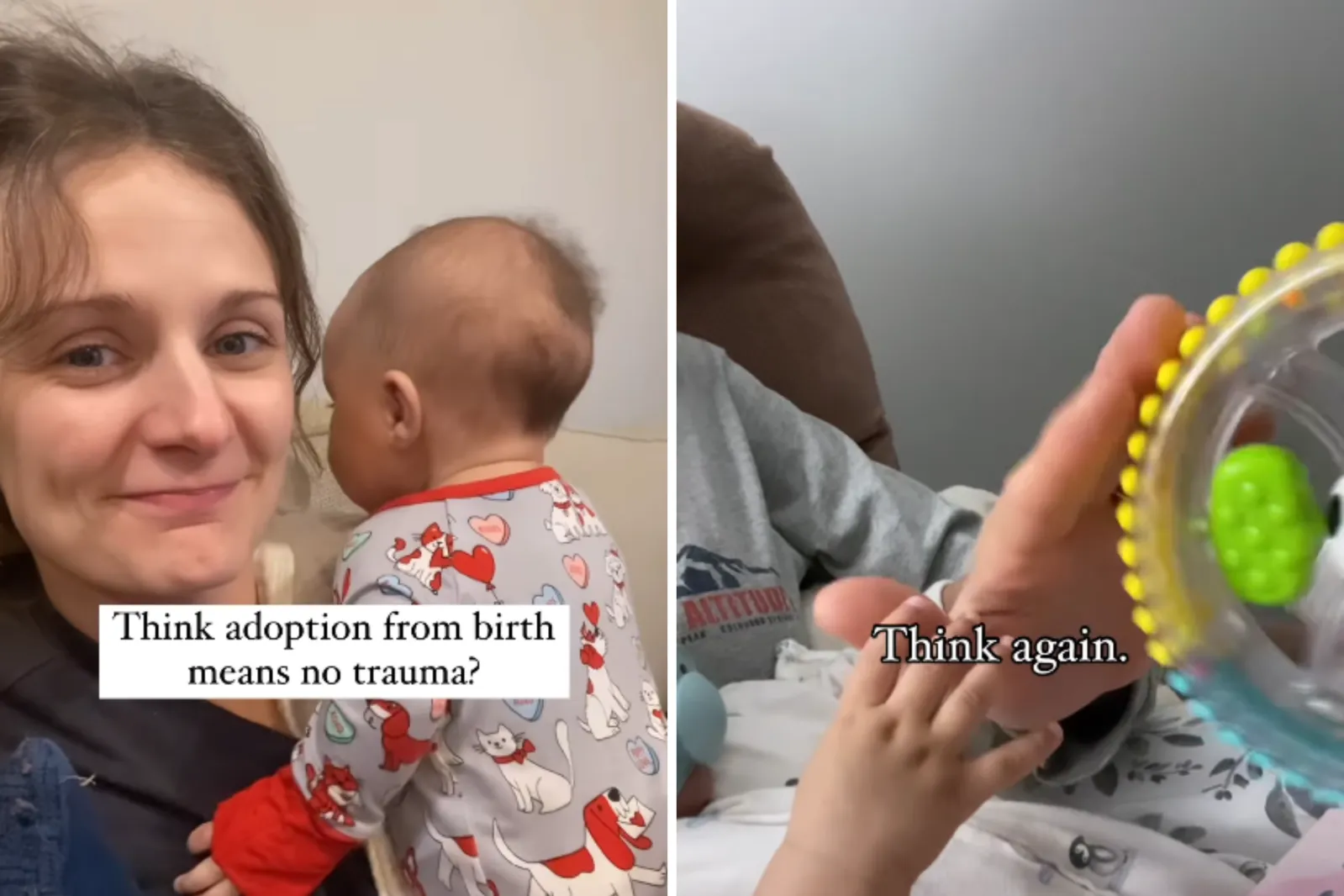
An adoptive mom is going viral for revealing how children adopted at birth can still experience trauma.
Lora Rose Buth, who works as an occupational therapist based in Kentucky, explained in a reel on Instagram that young babies can carry early experiences, such as being separated from their mothers at birth.
Buth told Newsweek that she speaks to many adoptive parents who are unaware that their child may have experienced trauma, even when they are adopted at birth.
Read More on Family & Parenting
...
"I posted the reel to bring awareness to this, so that families can understand they might need to parent their adopted children with a different perspective than they would a biological child," the 35-year-old told Newsweek.
While many people associate trauma with neglect or abuse at birth, Buth explained that it can start far earlier.
"Infants bond with their mothers in the womb. They become familiar with her voice, her smell, and heartbeat. When they are taken away from that—even for good reasons—it can affect their cortisol levels, which may be traumatic," she said.
"Research shows that even newborns feel the loss of their birth mother, with one study revealing elevated cortisol levels (aka the stress hormone) in infants separated at birth," Buth wrote in the caption of her reel.
Buth also pointed out that prenatal experiences play a significant role—positive or negative.
"Infants are impacted by what the biological mother experiences during pregnancy, whether that is a positive environment where the mother is well cared for, or a negative one involving substance abuse, lack of prenatal nutrients, or extreme stress such as domestic abuse."
While not all adopted children will face significant challenges, early experiences may lead to a heightened risk for conditions like ADHD, sensory processing issues or FASD (Fetal Alcohol Spectrum Disorder).
However, Buth added: "Many children are able to form healthy bonds with their adoptive parents."
Charlotte Bailey, a trauma specialist and psychotherapist (charlottebaileytherapies.com), agreed that children can experience trauma in utero, as stress from the mother causes elevated cortisol levels.
"While infants lack the conscious ability to recall these events, their nervous systems register the separation as a threat to safety. This prolonged activation, often referred to as pre-verbal trauma, can disrupt emotional and physiological development, as well as impair their ability to self-regulate," she told Newsweek.
Conversely, research in neuroscience and attachment theory offers hope, Bailey added.
"Consistent, nurturing, responsive care and co-regulation can calm an infant's heightened stress response, fostering safety and connection and mitigating stress to support healthy development in children affected by early trauma. Thanks to the brain's plasticity, secure relationships provide a pathway for healing," she said.
Buth told Newsweek that the amount of attention her reel received was surprising. With 5.3 million views and over 1000 comments, the reaction was polarizing.
Some users who were adopted at birth criticized Buth for generalizing.
"You do NOT speak for all of us," one wrote. Another argued that being adopted is less traumatic than being "left in an orphanage, abused or worse. Don't make adoption a bad thing."
Others were grateful to have their feelings validated by Buth's reel. "Just because it's not as traumatic as other things doesn't mean it's not traumatic at all," a third wrote.
"I'm adopted and have suffered [with] the trauma my entire life. Thank you for sharing," commented another.
Buth explained how some felt "personally attacked" by her use of the word trauma because they didn't experience this.
"I am not personally adopted, so I try to keep my information as factual as possible, but I can definitely understand why the reel was so emotionally triggering for some," she added.
View 0 Comments
Submit Correction
View Editorial & AI Guidelines