...

By Tom O'Connor
Deputy Editor, National Security and Foreign Policy
0
Share
Newsweek is a Trust Project member
See more of our trusted coverage when you search.Prefer Newsweek on Googleto see more of our trusted coverage when you search.
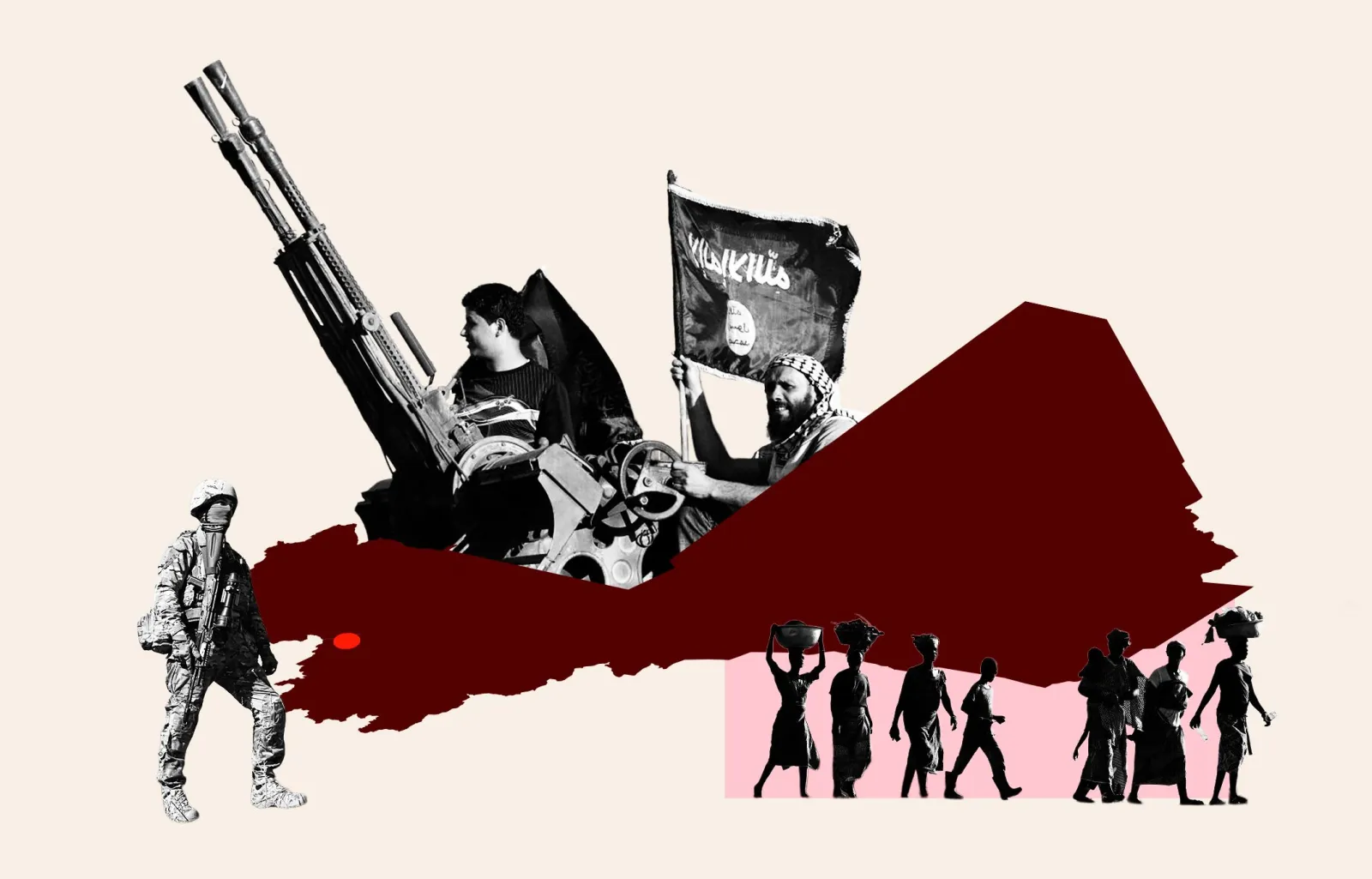
Thousands of miles from the frontlines in Ukraine, where the Kremlin's war machine is steadily grinding forward, Russian forces face a potentially catastrophic situation in the West African nation of Mali as Al-Qaeda-loyal militants close in on the capital.
Jihadi fighters of Jama’at Nusrat ul-Islam wa al-Muslimin (JNIM), or "the Support Group for Islam and Muslims," have repeatedly rebuffed attempted counteroffensives by government forces and allied personnel of Russia's Africa Corps, the state-sponsored successor of the Wagner Group private military company. In recent weeks, JNIM has effectively blockaded Bamako, targeting critical fuel convoys and supply lines.
The military-led government that just three years ago ousted French troops in favor of Moscow is now under growing pressure that some fear could lead to a total collapse of the state, handing a historic victory for Al-Qaeda and dealing a devastating blow to a region and continent dealing with several simultaneous insurgencies by Islamist factions, including various affiliates of the Islamic State militant group (ISIS).
Read More on Analysis
As the fate of Mali's 25 million people, most of which are concentrated in the still largely government-held south, hangs in the balance, some argue that it's time for Russia to bring to bear its diplomatic might where military efforts have failed and economic potential was scarce—or risk the kind of scenario that occurred nearly a year ago in Syria, where a former Al-Qaeda affiliate toppled the Moscow-backed government in Damascus.
"I think Russia is making the same mistake in Mali as it did in Syria," Anton Mardasov, associate fellow at the Washington-based Middle East Institute and expert at the Moscow-based Russian International Affairs Council, told Newsweek. "That is, Moscow should be imposing its will on a government that depends on Russian support and pushing the center toward negotiations, rather than following the authorities' lead on controversial military operations or refusing to negotiate.
"Control of the situation in Mali is important not only from an image perspective, but also from a practical point of view, as Mali is a member of the Alliance of Sahel States (AES), which includes two other countries where Russian troops are also based. Moscow can offer these countries security exports first and foremost, as it does not have extensive economic opportunities."
...
Roots of Russia's War in Africa
Prior to coups in 2020 and 2021 that ultimately brought President Assimi Goita to power, Mali had relied largely on its former colonial ruler, France, to help in the fight against Islamist militants that rose up amid a 2012 Tuareg rebellion that remains in control of large parts of the north. The French intervention, backed by a number of European and African nations, produced early successes, with the retaking of key cities, but frustration and fatigue over failures to route an entrenched insurgency fostered popular discontent, resulting in the mission's expulsion in 2022.
Goita's government simultaneously forged closer ties with Russia, leading to the deployment of Wagner Group fighters to aid in the war effort. The development fit into a trend of backlash against French military presence in the Sahel region, where coups also brought military leaders to power in Burkina Faso in September 2022 and in Niger in July 2023, leading to the establishment of the Alliance of Sahel States among the three nations in September 2023.
The same year, however, the Wagner Group would undergo its own uprising as the war launched by Russia in Ukraine in February 2022 dragged on. In June 2023, the group's leader, Yevgeny Prigozhin, long viewed as a close confidant of Russian President Vladimir Putin, staged a stunning rebel march toward Moscow in protest of Russian military leadership.
The mutiny would last just a day until Prigozhin called it off in line with a deal brokered by Belarus. He died two months later when his place crashed while traveling in Russia, and the Wagner Group was reorganized under the leadership of the state, with operations in Africa largely being transferred to the newly established Africa Corps.
While Russia's war in Ukraine continues today, the Kremlin, buoyed by gradual yet steady advances and recent breakthroughs on the frontlines in the east, appears confident in its continued ability to project power abroad, particularly in Africa.
As of July, British intelligence estimated that about 2,000 Africa Corps personnel had been deployed to Mali, armed with "over 100 pieces of major combat equipment," including "main battle tanks, multiple launch rocket systems and tactical bomber aircraft, greatly increasing the firepower available to Russian forces in the country."
The briefing, however, came as the Malian government issued a rare admission of "significant losses" following a two-day battle involving Malian forces and Russian private military operators on one side and Tuareg separatists and JNIM on the other. JNIM claimed to have killed up to 50 Russians and 10 Malian soldiers in the fight.
Such episodes have proved to be a test for Russia's partnership with Mali and ongoing efforts to take advantage of skepticism toward the West to secure greater influence across Africa.
A month earlier, in June, Putin received Goita in Moscow to sign new deals to boost diplomatic ties, trade relations and nuclear energy cooperation. The delegation also saw a meeting between the two nations' defense ministers, during which the Russian side expressed the prioritization "in enhancing security and sovereignty," and his Malian counterpart backed Moscow's narrative of the war in Ukraine as a "struggle against Nazism."
in some instances, such as another deadly ambush targeting the Wagner Group and Malian troops in July 2024, Ukrainian intelligence has claimed to have played a role in aiding insurgents.

...
Al-Qaeda's Power in Mali
Despite the enhanced security cooperation between Russia and Mali, JNIM has proved to be a resilient foe. The group that emerged in 2017 from a coalition of jihadi groups, including the former Al-Qaeda in the Islamic Maghreb, has managed to expand its traditional rural area of operations to ramp up attacks in urban centers, including a major surprise strike against Bamako International Airport in September of last year.
"It is clear that JNIM will not launch a frontal assault on Bamako," Mardasov said, "but the group's leadership has demonstrated that, through flexible tactics, it is capable of 'dividing' and 'pincering' populated areas, reaping significant dividends from the economic blockade and wearing down government forces with surprise attacks."
The group has also demonstrated its effectiveness in maneuvering through long-standing ethnic divides. While once broadly reliant on recruiting among Fulani and Tuareg minorities in Mali, "in recent years JNIM has been actively working with representatives of the Bambara ethnic group, the most numerous ethnic group in the country," Mardasov said.
"The Bambara are widely represented in the Malian government and armed forces, playing a central role in the fight against rebel groups in the ongoing civil war," he added. "However, JNIM is exploiting the long-standing trade links between the Bambara [farmers] and Fulani [herders] in Mali to build cooperation in the fight against the ruling regime."
Héni Nsaibia, senior analyst for West Africa at the Armed Conflict Location and Event Data (ACLED) monitor, noted how JNIM has "effectively combined guerrilla warfare with a broad repertoire of tactics, including the use of weaponized drones."
"Through strategic messaging, its popular outreach has broadened to a wider range of ethnic groups within its areas of influence that has grown rapidly in recent years," Nsaibia told Newsweek. "The group has also developed diverse revenue streams, making it increasingly difficult to target its financing and resourcing, which sustains its operations, which have been conducted and maintained with a relatively high operational tempo when compared to other armed actors/groups in the region."
ACLED data shared with Newsweek counted some 200 attacks, clashes, abductions and other events tied to JNIM in Mali since the beginning of September, when the group began its blockade of Bamako.

...
The Battle for the Sahel
Nsaibia also pointed out that JNIM's presence is not limited to Mali and extends to five other nations in the Sahel and coastal West Africa. He said Mali and Burkina Faso constitute the group's "primary theaters," where it "has sustained a multifront war for years against state forces and their foreign partners [Wagner/Africa Corps], pro-government militias, and jihadist rivals from the Islamic State."
While JNIM's campaign "has effectively paralyzed parts of the Malian economy and severely disrupted daily life for local populations," he noted that "the broader regional implications are also serious."
"Jihadist activity has already spread beyond the central Sahel with ripple effects in coastal West Africa, including Benin, Togo and Nigeria," Nsaiba said. "JNIM’s strategic aim appears to be the destabilization of Sahelian military regimes—particularly in Mali and Burkina Faso—with the goal of triggering popular unrest or internal coups that could lead to regime change."
"Such a shift could potentially bring to power governments more willing to accommodate the group’s demands, including the implementation of Islamic law, judicial reforms and recognition of its territorial influence," he added.
Thus far, he said, "the international community’s leverage remains limited at present, especially after successive coups and the withdrawal of international forces."
And yet the greatest challenge posed to JNIM may not even stem from the Malian government or its Russian allies, but rather rival jihadis of ISIS' Islamic State Sahel Province (ISSP). Clashes between Islamist militants have become a central feature of the conflict wreaking havoc across the Sahel and West Africa, including in Nigeria, where Boko Haram has engaged in frequent battles with a splinter faction aligned with ISIS' Islamic State West Africa Province (ISWAP).
Boubacar Ba, researcher at the Bamako-based Center for Analysis on Governance and Security in the Sahel, reported that fighting between JNIM and ISSP in Burkina Faso "resulted in hundreds of deaths" over the past week until a truce was reached.
In a note shared with Newsweek, Ba outlined the local complexities of these frontlines, with JNIM composed of three main factions "mainly made up of pastoralists from the Seno region [Mali], Jelgobè [Burkina Faso] and Tolobès [Niger]," while the ISIS fighters were represented by the Islamic State in the Greater Sahara, the former name of ISSP, alongside allies from ISWAP, "primarily from the Boko Haram group [Kanuri, Boudouma and Fulani] originating from the Lake Chad Basin region."
"Keen observers have noted that many JNIM fighters have recently joined forces with ISIS, altering the dynamics and nature of the fighting," Ba wrote. "ISIS fighters have apparently inflicted numerous casualties on JNIM and disrupted the balance of power in the region, creating a new dynamic. JNIM reinforcements have arrived from Sahelian countries but have been unable to halt ISIS' advance."
Ba warned that the conflict, which he described as "a new inter-jihadi war rooted in the history of medieval conflicts linked to ancient Islamic successions," had been largely overshadowed by JNIM's blockade of Bamako, and yet it had the potential to bring about major regional upheaval.
"This new conflict amply demonstrates the complexity of hybrid and asymmetric insurgency warfare, with its indecipherable sociological and geopolitical dynamics unfolding in the central Sahel region," Ba wrote. "This new paradigm of conflict must be taken very seriously in light of the rise of the Islamic State [ISIS] in the central Gourma region."
"This foreshadows a new geopolitical reconfiguration of the jihadi groups' war. An advance by ISIS towards the central Sahel and surrounding areas cannot be ruled out. The consequences are as serious as the ongoing, multiple, and complex attacks by jihadist groups against the countries of the Alliance of Sahel States."

...
The Cyber Front
The competing Islamist forces are not just battling on the field. Both JNIM and ISSP have brought pressed forward with sophisticated online campaigns, weaponizing social media and messaging services to spread their ideology and parade their victories.
While ISIS has built a reputation for state-of-the-art cyber strategies, now including the use of artificial intelligence, it was largely Al-Qaeda that first brought jihadi tactics into the Internet Era decades earlier. Today, JNIM carries on this tradition through a vast array of accounts on TikTok, Facebook and other platforms, as well as its own dedicated networks, particularly the Az-Zallaqa Media Foundation.
"Since 2024, JNIM has complemented its insurgency in Mali with a sophisticated information campaign that merges coordinated digital warfare, propaganda production, and narrative manipulation," Lucas Webber, senior threat intelligence analyst at Tech Against Terrorism and senior research fellow at the Soufan Center, told Newsweek.
Using such channels, "JNIM releases statements, leader messages, and video productions in Arabic, French, Fulfulde, and local languages, tailoring its content to specific audiences," Webber said, with Az-Zallaqa focusing "on official communiqués and attack claims distributed through networks."
"These productions emphasize state corruption, foreign interference, and the junta’s inability to deliver basic services, casting JNIM as an alternative authority that can provide justice and order," Webber said. "This approach blends theological framing with political commentary, reinforcing the group as both a religious and socio-political actor."
Russia, a nation known for its own cutting edge in information warfare, has thus found itself to be a frequent target of JNIM's online attacks that portray Moscow as a hostile invader, much as ISIS began to do when Russia first intervened in Syria a decade ago. Such exposure has proven capable of bringing bloodshed to Russian soil, most notably during the March 2024 attack claimed by ISIS against a concert hall outside of Moscow.
As for JNIM, its digital campaign has been especially effective in combination with the group's ongoing offensive against fuel tankers attempting to cross into Mali from Côte d’Ivoire and Senegal. Webber noted that, "in the context of the ongoing fuel blockade campaign, JNIM’s digital media apparatus has adopted a more explicitly economic and political function."
"Each convoy attack or tanker ambush is immediately followed by Az-Zallaqa statements and videos portraying the act as a targeted measure against the junta rather than the civilian population," Webber said. "By showing images of burned trucks, empty fuel stations, and urban shortages, the group dramatizes the state’s failures and claims to act on behalf of ordinary Malians."
"Social media, encrypted apps, and local radio amplify the physical impact of the blockade, deter drivers and traders from resupplying, and stoke public frustration toward the government," he added. "JNIM also propagates disinformation about official relief efforts, accusing authorities of corruption or incompetence in emergency fuel imports. Through this cycle, physical disruption fuels online propaganda, which in turn heightens the perception of state collapse."
In turn, JNIM portrays itself as able to fill the vacuum.
"JNIM also engages in on-the-ground activities that reinforce its narrative of legitimacy," Webber said. "Its media documents involvement in local economic activities, such as logging, underscoring how the group grants communities access to resources and addresses community needs."
"The group provides alternative dispute resolution, local courts, and protection services in regions where official authorities are absent or ineffective," he added. "These services, coupled with media coverage from outlets like Az-Zallaqa, strengthen JNIM’s image as a governing actor rather than solely an armed group, allowing it to position itself as both a political and social force in the region."

...
'Wait and See'
While Mali's struggle to beat back the encroaching insurgency has spurred some international debate regarding the wisdom of choosing Moscow over Paris and of breaking with the Economic Community of West African States (ECOWAS) in favor of the Alliance of Sahel States, the experience of all foreign efforts thus far has also raised questions on the feasibility of defeating JNIM on the battlefield altogether.
Much like Syria's Hayat Tahrir al-Sham and the Afghan Taliban, both of whom overcame the odds against great power interventions to take over their respective nations over the past four years, and even the Palestinian Hamas movement that now faces potential defeat after 18 years of rule in Gaza, JNIM's capacity to exploit desperate local conditions has proven largely immune to kinetic opposition, which at times may have the opposite effect.
"JNIM has succeeded because on the whole, when it expands into new areas, it finds ways to meaningfully address the needs of at least some segments of the communities it enters—it gains a critical mass of recruits by offering protection, a change in the social order, revenge against security forces or other enemies, etc.," Alexander Thurston, associate professor at the University of Cincinnati who specializes in Islam and politics in West Africa, told Newsweek.
"JNIM is also often able to build on its own momentum by capturing new weaponry, finding new economic opportunities, intimidating local civilian authorities, etc."
In this respect, Thurston identified shortcomings in the French and Russian approaches to the war.
"JNIM also succeeds because governments' responses have been fairly clumsy and brutal," Thurston said, "including not just the abusive and erratic approach of the Sahelian governments but also the narrow approach of the French intervention, which focused overwhelmingly on killing top leaders rather than on deeply thinking through what the roots and drivers of the insurgency were.
"The Russian/Wagner approach has been more brutal than the French counterterrorism missions but has had the same core logic," he added, "namely that this is a problem to be solved militarily, and so the Russians have also struggled to blunt the insurgency's momentum."
With few alternatives at hand, he argued that diplomacy may ultimately be the only answer should JNIM succeed in becoming the first active Al-Qaeda affiliate to overthrow a standing government.
"If the government does collapse, the international community has no good options, so adopting a wait-and-see attitude would be my medium-term recommendation in that scenario," Thurston said. "If JNIM proved pragmatic, perhaps there could be limited international engagement with them."
View 0 Comments
Submit Correction
View Editorial & AI Guidelines