
By Jordan King
Reporter
0
Share
Newsweek is a Trust Project member
See more of our trusted coverage when you search.Prefer Newsweek on Googleto see more of our trusted coverage when you search.
The right-wing Alternative for Germany (AfD) party is attracting the attention of Americans after Elon Musk backed it last week, amid its growing popularity in the European nation—Newsweek has looked at the odds of the party actually winning Germany's upcoming elections.
Musk's message that "only the AfD can save Germany" came after the collapse of the German coalition government, when Chancellor Olaf Scholz lost a confidence vote, triggering snap elections in February.
Read More on News
Meanwhile, Germany is still reeling from an attack at a Christmas market in Magdeburg, where Saudi Arabian national Taleb Al Abdulmohsen allegedly drove a car into the crowd, killing at least five people and injuring more than 200 others last Friday.
AfD Popularity Growing
The AfD became the first party considered by many to be far-right to come out victorious in a state election in Germany since the World War II, when it won Brandenburg in September.
While the majority of Germans see the party in a negative light, the AfD's current 19 percent favorability rating is the highest recorded in the Pew Research Center's eight years of surveys.
At the same time, other German parties have seen their popularity wane, with Scholz's Social Democratic Party (SPD)'s popularity dropping from 67 percent in 2022 to 39 percent this year, according to Pew Research Center data. And that was before the recent government collapse.
Could the AfD Win the German Election?
"There is close to a zero percent likelihood that the AfD will place first in the February 23rd general election and an even lower likelihood that they will gain an absolute majority," Eric Langenbacher, a Senior Fellow and Director of the Society, Culture & Politics Program at the American-German Institute told Newsweek.
"Of course, there are always the 'unknown unknowns' and the consequences of the recent attack on the Christmas market in Magdeburg in the deeper electoral context of widespread concerns about migration and integration might boost the AfD a little," he added.
The party is currently polling at 19 percent, according to Politico's most recent general election survey, updated on December 16.
While the AfD is ahead of the SPD (17 percent), it is substantially behind the Christian Democratic Union of Germany (CDU)/Christian Social Union (CSU), which is polling at 31 percent.
Prediction market platform Polymarket estimates that the AfD has a 14.3 percent chance of winning, while the CDU/CSU has an 85 percent chance.
Although these figures make it look unlikely that the AfD would outright win Germany's elections on February 23, the party seems set to gain more federal influence than it has ever had.
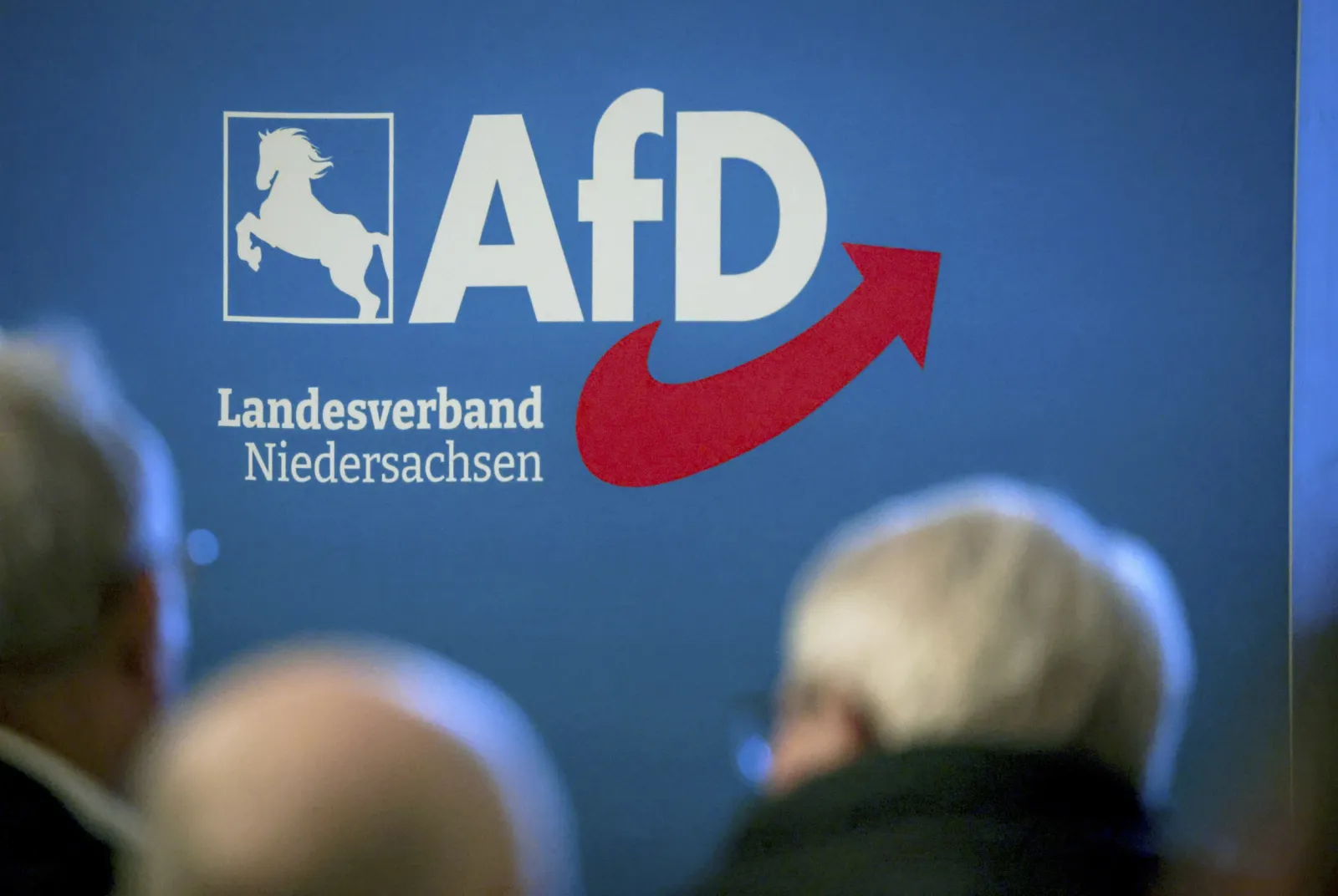
...
AfD co-chair Alice Weidel has called on Germany's "mainstream parties" (the CDU/CSU alliance and the SPD) to work with her party.
Earlier this year, she said: "We call on the CDU/CSU and the FDP to finally accept their civic responsibility and to reach an agreement with us. After all, we represent millions of voters."
Both these parties have ruled out governing with the AfD. Before the September election, in the face of the AfD's growing popularity, CDU leader Friedrich Merz repeated this pledge, saying: "Our word stands. We will not do it."
Newsweek has contacted the CDU, via email, to ask if this is still the case.
Langenbacher said: "Postwar Germany has always had coalition governments so the question is if the established parties would countenance governing with this challenger party.
"Currently, that answer is no because of an informal firewall against working with the AfD. It is possible eventually that the desire of the CDU/CSU to govern conservatively will erode this norm, but this will not happen yet in 2025."
What Is the AfD and Is It Far-Right?
The party has gained support for its anti-immigration, pro-border security positions after the 2015 refugee crisis. It promotes national security and identity, often opposing globalism and multiculturalism.
But it has been branded far-right and is currently under observation by Germany's domestic intelligence agency, the BfV, for suspected extremism, which the AfD has insisted is a political attempt to discredit the party.
In January, a media report revealed that some figures from the party attended a meeting in which extremists discussed the deportation of millions of migrants, including some with German citizenship and this triggered mass protests against the far-right.
One of the AfD's best-known figures, Björn Höcke, was charged this year with using a Nazi slogan – he denies these accusations.
AfD supporters generally have worries about the German economy, are unsatisfied with the state of the country's democracy and have a negative view of the European Union, according to the Pew Research Center.
Newsweek contacted the AfD, via email, for comment.
Update 12/24/24, 03:36 a.m. ET: This article was updated to include comment from Eric Langenbacher.
View 0 Comments
Submit Correction
View Editorial & AI Guidelines