...


By Paula J. Dobriansky and Natalie Gonnella-Platts
0
Share
Newsweek is a Trust Project member
See more of our trusted coverage when you search.Prefer Newsweek on Googleto see more of our trusted coverage when you search.
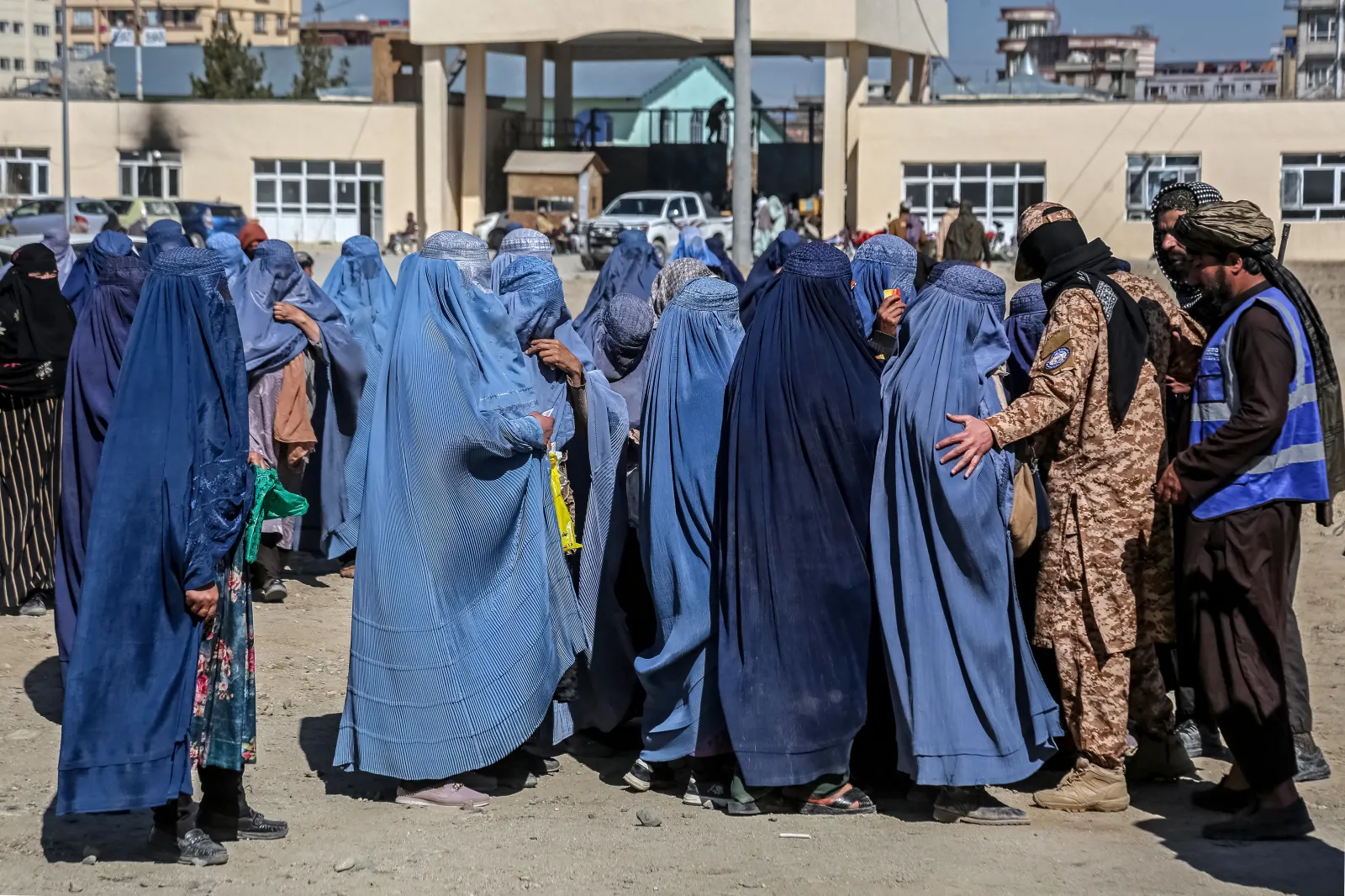
Imagine a society in which women’s laughter in public is outlawed. One where showing their faces is a crime. A place where female citizens are forbidden from school or a job, moving about freely, worshipping in public or speaking to friends and neighbors.
In this dystopia, slavery is legal, music and free thought are banned, domestic violence is encouraged and extremism is rewarded.
We cannot forget that this is the reality for women and girls in the Taliban’s version of Afghanistan in 2026. It’s unfathomable on a personal level. It also presents a tremendous security threat. Countries that subjugate women are less stable, peaceful and prosperous. From Iran to Yemen to the Democratic Republic of Congo, violence and persecution of women and girls have been eagerly embraced by illiberal actors with catastrophic impacts at local and global levels. But nowhere in the world is the state-based oppression of women more severe than in Afghanistan today. And it’s why American and international leaders must recommit to supporting Afghan women and increasing pressure on the Taliban.
Read More on Opinion
Leveraging our longstanding policy work in support of Afghan women and children, the George W. Bush Institute is launching the U.S.-Afghan Women’s Coalition in support of this critical need. This work builds on the tremendous legacy of the U.S.-Afghan Women’s Council, a public-private partnership that for nearly a quarter century has convened government officials, civil society advocates and private sector leaders in Afghanistan and the United States to improve the lives of Afghan women and children. In the spirit of the council, the coalition aims to connect, inform and steward action amid the Taliban’s vicious assault on the Afghan people.
...
As they have for decades, Afghan women refuse to submit to the brutality that has constricted their lives since the Taliban returned to power in 2021. Under the Taliban reign of terror in the 1990s, many brave women formed underground schools and disguised their girls as boys to ensure access to education, critical thinking and free thought. They organized home clinics and health trainings despite immense resource challenges. They secretly ran businesses—like tailoring services and bakeries—providing for their children and their communities.
Every one of these actions was a crime under the Taliban’s Neanderthal ideology.
After the regime fell in 2001, these same women and many others stepped into the open and worked to catalyze access and opportunity for others. They directly contributed to the development of infrastructure, the advancement of rule of law and accountability and the protection of personal freedoms.
The achievements were extraordinary. In 20 short years, Afghan women moved the needle in ways that transformed their well-being and their society as a whole.
Of course, significant challenges remained, but the progress in such a short period of time was awe-inspiring.
Maternal and infant mortality rates plummeted. Student enrollment grew nearly 10-fold by 2016. Women emerged as breadwinners, entrepreneurs and economic innovators pulling their families and communities forward. As a result, support for women’s suffrage, education and employment hit record levels by 2019, at 89.3 percent, 86.6 percent and 76 percent, respectively, according to the 2019 Survey of the Afghan People. By 2021, Afghan women made up almost a quarter of the country’s workforce and held 27 percent of legislative seats—above the global average.
In every way, these accomplishments, and the women behind them, matter—for peace, prosperity and stability.
That’s why the Taliban so viciously seek to erase female Afghans from public life. These women are a direct threat to the regime’s extremist ambitions and widespread use of corruption and control.
“Afghan women know, through hard experience, what the rest of the world is discovering: The brutal oppression of women is a central goal of the terrorists,” as Mrs. Laura Bush so compellingly stated in her 2001 radio address.
Coordination, inclusion and targeted action remain critical, just as they were when the U.S.-Afghan Women’s Council began its work nearly 25 years ago.
Policymakers and the United Nations should be doing everything possible to ensure the meaningful representation of Afghan women in any discussions on the current situation in Afghanistan. This is critical when it comes to any negotiations on regional security or the ongoing Doha process meetings (structured dialogue between the international community and Taliban officials) led by U.N. entities.
Targeted sanctions against Taliban members should also be thoroughly reviewed and expanded by national governments and the U.N. Security Council, especially as those most responsible for the Taliban’s abuses corruption and extremist ideology currently face few if any restrictions.
Countries must also stand behind their commitment to nonrecognition. Too often, bilateral actions undermine global solidarity to deny the Taliban legitimacy. Since the 2021 international withdrawal, a growing list of countries has named ambassadors, granted embassy access, posed for photo opportunities and directly coordinated with Taliban officials on issues like immigration and even education and sport (despite female Afghans being barred from both).
Most importantly, public and private sector institutions should pursue every opportunity to collaborate with Afghan human rights advocates and women-led organizations on mutual goals.
Solidarity with Afghan women is more imperative now than ever. As they always have, these women and the generations they have raised in their image will continue to resist in the hope of a more free and fair future for all. They deserve meaningful support.
Paula J. Dobriansky is the former under secretary of state for global affairs in the George W. Bush administration and the first co-chair of the U.S. Afghan Women's Council.
Natalie Gonnella-Platts is the director of global policy at the George W. Bush Institute.
The views expressed in this article are the writers' own.
View 0 Comments
Submit Correction
View Editorial & AI Guidelines