10
Loading video...

By Raymond Sheen
0
Share
Newsweek is a Trust Project member
See more of our trusted coverage when you search.Prefer Newsweek on Googleto see more of our trusted coverage when you search.
I am tired of hearing AI’s enormous price tag treated as evidence that the technology has failed in terms of cost effectiveness. It has not. We are paying the upfront cost of a transformation that will reshape how work gets done, and that cost will hurt.
The real danger is not spending too much today. It is refusing to change while everyone else learns how to work differently.
I have seen this pattern before. During the dot-com era, businesses spent millions building websites, e-commerce operations, and digital marketing systems before the returns were obvious. Some investments failed. Others took years to mature.
Read More on Leadership Insights
But it was companies such as Amazon, which stayed with the transformation, that ultimately changed their industries.
Becoming a change maker has never been cheap.
AI is now entering that same uncomfortable middle ground.
...
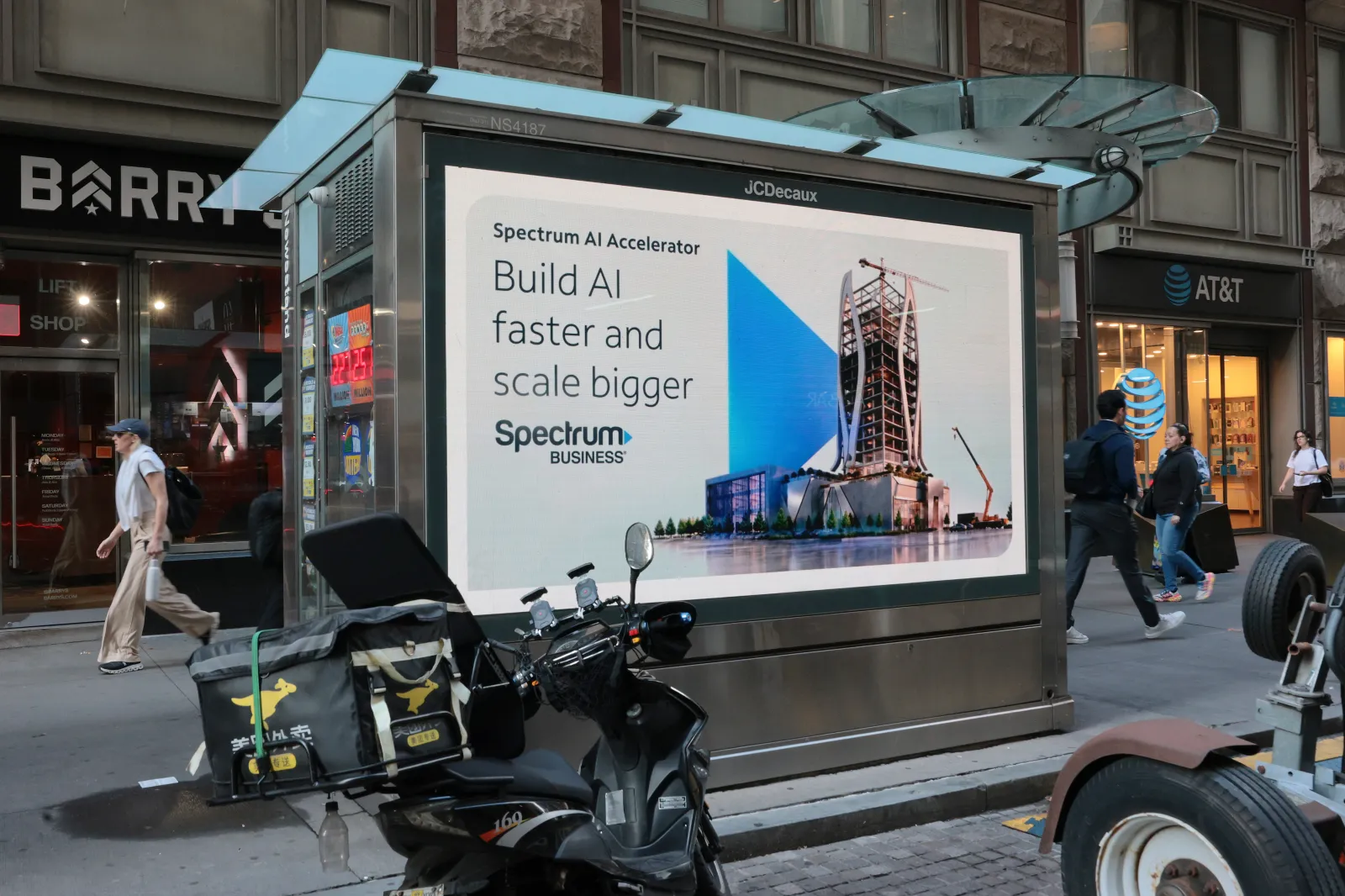
Forbes reported that more than 142,000 technology jobs were eliminated in the first five months of 2026 while major technology companies committed roughly $700 billion to AI infrastructure. That raises a legitimate question: Are companies cutting people because AI can do their jobs, or because leaders believe AI eventually will? Those are two very different decisions.
Workers worry about disappearing jobs. Young people worry that the first rung of the career ladder is disappearing. Those concerns are real. We should invest intelligently and bring people through the transition. But I reject the idea that the answer is to stop investing in AI.
Where Companies Are Going Wrong
Here is where companies are getting into trouble. AI is excellent at routine work, research, drafting, summarizing, administrative processes, and other defined tasks. It becomes less reliable when it has to make decisions in a Volatile, Uncertain, Complex, and Ambiguous (VUCA) world.
A model can learn the normal cases. Business leaders still have to handle the exceptions, incomplete information, changing customers, and problems nobody saw coming.
That is why firing people before AI can actually perform their entire jobs is backward. Use AI to remove repetitive work and give people more time for judgment, innovation, customer relationships, and problem-solving. Keep humans in the foreground. Put AI in the background where it can build capacity.
The numbers point in the same direction. According to KPMG’s June 2026 Global AI Pulse, only 7 percent of leaders reported established AI return on investment (ROI). Yet organizations with CEO accountability for AI-informed decisions reported established ROI at 14 percent, compared with 4 percent among organizations without that accountability.
Leaders with strong cost visibility were five times more likely to report ROI. The message is clear: AI investment needs ownership, measurement, and discipline.

...
That discipline must reach education. We cannot keep sending graduates into a workplace designed around entry-level tasks that machines increasingly perform. Students need specialized skills, adaptability, critical thinking, judgment, and the ability to work alongside AI from day one. Employers also need to rethink entry-level roles as training grounds for uniquely human capabilities, not disposable labor.
Individuals have a choice, too. Fear can freeze you, or it can force you to adapt. Learn the tools. Understand your industry. Build the skills AI struggles to replicate: trust, persuasion, creativity, leadership, relationship-building, and judgment under uncertainty.
Business leaders must make the same choice. Do not treat AI as a replacement program or a software purchase. Treat it as a new member of the workforce. Define its responsibilities. Train your people to use it. Measure what it saves and what it produces. Keep human beings accountable for consequential decisions.
Choose Well And Reap The Rewards
If we do this well, the payoff is enormous: lower routine costs, faster learning, stronger customer relationships, more productive workers, and organizations capable of doing more with the same resources.
If we do it badly, we get the opposite: hollowed-out talent pipelines, frightened workers, expensive systems nobody trusts, and companies that discover too late that automation cannot replace institutional knowledge.
We are already living in a VUCA world. Our organizations and education systems must catch up.
Invest in AI, invest in people, measure the results, and redesign work around what humans and machines each do best. The companies that make that transition will build the future.
The ones that refuse will eventually have to buy their way back into it.
Raymond Sheen is the president of Product & Process Innovation, Inc. (PPI), a training, consulting, and advisory firm focused on digital transformation, project management, and operational improvement. The views expressed in this article are his own.
View 0 Comments
Submit Correction
View Editorial & AI Guidelines