...

By Dan Gooding
Associate News Editor
0
Share
Newsweek is a Trust Project member
See more of our trusted coverage when you search.Prefer Newsweek on Googleto see more of our trusted coverage when you search.
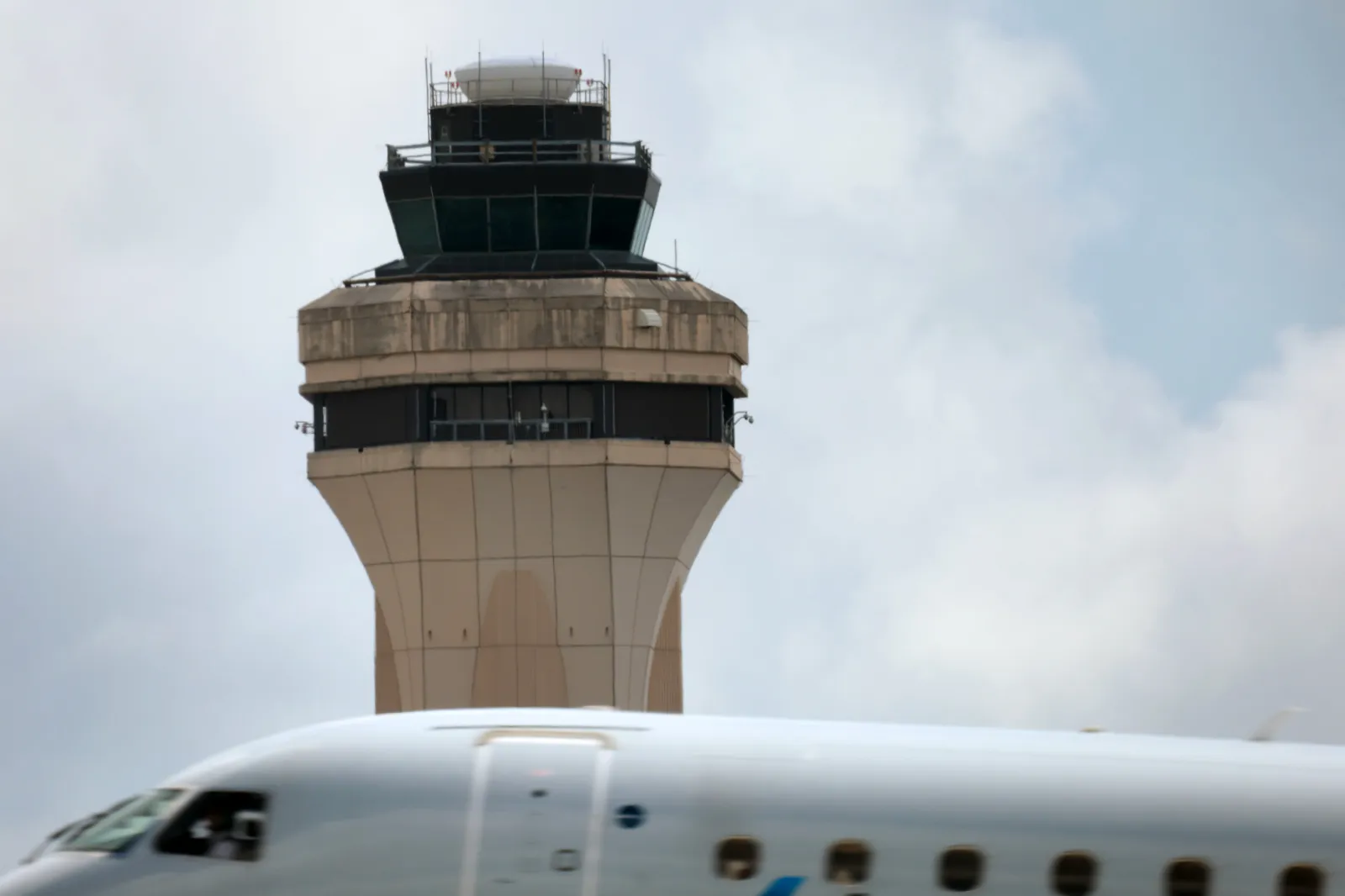
U.S. Transportation Secretary Sean Duffy revealed plans to upgrade air traffic control facilities at eight airports across the country on Friday, costing more than $835 million.
The investment is part of a wider effort to upgrade the country's aging air traffic control system and infrastructure, something the Trump administration has focused on after multiple incidents—some fatal—at airports around the country over the past 18 months.
Duffy said the sites had been chosen based on safety and efficiency needs, with a promise that a new air traffic control system would also be installed as part of the projects.
Read More on U.S.
“This administration is laser focused on ushering in the Golden Age of Transportation and investing in our aging air traffic control towers is critical to that mission,” Duffy said in a press release. “Under the last administration’s watch, these facilities were neglected and left to deteriorate rapidly. We need a system and supporting infrastructure that is built for the future to attract top talent for our air traffic control workforce.”
Which Airports Will See Upgrades?
The Department of Transportation (DOT) said the Federal Aviation Administration (FAA) would replace facilities in:
- Charleston, South Carolina
- Grand Forks, North Dakota
- Greer, South Carolina
- Lawton, Oklahoma
- Pocatello, Idaho
- Sacramento, California
- San Jose, California
- Tamiami, Florida
More than $750 million will be invested in replacing air traffic control towers and terminal radar approach controls, the DOT said. Elsewhere, federal contract towers at 41 airports across 24 states will see a joint investment of $85.8 million.
“Our controllers are the best in the world and they deserve to work in the best, most modern facilities,” FAA Administrator Bryan Bedford said Friday in a press release. “These investments will replace aging infrastructure with modern, state-of-the-art towers and equipment that strengthens safety, improves reliability, and supports the future of the National Airspace System.”
The Trump administration has been racing to improve air traffic control safety, including hiring new staff amid dwindling numbers and continued reports of stress.
The airports listed by the DOT Friday are also undergoing other enhancements and upgrades.
Charleston International Airport
Charleston International Airport in South Carolina is in the midst of a sweeping set of upgrades aimed at improving capacity, security and passenger convenience as traffic grows, per local reports. The airport is currently installing a third explosive detection system as part of its baggage handling operation, a project that will significantly boost screening capacity.
At the same time, airport leaders are moving forward with broader modernization plans under the “CHS 2029” expansion program. These include the ongoing West Gates expansion, which will add gate capacity and improve terminal flow, and the opening of a redesigned rental car pavilion to streamline ground transportation. Taken together, the projects reflect a long-term push to accommodate growth in both leisure and business travel while improving efficiency across the passenger experience.
...
Grand Forks International Airport
Grand Forks International Airport in North Dakota is undergoing a mix of infrastructure investment and policy changes that could reshape how services are provided on-site. Officials have approved adjustments to minimum standards for aircraft service providers—moves that have drawn mixed reactions from operators but are intended to encourage competition and flexibility within the airport’s aviation services sector.
Meanwhile, the airport is set to receive roughly $15 million in funding for infrastructure improvements, which will support upgrades to facilities and operations. These investments are expected to enhance the airport’s long-term viability and service capacity, particularly as regional airports compete to maintain air service and modernize aging infrastructure.
Greenville-Spartanburg International Airport
Greenville-Spartanburg International Airport in Greer, South Carolina, is expanding rapidly following a surge in passenger demand, recently surpassing 3 million annual travelers for the first time. That milestone has accelerated a series of capital improvements, including the opening of a new parking garage and consolidated rental car facility designed to simplify ground access and improve the overall passenger flow.
Looking ahead, the airport is preparing for significant airfield work, with planned runway closures this year to carry out critical rehabilitation. The project is considered essential to maintaining safety and supporting continued growth. Together, the upgrades highlight how GSP is transitioning from a mid-sized regional airport into a higher-capacity travel hub.
Lawton-Fort Sill Regional Airport
At Lawton-Fort Sill Regional Airport in Oklahoma, recent developments have been shaped in part by safety concerns following a deadly plane crash in 2025, which prompted federal investigation into the circumstances surrounding the incident. While the preliminary findings are still being evaluated, the crash has underscored the importance of continued investment in airport infrastructure and safety systems.
New federal funding opportunities from the DOT could play a role in addressing these concerns by supporting upgrades such as improved runway conditions, navigation aids and safety technology. While not directly tied to the crash, such investments are often aimed at reducing risks and strengthening safety standards at smaller regional airports like Lawton.
Pocatello Regional Airport
Pocatello Regional Airport in Idaho has recently balanced infrastructure maintenance with growing national recognition for its operational performance. The airport temporarily closed its main parking lot to complete needed repairs, a short-term disruption intended to improve long-term accessibility and facility quality.
At the same time, Pocatello has earned national recognition for reliability—highlighting its strong on-time performance and consistent service despite its smaller size. The combination of targeted upgrades and operational success positions the airport as a standout among regional facilities, demonstrating how smaller airports can maintain high standards while investing in incremental improvements.

...
Sacramento International Airport
Sacramento International Airport in California is in the midst of a major, multi-year transformation as it prepares for continued record-breaking passenger volumes. Current construction includes a new pedestrian bridge at Terminal B and a large parking garage with thousands of spaces, both aimed at easing congestion and improving access during peak travel periods.
The projects are part of a broader pipeline of upgrades that includes expanded concourses, roadway improvements and a future consolidated rental car facility. With travel demand continuing to rise, officials are focusing on both near-term capacity improvements and long-term expansion, positioning the airport as a key Northern California hub capable of handling sustained growth.
San José Mineta International Airport
San José Mineta International Airport in California is leaning heavily into technology and passenger experience enhancements as part of its latest evolution. The airport has introduced an AI-powered humanoid robot to assist travelers, reflecting a push to modernize customer service and streamline navigation through terminals.
Additionally, the airport has embraced innovation in ground transportation, authorizing autonomous vehicle services to transport passengers between terminals—making it one of the first airports to integrate this kind of technology at scale. Alongside these efforts, San José is expanding its retail and dining offerings, signaling a broader strategy focused on convenience, automation and enhancing the overall traveler experience.
View 0 Comments
Submit Correction
View Editorial & AI Guidelines