...

By Khaleda Rahman
National Correspondent
0
Share
Newsweek is a Trust Project member
See more of our trusted coverage when you search.Prefer Newsweek on Googleto see more of our trusted coverage when you search.
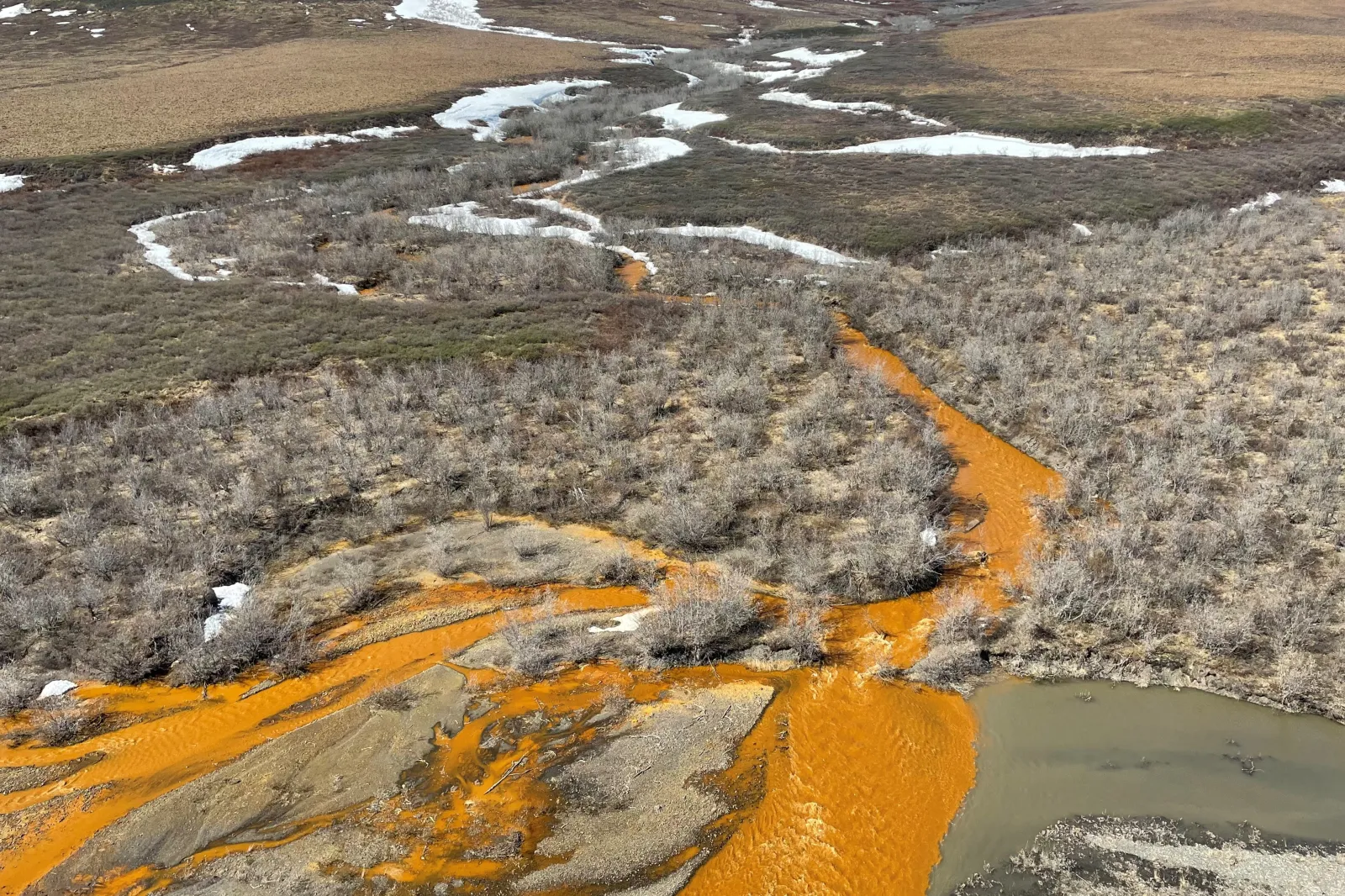
Alaska's rivers are turning bright orange, and scientists are working to figure out exactly why.
In recent years, scientists have observed streams and rivers that have turned a vibrant orange color across Alaska's Arctic region. The recent discoloration of the Salmon River, a designated national wild and scenic river in Kobuk Valley National Park, is of particular concern, according to the National Park Service. Data showed the river's water was pristine before 2019, but in the summer of that year the Salmon's clear waters suddenly turned orange-green.
This is also happening to rivers and streams throughout the Brooks Range in Alaska, according to Scientific American, and will likely occur in other parts of the Arctic.
Read More
Hidden Mountain Range Discovered in World’s Strongest Ocean Current4 min read

Is Wildfire Decline in Forest a Clue to the Solution?4 min read

Bubblegum-Pink Lakes to Become More Common as Climate Changes5 min read

...
The magazine's new report on the phenomenon said scientists who have studied the rusting rivers believe climate change is ultimately to blame. Studies have shown that the Arctic is warming at a faster rate than the rest of the world.
Those rising temperatures are thought to have caused the thawing of permafrost—ground that usually remains perennially frozen—in the national park and beyond. Still, how permafrost thaw has caused the rivers to turn orange remains unknown.
Some researchers think acid from minerals is leaching iron from bedrock, and when those sediments hit running water and air, they oxidize and turn a rusty orange color.
Another theory is that the thawing of permafrost soil under a wetland allows bacteria to reduce oxidized iron. Reduced iron, unlike oxidized iron, is soluble in water. When groundwater carries it into an oxygenated stream, it becomes oxidized again, turning the stream orange, according to Scientific American's report.
Finding the cause of the phenomenon is important to gain an understanding of what the ecologic impact could be, including the risk it may pose to wildlife in the rivers and the communities that rely on them for fish and drinking water.
Many of the tributaries of the Wulik River have been turning orange, Scientific American said, which could have a significant impact on Kivalina, a village of 444 residents who need the river for water and fish.
"It's fascinating from a scientific point of view, but from an emotional point of view it's sad," Roman Dial, a biology and mathematics professor at Alaska Pacific University, told the magazine while speaking about the changes he's seeing. "The alarming thing is how far our human reach is, in a big way."
Newsweek has contacted U.S. Geological Survey (USGS) researchers for comment via email and Dial via a contact form on the Alaska Pacific University's website.
The USGS is conducting a study documenting occurrences of orange streams and rivers in Alaska and the timing of their onset.
The study aims to test multiple hypotheses related to their cause and their connection to warming and thawing landscapes, the USGS's website says, and will consider the implications for water quality and ecosystems.
View 0 Comments
Submit Correction
View Editorial & AI Guidelines