...

By David Averre
0
Share
Newsweek is a Trust Project member
See more of our trusted coverage when you search.Prefer Newsweek on Googleto see more of our trusted coverage when you search.
Alex Ovechkin is facing a torrent of criticism after American media discovered he had appeared in an election campaign ad for Vladimir Putin’s United Russia party ahead of this week’s Russian elections.
Facing the cameras last night, the Washington Capitals captain and future NHL Hall of Famer insisted he "wasn’t into politics," and just supports his country, adding he wants "peace and love for everyone."
This is, of course, nonsense. So is the tsunami of outrage from anyone calling for his punishment and dismissal.
Read More on Analysis
Ovechkin didn’t threaten anyone, incite violence or express hatred against Ukrainians. He made a peaceful partisan endorsement—it just happened to be one that millions of Americans find repellent.
If that alone is enough to decide he should no longer be allowed to play hockey, then there are many athletes at the peak of American sport who must also be shown the door.
Peace, Love and Putin
Ovechkin does not actually speak in the United Russia advert. He didn’t need to.
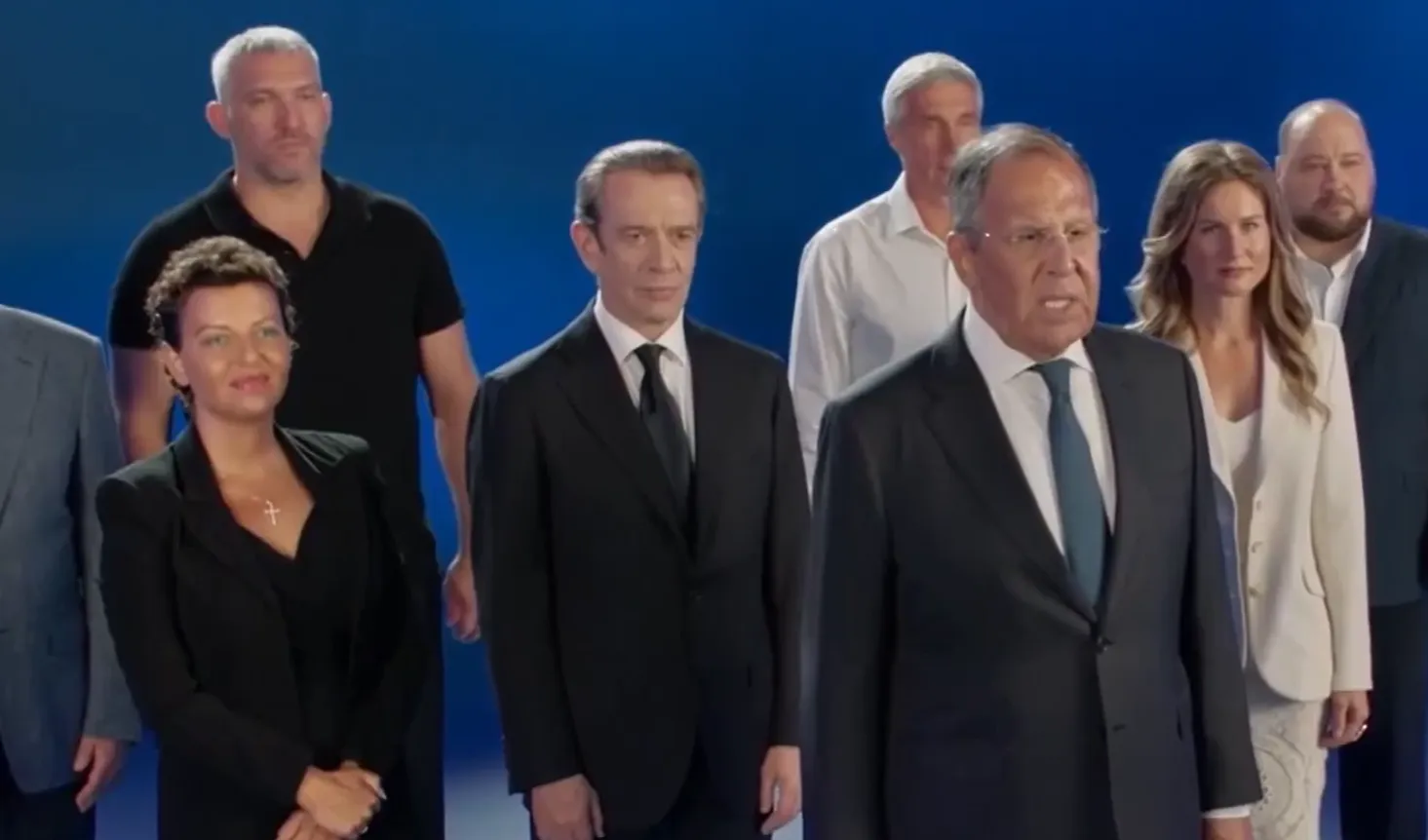
The NHL's all-time leading goal scorer stands by Russia’s foreign minister Sergei Lavrov, who delivers a message warning opponents of Moscow to "expect no mercy, we will rise together, as we do today." Besides Ovechkin, the Kremlin official was flanked by luminaries such as Editor-in-Chief of RT Margarita Simonyan, actor Vladimir Mashkov and singer Tatyana Kurtukova.
When pressed by journalists this week, the 41-year-old’s rationale for supporting United Russia was simply: "I am Russian, I support my country." He followed this with a string of empty platitudes that included "I hope peace and love for everybody," "I’m not into politics," and "it doesn't matter who you are, American, Russian or Ukrainian. I hope everything's gonna be good."
...
Unfortunately for him, supporting United Russia does not equate to simply supporting your country—no matter how much Putin may want that to be true. Nor can Ovechkin claim his actions aren’t political in nature.
The hockey star didn’t appear in an ad for the Moscow board of tourism. He openly supported Russia’s dominant political party, synonymous with a man who has effectively ruled the country for a quarter century and whose armed forces are leading an imperial conquest of a neighboring sovereign state while routinely hitting its civilians with drones and missiles.
"Peace and love" doesn’t cut it, I’m afraid. Neither does the double standard Ovechkin is being held to.
Say Whatever You Want, Except That
When the ad surfaced, Republican Rep. Joe Wilson wrote to NHL Commissioner Gary Bettman and Washington Capitals owner Ted Leonsis asking the league to review Ovechkin’s appearance and clarify its rules on players participating in foreign political campaigns. Hall of Fame goalie Dominik Hasek, a longtime critic who has previously called for Russian NHL players to be suspended, said the advert amounted to support for Russia’s war.
Criticism is fine. Punishing Ovechkin for his political activism is another prospect altogether.
If the rule is that professional athletes should not campaign for politicians or parties, American sport has never applied it consistently. Stephen Curry appeared with his family at the 2020 Democratic National Convention and explicitly endorsed Joe Biden. LeBron James previously campaigned for Hillary Clinton in Ohio. Nobody seriously suggested either man should be thrown out of professional sport.
Related Story
Putin’s New Warrior Class Is Coming for Russia’s Elections—and Maybe Him
Still not convinced? Consider the case of the NBA’s Nikola Jokic.
In 2023, while playing for the Denver Nuggets, Jokić’s name appeared among more than 2,000 prominent Serbian figures backing an electoral list for the party of Serbian president Aleksandar Vučić, who personally thanked Jokić and his brothers for their support.
That election was hardly an immaculate democratic exercise. International observers said it was dominated by Vučić’s involvement and his ruling party’s "systemic advantages" to sway the election, including a biased media, pressure on public employees, and misuse of public resources.
Nobody demanded the NBA investigate whether Jokić remained fit to play basketball.

...
Keep the Same Energy
Granted, Russia’s war against Ukraine makes Ovechkin’s endorsement of United Russia considerably more controversial. But it is hardly as if we’re just discovering where his loyalties lie.
The hockey star has openly supported Putin since 2017, when the Washington Capitals stalwart launched "Putin Team," a social campaign to unite "people who are proud of their country and want to make Russia stronger." Back then, he used almost exactly the same defense he is using now: "I just support my country."
That didn’t stop the Capitals from handing Ovechkin a five-year, $47.5 million contract in 2021—four years after the Putin Team incident, and months before Russian forces launched their full-scale invasion of Ukraine. This July, Washington signed him again to a deal capable of paying him $9 million in salary and bonuses and celebrated his return for a 22nd season as the longest-tenured athlete in D.C. sports.
Questioning Ovechkin’s woeful defense of his actions is entirely justified. Ukrainian fans can despise him. NHL fans can boo him. Journalists are perfectly entitled to ask how campaigning for United Russia alongside Lavrov squares with "peace and love."
However, that criticism must not become punishment, and anyone advocating the opposite is a hypocrite.
We’ve watched Ovechkin support Putin for years. That didn’t stop anyone from paying him tens of millions of dollars, making him the face of a franchise, and cheering while he rewrote the NHL record books.
If this week’s political endorsement is finally where professional sport draws the line, write that rule down and apply it to every athlete who campaigns for a politician.
If not, then Ovechkin can take the boos, answer the questions—and keep playing hockey.
View 0 Comments
Submit Correction
View Editorial & AI Guidelines