...

By John Feng
China Editor
0
Share
Newsweek is a Trust Project member
See more of our trusted coverage when you search.Prefer Newsweek on Googleto see more of our trusted coverage when you search.
The United States has continued to keep tabs on North Korea with an hourslong reconnaissance flight along the Korean demilitarized zone—the second such operation in a week.
The sortie was flown by an RC-135U Combat Sent, one of only two still operated by the U.S. Air Force. It left a base in Japan on Thursday morning and spent about 90 minutes in South Korean airspace, just south of the DMZ, landing six hours later, according to aircraft-tracking website Flightradar24.
Read More on World
Pyongyang has been increasingly vocal in opposing Washington's military training with Seoul. The allies this year said they stepped up the scope and scale of their annual air, sea and ground drills with an eye on possible provocations by North Korea.
Kim Jong Un's regime says the U.S.-South Korea treaty alliance is a threat to its national security. The heavily sanctioned country has responded with repeated weapons tests, leading to a further deterioration of inter-Korean ties.
The Boeing-built Combat Sent, first flown in the Cold War, was designed for electronic intelligence collection and carries on board "a minimum of 10 electronic warfare officers," the Air Force says.
Its latest flight to the DMZ began at Kadena Air Base, on the Japanese island of Okinawa, which hosts about two-thirds of the 50,000 or so U.S. troops stationed in the country.
The six-hour round trip from the East China Sea to the Sea of Japan—known in both Koreas as the East Sea—would have covered at least 2,000 miles, or roughly half the aircraft's stated operational range.

...
The U.S. Department of Defense does not comment on specific operations. South Korea's Defense Ministry could not be reached for comment before publication.
North Korea's embassy in Beijing did not immediate return a written request for comment about the flight, which remained at least 30 miles south of the de facto inter-Korean border.
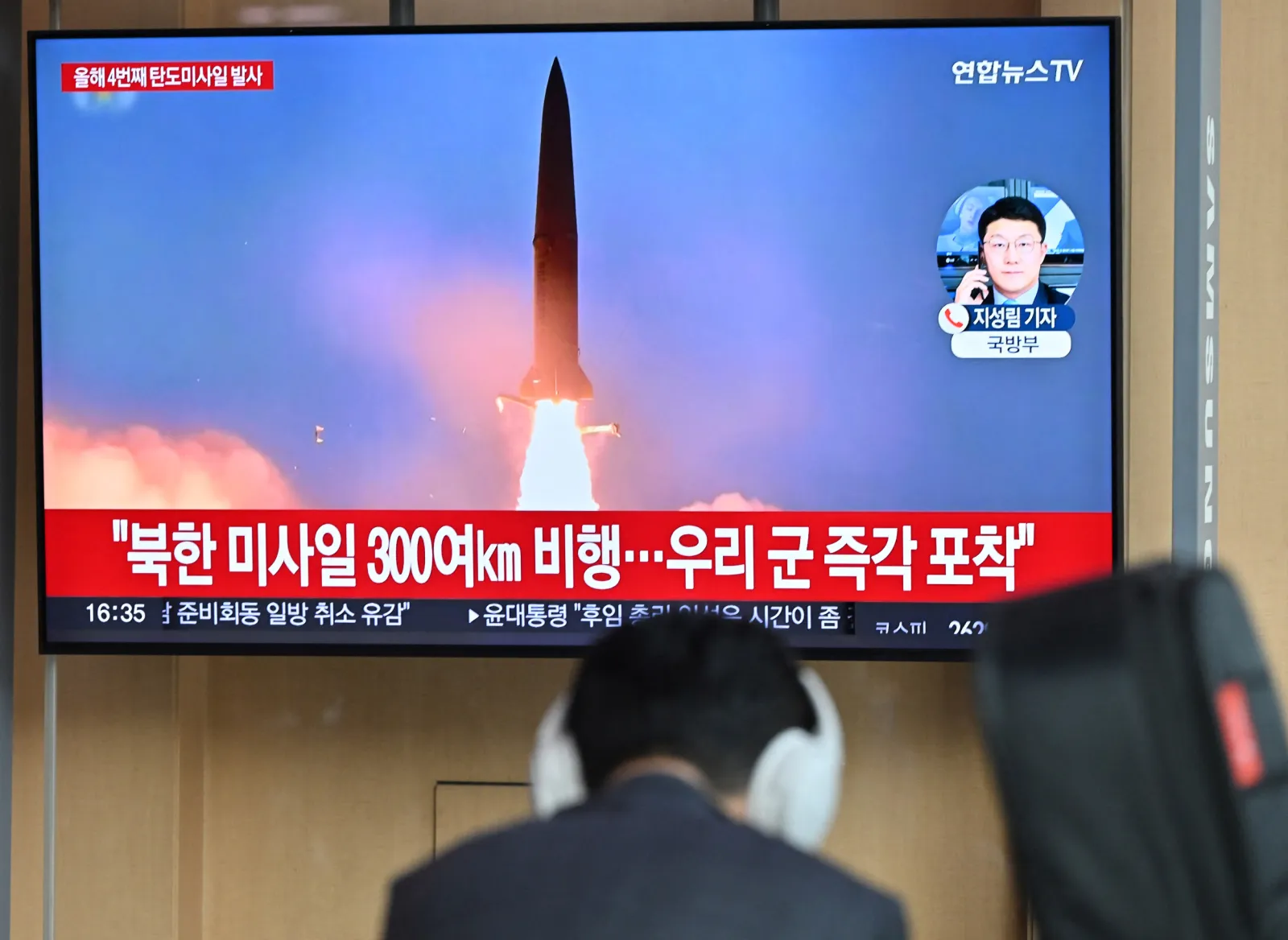
The Air Force sent the same Combat Sent to the DMZ on May 17, aircraft data showed, on the same day the South Korean military said the North launched suspected short-range ballistic missiles into the Sea of Japan.
North Korea last fired short-range weapons into its eastern seas in April, ignoring U.N. Security Council resolutions that prohibit Pyongyang from developing ballistic and nuclear technologies.
At the young age of 40, Kim is far and away the North Korean leader who has tested the highest number of "strategic missile systems," those capable of delivering a minimum payload of 1,100 pounds over at least 185 miles, according to the North Korea Missile Test Database maintained by the James Martin Center for Nonproliferation Studies.
Since 1984, North Korea has conducted at least 269 tests of these systems, including failed attempts, and Kim has been responsible for nearly 90 percent of them, the project's data showed.
South Korean authorities said on Friday that the North was preparing to put its second military spy satellite into orbit, citing preparations apparently underway at a launch site in the country's northwest, near the Chinese border.
View 0 Comments
Submit Correction
View Editorial & AI Guidelines