...

By Joe Edwards
Reporter
0
Share
Newsweek is a Trust Project member
See more of our trusted coverage when you search.Prefer Newsweek on Googleto see more of our trusted coverage when you search.
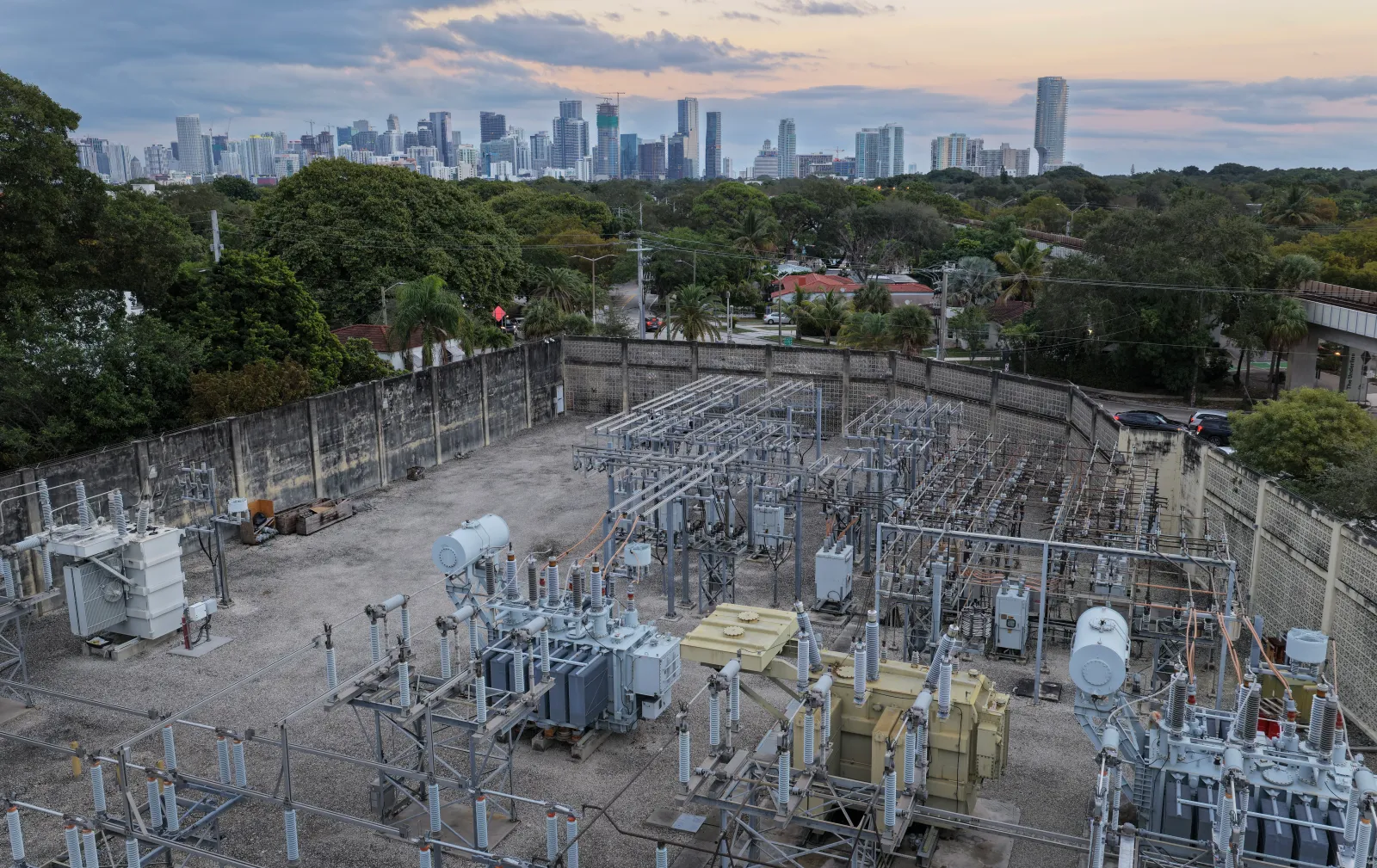
The rapid buildout of AI-driven data centers across the U.S. is increasingly colliding with local concerns about who pays for the infrastructure and resources that the facilities require—and how communities live alongside them.
As data centers expand and concentrate demand in specific regions, bodies have been warning that the growth can translate into higher household utility costs. At the same time, local controversies suggest opposition is shifting from online frustration to public meetings, street demonstrations and policy fights.
What AI Data Centers Are
AI data centers are purpose-built to train, deploy and deliver AI, using advanced compute, network and storage architectures that can handle intense AI workloads. These systems can require massive electrical power and advanced cooling to prevent outages and overload.
Read More on News
Across the U.S., there are now more than 4,200 data centers, according to Data Center Map, with more than 600 in Virginia alone.

...
Florida Acts as Maryland Warns of Bill Increases
In one recent example of state-level action, Florida Governor Ron DeSantis last week signed SB 484, which directs state regulators to ensure that large data center customers pay the full costs of required electrical infrastructure, transmission upgrades and system expansions, rather than shifting those expenses onto residential utility bills.
DeSantis framed the measure as a fairness issue, saying individuals should not pay “one more red cent” for electricity because of a hyper-scale data center, arguing that the “most wealthy companies in the history of the world” should not be subsidized by household ratepayers.
Florida’s move came amid warnings in other states about the scale of potential bill impacts. A state agency in Maryland said residents could face a collective $1.6 billion increase in energy bills over the next decade to subsidize grid costs tied to feeding data centers.
Maryland’s Office of People’s Counsel—an independent agency representing residential electricity consumers—argued in a complaint filed with the Federal Energy Regulatory Commission (FERC) that the way PJM Interconnection allocates transmission costs can leave Maryland customers paying for projects largely driven by data center demand, including outside the state.
Grid Reliability Watchdog Flags Risks
The debate is also reaching the bodies responsible for keeping the lights on. The North American Electric Reliability Corporation (NERC) issued a rare Level 3 Essential Action Alert this month warning that a surge in large “computational loads”—such as those associated with data centers—poses immediate risks to the bulk power system. NERC said it has observed customer-initiated large load reductions and significant oscillations occurring within seconds, leaving little or no time for real-time intervention and potentially threatening grid reliability.
...
New Jersey Protests Put Data Centers Under Local Spotlight
Opposition is also taking a more visible form at the local level. In Kenilworth, New Jersey, residents rallied against a large data center under construction, according to ABC7 New York. It reported that a $1.8 billion, 400,000-square-foot facility is being built in the borough, and that residents showed up to a community meeting with cowbells and whistles, saying the project came as a surprise. ABC7 reported that the project is being built near the Garden State Parkway and is associated with CoreWeave, which issued a statement describing data centers as “investments in the communities that host them” and saying the facility is designed to be a “responsible neighbor.”
Residents quoted by the outlet raised fears about how a major facility could affect everyday life, including utility costs and local control. It also reported that some neighbors said local teenagers were among those knocking on doors to inform residents about the project and urge involvement.
Elsewhere in New Jersey, opposition around a separate data center concept in Andover Township turned especially confrontational.
NJ1015 reported last week that a public meeting about a potential AI data center at former Newton airport property turned physical, with video showing a resident being pushed to the ground by police officers during removal. The outlet said the scuffle came amid fears that data centers could strain power and water resources, and noted that the township had amended zoning rules that could allow such a facility even though, according to the report, there was no official proposal submitted.
Water Becomes Flashpoint in Georgia
In Georgia, a dispute over data centers centered not on electric infrastructure but on water. Residents in Fayetteville began raising alarms after noticing unusually low water pressure, and a county utility investigation ultimately found two industrial-scale water hookups feeding a data center campus south of Atlanta, according to Politico.
The outlet reported that one connection had been installed without the knowledge of the utility and the other was not linked to the company’s account, meaning it was not being billed initially.
Politico said the developer, Quality Technology Services (QTS), ultimately owed nearly $150,000 for more than 29 million gallons of unaccounted-for water use, noting that QTS disputed accusations around the incident and said the unmetered consumption occurred while the county converted to smart meters, adding that high water use last year was tied to temporary construction-related activities such as concrete work, dust control and site preparation. It also reportedly paid all retroactive charges after being notified of the issue, with a Fayette County water official blaming metering issues on a procedural error.
What Happens Next
Taken together, the string of flare-ups suggest that the data center boom is no longer just an abstract tech story but a local pocketbook—and infrastructure—issue. With states moving to protect ratepayers, grid reliability officials warning about new operational risks, and residents turning out to challenge projects on the ground, the question now is whether this rise in opposition and scrutiny becomes the new normal as more facilities come online.
View 0 Comments
Submit Correction
View Editorial & AI Guidelines