...

By Joe Edwards
Reporter
0
Share
Newsweek is a Trust Project member
See more of our trusted coverage when you search.Prefer Newsweek on Googleto see more of our trusted coverage when you search.
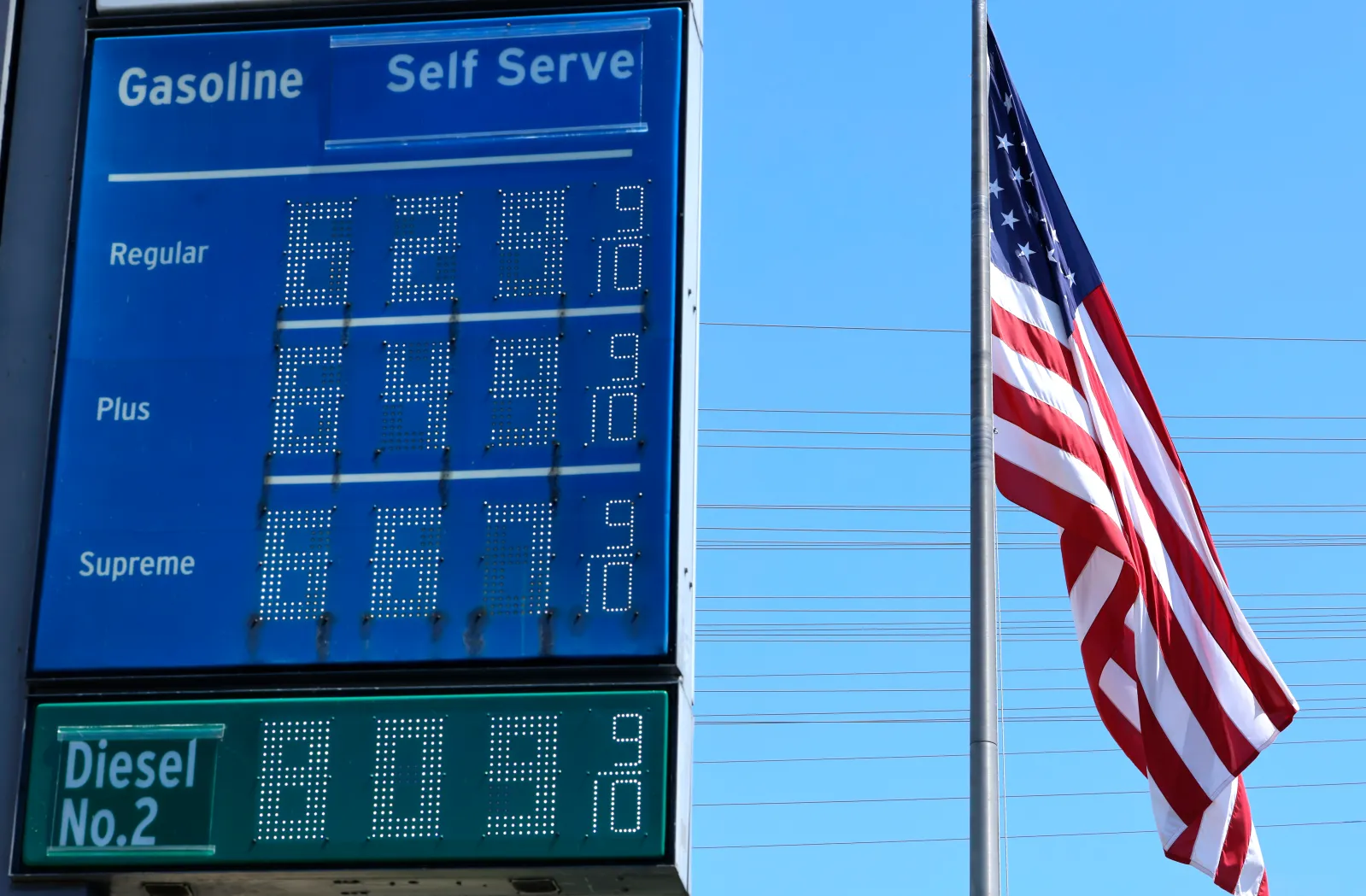
A top energy executive said Americans should consider driving less amid a spike in gas prices following the onset of the U.S. and Israel's war with Iran and subsequent shutdown of the Strait of Hormuz, a critical oil chokepoint.
“People should try to drive less. They should try to conserve energy,” Chevron Downstream, Midstream and Chemicals President Andy Walz told CBS News when asked how people could save money on gas. "We should be doing that all the time. Energy's essential for people's lives, but we should conserve it."
Newsweek contacted Chevron via online form for comment.
Read More on News
Why It Matters
According to the U.S. Energy Information Administration (EIA), the Strait of Hormuz typically carried roughly 20 million to 22 million barrels per day of crude oil and petroleum liquids between 2020 and the first half of 2025f. The agency said that some 20 percent of global liquefied natural gas flows through the chokepoint.
As of Wednesday, the price of Brent crude oil, one of the primary benchmark prices for oil traded globally, sits at about $95 a barrel, according to Trading Economics.
Monday marked the start of U.S. blockade of the strait—which links the Persian Gulf with the Gulf of Oman and the Arabian Sea—after Iran had previously allowed only ships perceived as friendly to pass, halting nearly all traffic.

...
What To Know
As per CBS, Walz said there was likely no “silver bullet” to lower prices for Americans over the long term while prices remain elevated elsewhere.
"It's a global market for crude," Walz said. "We have crude here, that's closer to us, that we're all processing and using. That's helping Americans buffer their price....If this goes on for an extended period of time, it's probably gonna get tougher."
Walz additionally flagged the risk of supply chain issues if the situation persists.
"America is more reliant on local production, but there's countries in Asia and other parts of the world that rely heavily on Middle East crude," he said. "They can't get it. They can't refine it. They can't make the products people need, and they're starting to run out. And that is a real problem. We're worried about price here. There's other countries that don't have the products. And to me, that is a big worry."
Why Can't the U.S. Use Its Own Oil?
Experts told CBS News that U.S. gas prices can rise even though the country is the world’s leading oil producer because oil is priced in a globally traded market.
“The global market sets the price. The provenance of the oil we're filling our gas tanks with doesn't matter," Bernard Yaros, lead U.S. economist at Oxford Economics, told the outlet.
CBS News added that refinery constraints also play a role because much U.S. production is “light” crude, while significant U.S. refining capacity is optimized for “heavy” crude and can’t be quickly reconfigured, according to former U.S. Secretary of Energy Ernest Moniz.
...
View 0 Comments
Submit Correction
View Editorial & AI Guidelines