...

By Khaleda Rahman
National Correspondent
0
Share
Newsweek is a Trust Project member
See more of our trusted coverage when you search.Prefer Newsweek on Googleto see more of our trusted coverage when you search.
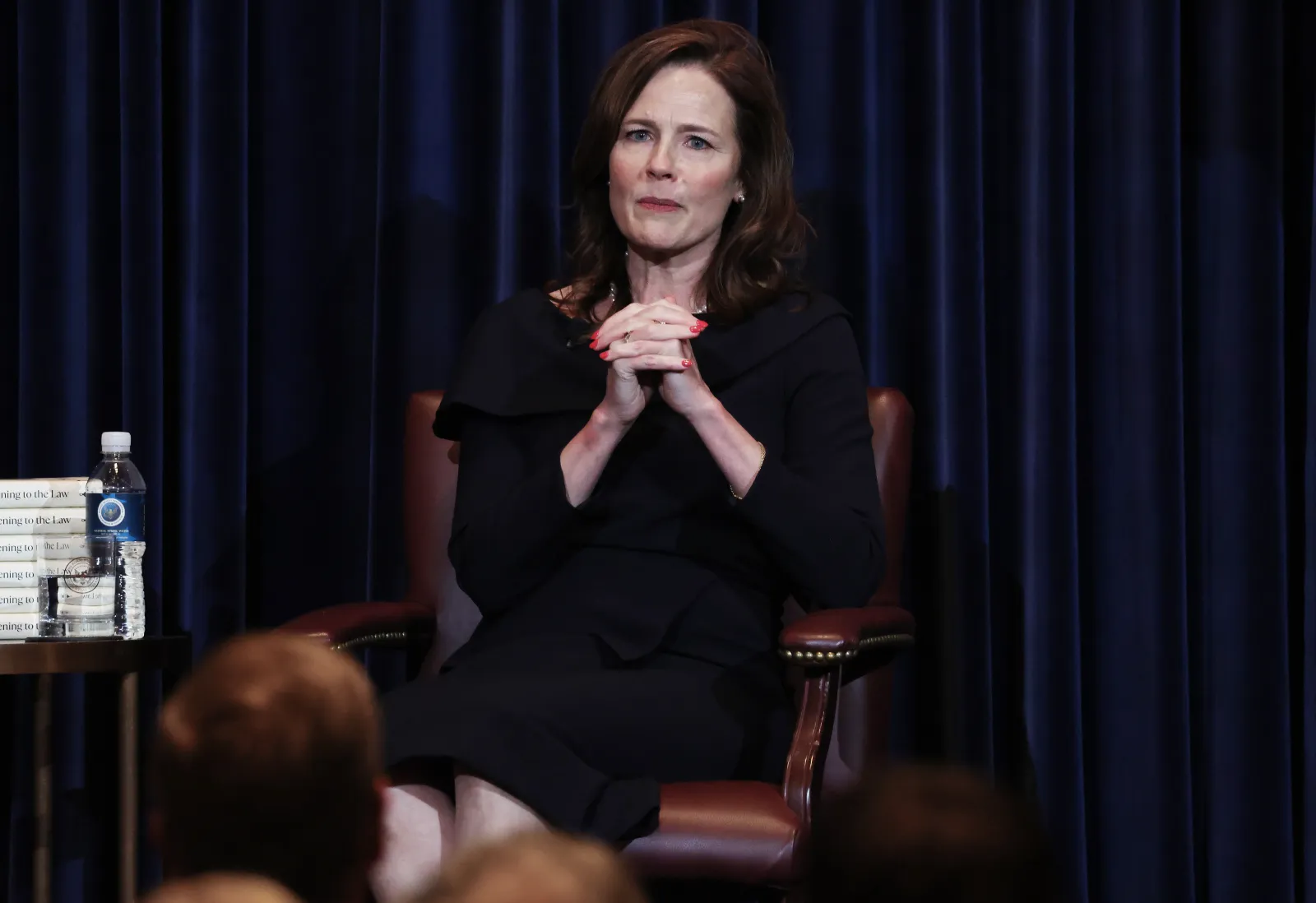
Supreme Court Justice Amy Coney Barrett has responded to criticism about the lack of reasoning given for decisions made in cases on the court’s emergency docket.
In an interview with Fox News Sunday, Barrett was asked about the “really heated dissents” from the court’s liberal wing about the lack of transparency about reasoning for those orders.
Barrett defended not providing an explanation for the orders issued in emergency appeals, telling Shannon Bream that writing a lengthy opinion in those appeals “might give the impression that we have finally resolved the issue” when that is not the case.
Read More on News
Newsweek has contacted the Supreme Court justices for comment via email.
...
Why It Matters
Since President Donald Trump returned to office in January, his administration has increasingly relied on emergency appeals to the high court to lift lower court orders slowing his agenda.
The high court, which has a 6-3 conservative majority, has given a series of green lights to the White House without full hearings or any explanation of its reasoning, as is typical on the court’s emergency docket, also known as the shadow or interim docket. Those decisions include clearing the way for stripping legal protections from immigrants, keeping nearly $5 billion in foreign aid frozen and ousting transgender members of the military.
The court has faced criticism for issuing decisions on its emergency docket with little or no explanation, with liberal justices repeatedly sounding the alarm about allowing Trump to proceed with harsh policies before their legality is fully determined. The high court has not issued final decisions in any cases, which are continuing in lower courts.
What To Know
On Sunday’s show, Bream noted there had been some “really heated dissents from those who are on the losing end of some of those decisions” in cases decided on an emergency basis.
She pointed to Justice Sonia Sotomayor’s dissent after the court in September cleared the way for federal agents to conduct sweeping immigration stops in Los Angeles.
In that dissent, joined by fellow liberal Justices Elena Kagan and Ketanji Brown Jackson, Sotomayor wrote: "In the last eight months, this court's appetite to circumvent the ordinary appellate process and weigh in on important issues has grown exponentially. Its interest in explaining itself, unfortunately, has not.”
Sotomayor noted that while there may be justification for issuing an unreasoned order in some circumstances, other situations “simply cry out for an explanation, such as when the government’s conduct flagrantly violates the law, or when lower courts and litigants need guidance about the issues on which they should focus.”
Barrett, a Trump appointee who was in the majority in that decision, said the decisions in emergency appeals are “preliminary.”
She called deciding a case on merits a “slow” and “painstaking” process.”
“When we write an opinion, it reflects our final judgment.”
Writing one for decisions issued in emergency appeals, she said, “might give the impression that we have finally resolved the issue. And in none of these cases have we finally resolved the issue.”
What People Are Saying
Supreme Court Justice Amy Coney Barrett said: “It's a relatively new phenomenon… or at least the amount of activity on it is relatively new. You know, these are cases that are preliminary and so they are not cases in which the court has had full briefing and made a final judgment…
"Deciding a merits case is a painstaking process. It's slow. It takes a lot of work. And when we write an opinion, it reflects our final judgment. On the interim docket, these preliminary decisions that we make, it’s not just about the merits, whether a case is right or wrong. We could account for other factors as well. And if we wrote a long opinion, it might give the impression that we have finally resolved the issue. And in none of these cases have we finally resolved the issue.”
Justice Sonia Sotomayor said in her dissent that when the lower court convenes a hearing on the plaintiff’s motion for a preliminary injunction, "neither the district court nor the parties will know whether the majority believed the key issue was standing, the merits, or the scope of relief, any one of which could have been the basis for the majority’s order…
"For each of those complex issues, it will be anyone’s guess whether the majority thought there were evidentiary deficiencies, legal errors, or a combination of both. This situation demands more.”
After the court’s conservative majority allowed Trump to withhold billions of dollars in foreign aid last month, Justice Elena Kagan, joined by Sotomayor and Ketanji Brown Jackson, wrote in a dissent that “per usual on our emergency docket, we have had to consider this application on a short fuse—less than three weeks. We have done so with scant briefing, no oral argument, and no opportunity to deliberate in conference… In a few weeks’ time—when we return to our regular docket—we will decide cases of far less import with far more process and reflection.”
What’s Next
The Supreme Court began a new term on October 6. The justices will hear oral arguments in cases through the spring of next year.
View 0 Comments
Submit Correction
View Editorial & AI Guidelines