10
Loading video...

By Jesus Mesa
Reporter
0
Share
Newsweek is a Trust Project member
See more of our trusted coverage when you search.Prefer Newsweek on Googleto see more of our trusted coverage when you search.
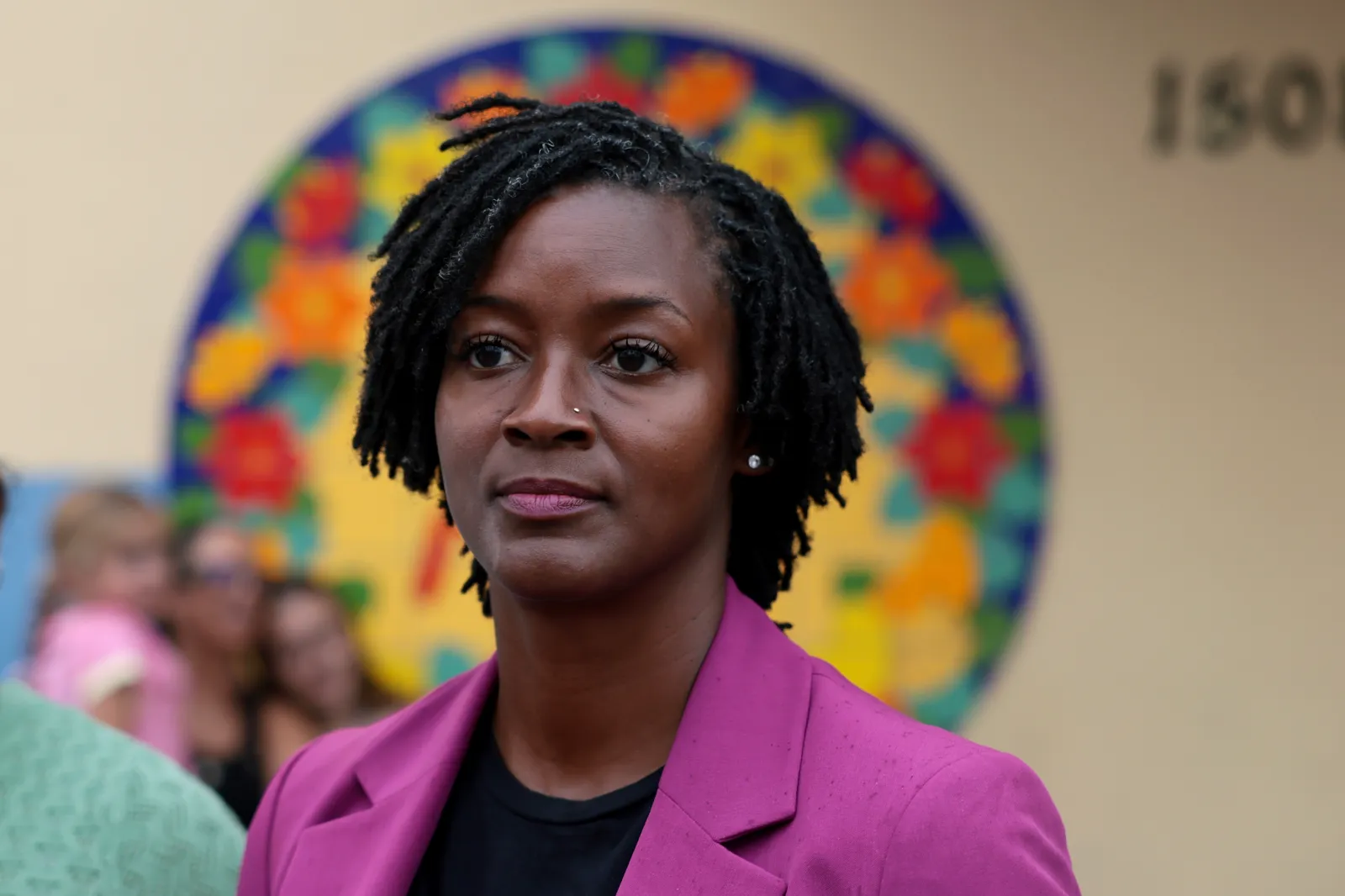
Florida Democratic hopeful Angie Nixon plans to end a streak that has kept her party out of the U.S. Senate in the state since 2018, but the newest polling shows her facing a difficult path against GOP incumbent Ashley Moody.
Nixon, a state representative and self-described progressive who had the backing of Representatives Rashida Tlaib of Michigan and Ilhan Omar of Minnesota, had hoped the enthusiasm surrounding other Democratic Socialists of America candidates this cycle would carry over into her race.
The most recent polling shows a deficit similar to, and in some cases worse than, what every Democratic Senate nominee in the state has faced since Bill Nelson's last win.
Read More on Politics
A Quantus Insights poll conducted September 8-10 has Moody leading Nixon 50 percent to 43 percent among 733 likely voters. More than 90 percent of decided respondents said they're locked in. Moody leads every media market except Gainesville and Orlando/Daytona/Melbourne. Even in Jacksonville, Nixon's home base, Moody is up 58 percent to 38 percent.
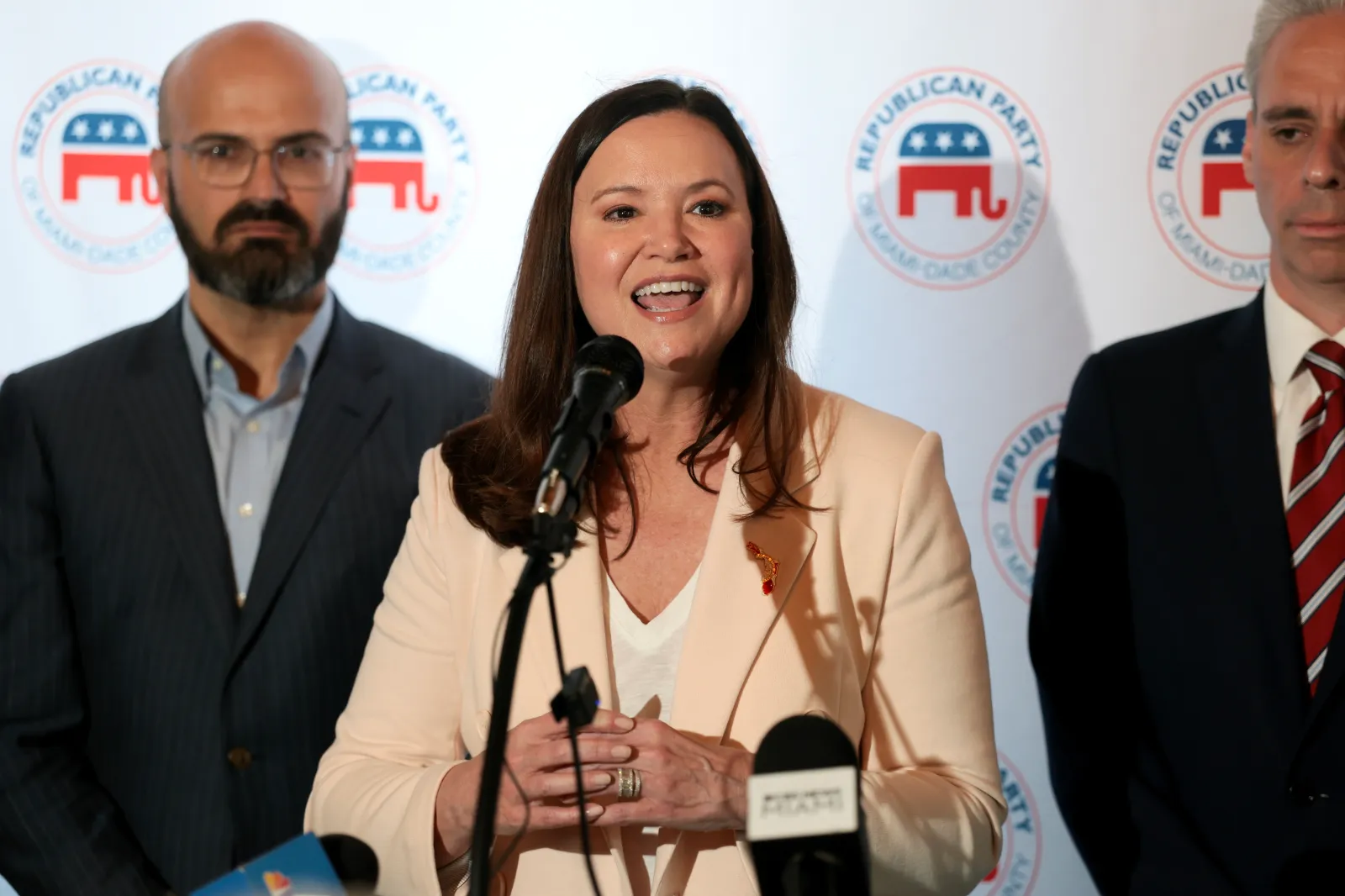
"In Moody, you have an incumbent that has won statewide previously, and who is also well funded," Alex Patton, a Florida-based Republican strategist, told Newsweek. "The exact amount we can argue about, but she is the clear favorite."
Asked about the gap between Nixon's numbers and the historical pattern of Florida polls undercounting Republicans, a Nixon campaign spokesperson argued the polling models themselves are the problem.
"In recent cycles, the standard polling models have failed to account for non-traditional, populist campaigns like ours that mobilize disaffected, working-class voters and independents," the spokesperson said in response to questions from Newsweek. "The Angie Nixon campaign is building a broad, turnout-driven coalition in response to a status quo that doesn't work for hardworking people, and the most important poll of the cycle will be votes cast in November."
Newsweek reached out to Moody's campaign for comment Tuesday.
How Nixon's Polling Stacks Up Against Past Florida Flips
The recent history offers both a warning and a precedent for Nixon. Florida Democrats came close to winning statewide in 2018, but the party's last two Senate nominees lost by double-digit margins.
The last time a Democrat flipped the exact seat Nixon is seeking was 1986, when then-Governor Bob Graham defeated Republican incumbent Paula Hawkins. Graham led by double digits for most of the campaign, including a 49-38 advantage in a July Miami Herald/Florida Times-Union poll and a lead as large as 22 points by early September. He won by 9.5 points, 54.7 percent to 45.3 percent.
The next Democratic Senate flip came 14 years later, when Bill Nelson defeated Republican Bill McCollum 51-46 in 2000, even as George W. Bush carried Florida by just 537 votes. Nelson won again in 2012, beating Connie Mack IV by 13 points. The final polling average had him ahead by about 6 points, making 2012 the last time Florida polling understated a Democratic Senate candidate's margin.
Since then, the pattern has reversed. Republican Marco Rubio defeated Democrat Patrick Murphy by 7.7 points in 2016. Nelson came within 0.1 points of unseating Republican Rick Scott two years later, making 2018 the closest Florida Senate race since the Democratic wins of the previous era. Rubio then defeated Val Demings by 16.4 points in 2022, followed by Scott's 12.8-point win over Debbie Mucarsel-Powell in 2024.
The governor's race offers another useful measure of how difficult statewide Democratic victories have become. Democrat Andrew Gillum came within 0.4 points of defeating Ron DeSantis in 2018, close enough to trigger a recount, after leading in the final polling average. DeSantis then defeated Charlie Crist by 19.4 points four years later, the largest margin in a Florida governor's race since 1982.
The state's voter registration numbers reflect the same shift. As of July 31, Republicans had 5.61 million active registered voters compared with 4.07 million Democrats, an advantage of about 1.54 million voters. Democrats still hold large registration edges in some of their strongest counties, including Broward, where they outnumber Republicans by nearly 196,000.
Against that backdrop, Nixon's current 7-point deficit sits well outside the margins of the Democratic wins in 1986 and 2000, and closer to the results Florida Democrats have posted in recent statewide losses.
Moody brings her own statewide track record to the race. She won reelection as Florida attorney general in 2022 with 60.6 percent of the vote, defeating Democrat Aramis Ayala by about 21 points.
The Upset That Got Nixon Into the Race
Nixon's primary win was striking given how little she had to work with compared to her opponent. She defeated Alex Vindman, the former National Security Council official whose testimony was central to Trump's first impeachment, despite being dramatically outspent.
Vindman raised roughly $16 million and had spent more than $9 million by the end of July. Nixon had raised just under $1 million and largely bypassed broadcast television, instead putting her money and energy into social media. Along the way, she picked up support from figures including children's education influencer Ms. Rachel.
Her campaign pointed to that result as evidence its grassroots strategy could overcome the financial gap in the general election, too.
"We proved in the primary that a people-powered field operation beats corporate TV ad buys," a spokesperson said. "With our post-primary grassroots momentum surging and volunteers knocking doors and calling folks in all 67 counties, organized people can and will beat corporate money again on November 3."
...
Trump celebrated Vindman's defeat on Truth Social, calling him "a real treasonous creep" and predicting Nixon, whom he described as a "Radical Left Lunatic," would face "certain defeat" against Moody. Vindman conceded without attacking his opponent.
"Representative Nixon ran a strong campaign. I will be standing by her side in the fight against Ashley Moody," he said.
The result also fits a broader pattern in Democratic primaries this year, as candidates associated with the anti-Trump "resistance" have lost to more progressive challengers in states including Texas, Michigan and New York. Britney Whaley of the Working Families Party told the Associated Press that Nixon's victory was a wake-up call for "a political establishment that believes a populist message can't win in the South."
Democratic voters in neighboring South Florida districts offered a different verdict. Moderates Jared Moskowitz and Pia Dandiya both defeated progressive challengers by wide margins.
Even so, the Democratic National Committee moved quickly to embrace Nixon after her win. Chair Ken Martin called her a "proven leader" and said the DNC "is ready to help elect Angie and work together to flip this seat."
The Turnout Question Hanging over Nixon's Race
What makes this race harder to call than the topline numbers suggest, according to Patton, is who's actually showing up to vote.
"Florida has had an influx of new voters since COVID, making modeling of the voting universe difficult. They tend to trend GOP. In addition, a lot of Nixon's support comes from more unreliable voters, young, minorities. Both things make Florida a little more difficult to model."
He isn't dismissing the possibility of a surprise. A wave big enough to flip the seat "would need to be a helluva wave to overcome the GOP structural advantage in Florida," he said, especially against an incumbent who's already won statewide and is well-funded. But he added a caveat: "With the president's numbers being such a drag on the GOP, combined with inflationary pressure and the war... strange things could happen come November."
Florida International University professor and pollster Eduardo Gamarra reaches a similar conclusion from a different angle. He told Newsweek that polling misses in Florida usually stem from overestimating turnout rather than from undercounting Republican support.
...
Latino voters in particular tell interviewers they're certain to vote and then don't, he said, pointing to this year's primary turnout, 16 percent in Broward and lower still in Miami-Dade, as evidence of the gap between stated intent and actual behavior. Beyond turnout modeling, Gamarra credits Republicans with simply outworking Democrats on the ground through better-rooted local candidates and campaigns that never really stop, against a Democratic base whose enthusiasm tends to fade well before Election Day.
Democratic strategist Steve Schale is skeptical the public polling has caught up to where the race actually stands. "Florida is a particularly hard state to poll due to the state's diversity, which can make getting an accurate sample very challenging, and there hasn't been much in the way of good public polling yet, so we'll see," he told Newsweek.
Schale laid out the math he thinks Nixon needs to hit: drive up base turnout, win independents by 20 to 25 points, which Democrats are seeing in other states this cycle, and win over 5 to 6 percent more Republicans than Moody peels off from Democrats. "That is just the math," he said. "The question is whether Angie can find a message to win over that number of disaffected Republicans."
Schale sees the erosion running deeper than turnout modeling. Migration into the state is a factor, he said, but "less of a factor than the absolute collapse of Dem support among Hispanics. If there is one thing that has to change for us to get back to a truly competitive place cycle after cycle, it is rebuilding trust with Hispanic voters."
The Mini-Trend, and the DSA Question
Florida Democrats have notched a handful of overperformances in special elections since Trump returned to office, results Schale attributes to two specific forces rather than a broad realignment. "Strong numbers with independents and disaffected Republicans pulling a Dem lever," he said, are driving those results, and he cautioned that Democrats "need to continue to see statewide wins in 2026" for the trend to mean anything beyond isolated districts.
On Nixon's DSA membership, Schale and Gamarra land in different places. Schale, who said he has known Nixon for nearly 20 years, called it a real obstacle but not necessarily a defining one, noting she joined the organization only about a month before the primary. "Certainly the DSA stuff is something she has to overcome," he said.
Gamarra went further, arguing some Democrats have made a tactical error by making an issue of it at all. He questioned the decision by some in the party to attack Nixon over her DSA membership, arguing it doubles as an attack on a Black candidate at a moment when that dynamic is especially sensitive.
"What you have to do is keep up the Black enthusiasm," Gamarra said. "The only way to maintain Black enthusiasm is to not attack Black candidates."
Contact Newsweek editors on this story: Jason Lemon and Gray R. Thomas
View 0 Comments
Submit Correction
View Editorial & AI Guidelines