...

By Robin Ganzert
President and CEO of the American Humane Society
0
Share
Newsweek is a Trust Project member
See more of our trusted coverage when you search.Prefer Newsweek on Googleto see more of our trusted coverage when you search.
As the U.S. celebrates its 250th anniversary, Americans are reflecting on the people, ideas, and events that have shaped our history. The American story is often told through the lens of presidents, soldiers, or titans of industry, but one chapter is commonly overlooked: The practical—and symbolic—role animals have played in the American epic.
Long before America ran on electricity, gasoline, or machines, the economy was largely agrarian. Thomas Jefferson and John Adams viewed independent farming as the backbone of the young republic and believed it to be essential to American liberty. Jefferson would once write to fellow founder John Jay in 1785, “cultivators of the earth are the most valuable citizens.”
Farming at the time was a grueling, labor-intensive profession that relied on rudimentary tools. Americans would have to wait more than a hundred years for the iconic John Deere tractor to appear on the scene. Instead, farmers counted on animal power to work the land.
Read More on Opinion
...
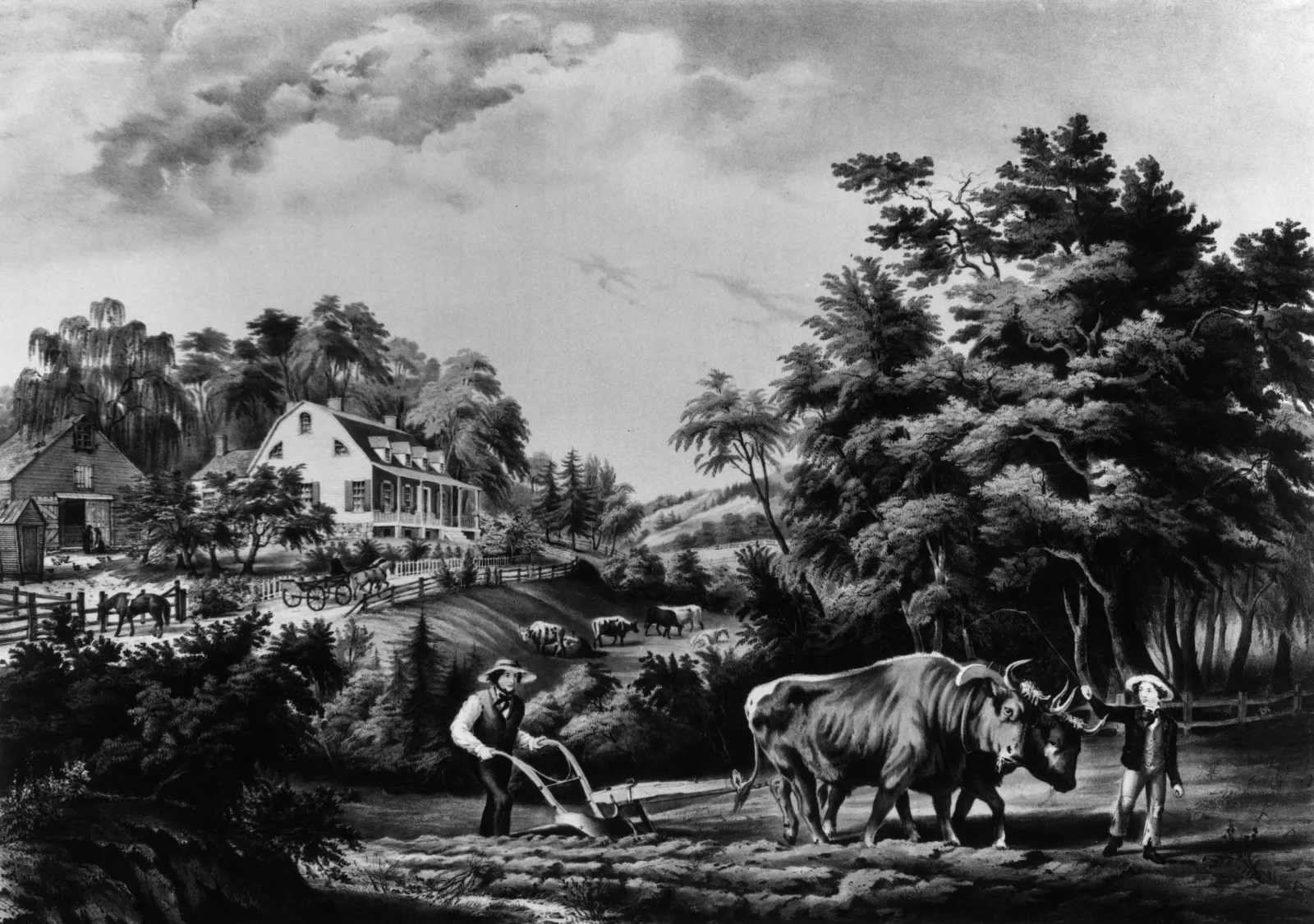
Oxen dragged plows through the rocky New England soil—softening the ground for corn, wheat, or barley. Animal manure enriched the fields and, after harvest, mules hauled crops to town squares. Livestock such as cows, chickens, and pigs provided protein, and even the wool on a sheep's back served the revolution, clothing the Continental Army and the citizens it bled to protect.
As east coast agriculture gave way to westward expansion, animals remained central to the American experiment. Families were pulled by oxen and mules in covered wagons along 2,000 miles of the Oregon Trail as pioneers grasped for their slice of the American Dream. The horse became a defining image of frontier life alongside legendary figures like Davy Crockett and Sam Houston.
Ranching and the American cowboy grew to prominence. The number of roaming cattle under human management exploded during the latter half of the 19th century. Pop culture continues to romanticize this lifestyle and the animals at its center. Look no further than the popularity of the rough-and-tumble cattle ranching television series Yellowstone and its spinoffs.
Animal agriculture would continue to evolve and remains a cornerstone of the country’s food supply today. But by the turn of the century with industrialization, reliance on working animals fell and a new attitude began to take hold. Animals were no longer just a resource. Americans started to consider preserving wildlife, landscapes, and biodiversity as a patriotic end in itself.
The conservation ethic fueled demand for federally-protected natural areas, leading to the creation of Yellowstone National Park in 1872. Four decades later, the sentiment inspired the establishment of the National Park Service. Today, the government agency oversees hundreds of parks that provide more than 300 million visitors annually the opportunity to connect with wildlife and their natural heritage.
These seeds sprouted into the modern conservation movement that we proudly carry on today.
During the 20th century, Congress instituted a number of policies aimed at preserving natural habitats and protecting marine life. Of great consequence, passage of the Endangered Species Act in the 1970s provided animals on the verge of extinction a fighting chance to survive. Notably, the landmark legislation helped to save the very symbol of America from permanent demise: the stately bald eagle.
These government efforts work in tandem with private sector contributions. Modern zoos and aquariums conduct critical research that supports habitat preservation and sustainable wildlife population levels. While most Americans no longer live on the “frontier” where encounters with animals are a fact of daily life, these facilities give families an opportunity to see and learn about the majestic creatures that also call America home.
These institutions don't just advance science; they bring Americans face-to-face with the living creatures our policies work to protect. Who doesn’t have a fond childhood memory of seeing a mighty buffalo for the first time? Or experiencing the inquisitiveness of a river otter? A summer day at the zoo is a shared life experience that rivals the Americana of attending opening day.
As Americans celebrate the semiquincentennial, remember that people are not the only characters in U.S. history. From farming in early settlements to hoofbeats on frontier trails to the majestic wildlife we now work so hard to protect, animals have been woven into the fabric of the American story since 1776.
Dr. Robin Ganzert is president and CEO of American Humane Society.
The views expressed in this article are the writer's own.
View 0 Comments
Submit Correction
View Editorial & AI Guidelines