
...

By Amir Daftari
News Reporter
0
Share
Newsweek is a Trust Project member
See more of our trusted coverage when you search.Prefer Newsweek on Googleto see more of our trusted coverage when you search.
A "ring of fire" eclipse of the sun is on the horizon, but only a few people will be fortunate enough to witness its full splendor.
The annular solar eclipse is set to take place on Wednesday, casting its shadow over remote places such as Easter Island and the southern tips of Argentina and Chile.
...
Read More on News
What is an Annular Solar Eclipse?
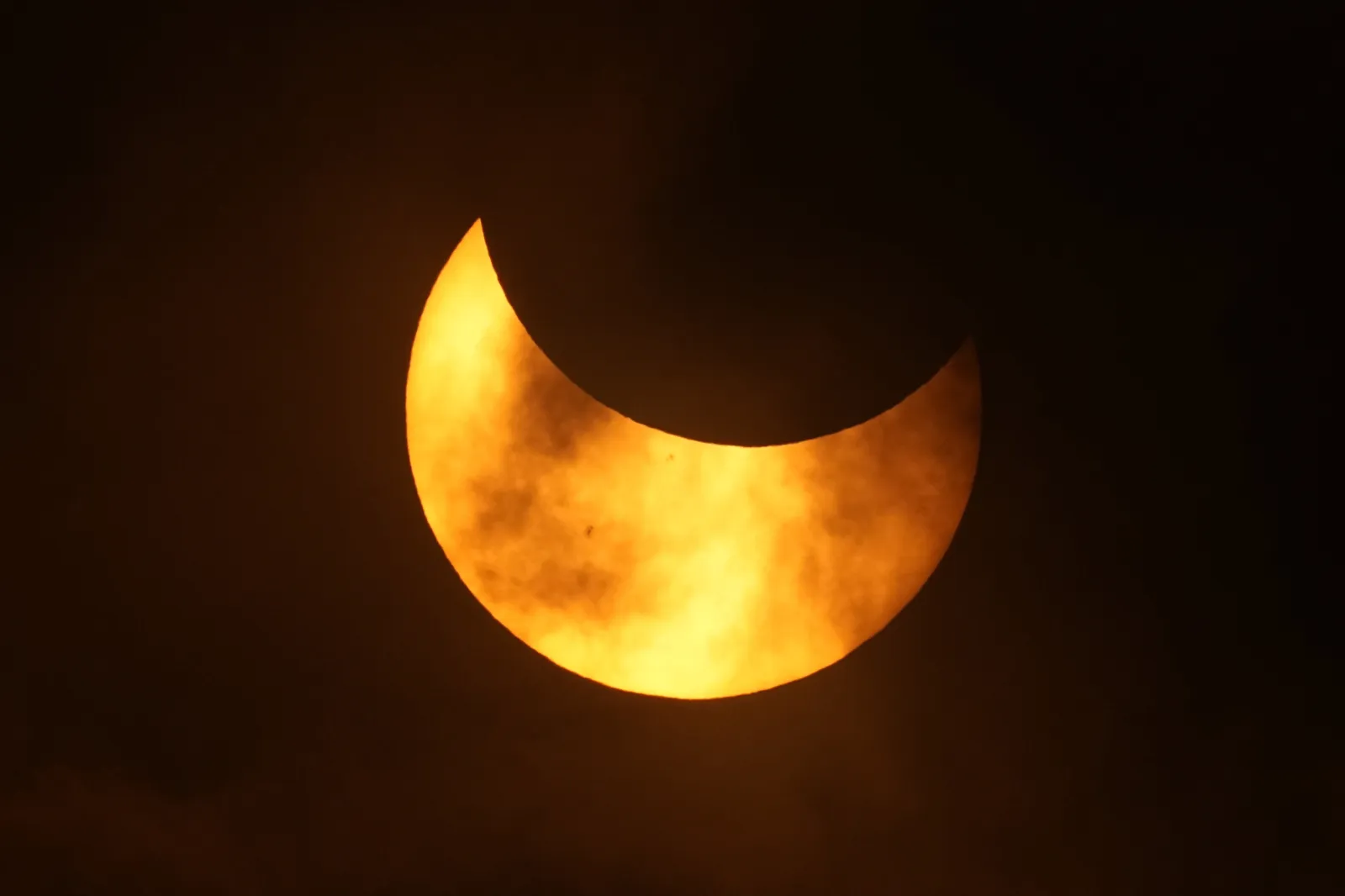
Solar eclipses occur when the sun, moon, and Earth align perfectly, with the moon casting a shadow that can either partially or completely obscure the sun's light. During an annular eclipse, however, the moon covers all but a ring-shaped sliver of the sun. This unique phenomenon arises because the moon is at a point in its orbit that places it farther from Earth.
"The moon is just not quite big enough to cover the sun," explained Carolyn Sumners from the Houston Museum of Natural Science. This particular eclipse will predominantly unfold over the waters of the Pacific Ocean, with Rapa Nui—commonly known as Easter Island—alongside parts of Argentina and Chile positioned within the path of the eclipse.
...
For those located beyond this direct path, a partial solar eclipse, where the sun appears as a crescent, can be observed in several regions, including Brazil, Paraguay, Uruguay, and Hawaii. Solar eclipses occur approximately two to five times a year, with April's total eclipse captivating observers in parts of Mexico, Canada, and the U.S.
How Do I Look at a Solar Eclipse Safely?
Directly staring at the sun can lead to severe eye damage, even during a partial eclipse. Therefore, the annular eclipse should only be viewed using certified solar eclipse glasses. These glasses block ultraviolet light and nearly all visible light. Regular sunglasses or binoculars are insufficient for safe viewing.

...
It's crucial to ensure that eclipse glasses comply with ISO 12312-2 standards, as counterfeit products can sometimes bear false labels. For those without eclipse glasses, there are alternative methods to enjoy the spectacle. Creating a pinhole projector using simple household materials allows viewers to indirectly observe the eclipse. Holding up a colander can also project images of the eclipse below. Additionally, looking at the ground beneath a shady tree can reveal crescent-shaped shadows created by sunlight filtering through branches and leaves.
What's Next?
Next year, two partial solar eclipses are scheduled to grace the skies in March and September. However, the next total solar eclipse will not occur until 2026, with its path crossing the northern fringes of Greenland, Iceland, and Spain.
This article includes reporting from The Associated Press.
View 0 Comments
Submit Correction
View Editorial & AI Guidelines