

By Jesus Mesa
Reporter
0
Share
Newsweek is a Trust Project member
See more of our trusted coverage when you search.Prefer Newsweek on Googleto see more of our trusted coverage when you search.
For months, Anthony Kazmierczak stewed behind a keyboard, his Facebook profile a slow-motion spiral into rage. His posts — once scattered photos of his daughters or gripes about back pain — turned darker: memes mocking immigrants, rants about liberals, profile photos swapped for images of Donald Trump and Erika Kirk.
In August, he tweeted that Black people were “reproducing too much.” By December, he declared white people genetically superior. Then, in January, he showed up to a Minneapolis town hall clutching a syringe filled with vinegar and shouting at Ilhan Omar to resign. The attack took seconds. The radicalization had taken years.
Kazmierczak’s journey from online rage to America's latest attempt of political violence is just one data point in a much larger phenomenon. Experts, law enforcement officials, and researchers have been sounding the alarm that many otherwise ordinary American men are sliding into extremist radicalization, particularly through algorithmic online platforms and partisan media.
Read More on Politics
FBI and law enforcement reports indicate that threats and acts of political violence have surged in recent years, driven largely by men enthralled by extremist ideologies. The U.S. Capitol Police documented approximately 15,000 threats or concerning statements against members of Congress in 2025 — a sharp increase compared to a decade ago.
From Isolation to Extremism: One Man’s Descent
*Newsweek’*s review of Kazmierczak’s digital footprint shows how visible his descent was to anyone paying attention. In the months leading up to the attack, his online language was neither coded nor vague. It was direct, increasingly hostile, and often centered on race — targeting immigrant communities in Minneapolis and promoting conspiracies about reparations.
While Kazmierczak had expressed conservative views before, his posts grew more aggressive in the years following the COVID-19 lockdowns. The shift coincided with a broader emotional and social decline.
By 2024, he was divorced and reportedly estranged from both of his daughters — one of whom is LGBT and the other said to be dealing with mental health challenges. He had filed for bankruptcy, was managing chronic illness, and was facing mounting legal and financial pressure. With few family ties and diminishing personal stability, his online presence intensified.

...
“There is compelling evidence to show that isolation, social exclusion, or social deprivation are predictors of radicalization into far-right views and anti-feminist sentiment,” said Debbie Ging, a professor at Dublin City University who studies online misogyny and digital culture. “Algorithms accelerate and amplify the process by deliberately targeting men.”
As the pandemic waxed and waned, Kazmierczak’s posts reflected growing isolation. Family photos disappeared, and mentions of his daughters stopped. Through 2021 and 2022, his tone sharpened. Memes attacking leftists became more frequent. Rep. Ilhan Omar, in particular, appeared repeatedly as a focus of his frustration.
Then came a lull. For nearly a year, his accounts were quiet. But when he resurfaced on Quora in 2024, his tone had changed. He no longer expressed general political dissatisfaction. His posts were openly hostile. He called Democrats “angry liars,” pushed election fraud conspiracies, and questioned whether descendants of enslaved people should pay restitution to the families of Union soldiers.
By mid-2025, he joined X under the handle @andysright and quickly immersed himself in the online right-wing ecosystem. He followed accounts such as Libs of TikTok, Charlie Kirk, Candace Owens and Elon Musk. Within weeks, his posts turned overtly racist, including complaints about “Black people reproducing.”
The September 2025 assassination of Charlie Kirk, founder of Turning Point USA, appeared to push him even further. Kazmierczak had previously shared pro-TPUSA content and used a photo of Trump at one of the group’s events as his Facebook profile picture. After Kirk’s death, his posts took on a sharper, more aggressive tone.

In December, he expressed disappointment that Somali immigrants in Minneapolis were not being arrested by ICE. Days before the attack, he wrote that “white people are genetically superior to Blacks.” His fixation on Ilhan Omar remained constant. A federal affidavit later revealed that, years earlier, he had told someone that “somebody should kill” her.
Not Just Young Men
By January 27, Kazmierczak’s path into the echo chamber was complete when he decided to turn his online fixation into a real-world confrontation with Omar. Researchers who study male loneliness say the trajectory is disturbingly recognizable — and often fueled by the algorithms that increasingly govern our lives.
When people imagine “radicalized” individuals, they may picture disaffected youth or isolated young men. Evidence shows, however, that middle-aged and older men are a major force in modern American extremism — a fact that has surprised some observers.
Research conducted by the University of Maryland’s START center, which tracks extremist offenders, found that individuals committing politically motivated crimes in the U.S. tend to be in their 30s on average, not teenagers. Far-right anti-government extremists often do not commit their first offense until their 40s.

...
William Braniff, a counterterrorism scholar who served from 2023 to 2025 as director of the Center for Prevention Programs and Partnerships at the Department of Homeland Security and now heads the Polarization & Extremism Research & Innovation Lab (PERIL) at American University, told Newsweek that vulnerability, rather than ideology, is often the driving force.
“These are men who feel powerless, disconnected, and angry. They’re looking for answers. The internet provides them, often in the form of scapegoats.”
He is not alone in that assessment. Researchers note that while extremist ideology may appear to drive these cases, it is often layered on top of personal crises: isolation, divorce, financial instability, chronic illness, and a loss of identity. Kazmierczak fits the pattern. He was twice divorced, estranged from his children, suffered from serious health problems including Parkinson’s and chronic pain, faced mounting debts and bankruptcies, had a history of DUIs and legal issues, and had increasingly withdrawn from the offline world, according to court records and reporting from the New York Times.
“You add all those risk factors up, and someone might be really struggling,” Braniff said. “They start to look for someone to blame. And when that struggle meets toxic online rhetoric, it creates a pathway toward dehumanization and violence.”
Warren Farrell, an author known for writing about gender and men’s issues, agrees. He points to a longer arc in how men are socialized in the United States — encouraged to provide but not to seek help, to produce but not to feel needed outside of work. When those roles collapse, men often retreat into silence or into online spaces that reward anger.
“These men aren’t just looking for politics,” Farrell told Newsweek. “They’re looking for meaning. They want to feel like they matter. And if no one is telling them they do, they’ll find voices online that offer a sense of purpose — sometimes through hate.”
The January 6 Capitol riot offers one of the clearest data sets: the average age of those charged was in the early to mid-40s, overwhelmingly male, and disproportionately driven by the belief that the so-called “deep state” had betrayed them.
And Not Just One Side
Acts of political violence are not confined to one age cohort of men, though they are almost exclusively committed by men. What many of these incidents share — regardless of political leaning or age — is a throughline of personal disconnection and isolation.
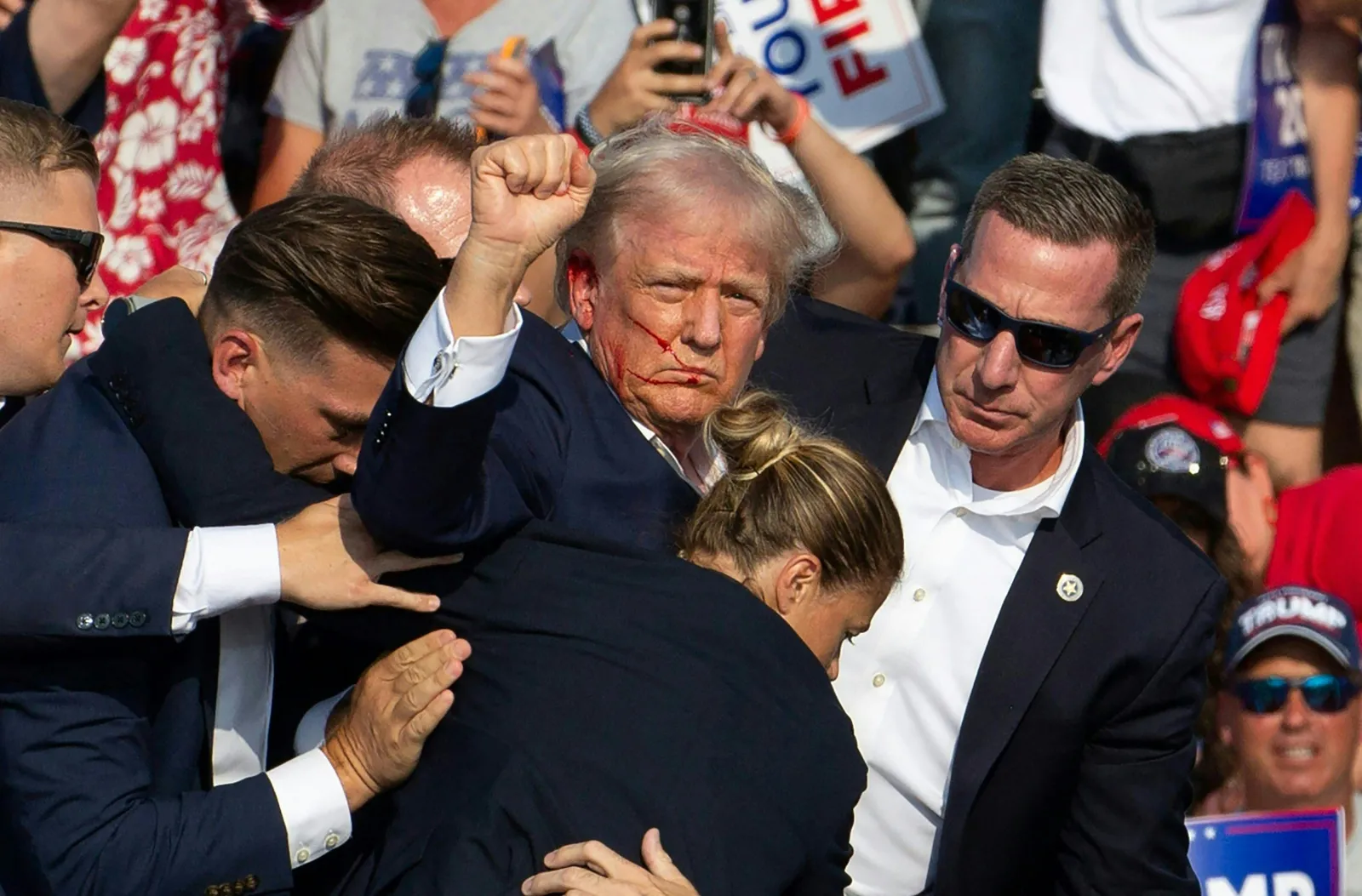
In 2024, two separate assassination attempts targeted Donald Trump. In July, a 20-year-old gunman opened fire at a campaign rally in Butler, Pennsylvania, wounding Trump and killing a bystander. Two months later, an older man, Ryan Wesley Routh, was discovered near Trump’s Florida golf course with a loaded SKS-style rifle, positioned for a possible attack.
That same year, UnitedHealthcare CEO Brian Thompson was gunned down outside a hotel in Manhattan. The man charged in the killing, Luigi Mangione, was later arrested in Pennsylvania with a weapon and a handwritten manifesto railing against healthcare executives and corporate elites.
Debbie Ging noted that many effective online radicalization pathways begin innocuously — videos or posts about men’s health, fitness, entrepreneurship, or dating — before algorithms steer users toward more aggressive messaging.
“They start with content that purports to care deeply for the ‘male condition,’” she said. “But this quickly segues into more extreme ideas, encouraging men to direct their sense of ‘aggrieved entitlement’ at women, minorities, and immigrants.”
...
While each case of real-world violence has its own context, Ging added that many perpetrators of stochastic or ideologically motivated attacks have histories of intimate partner abuse or prior violent behavior. They are often embedded in extreme online communities where hostility and dehumanization are normalized.
Federal prosecutors say Anthony Kazmierczak belongs in this lineage. He is charged in federal court with forcibly assaulting a member of Congress during the performance of her official duties.
His case will ultimately rest on specific charges and legal process. But the path he took — from emotional collapse to digital grievance and finally to real-world violence — is one experts warn is becoming alarmingly familiar. Not only because of the politics involved, but because of what sits underneath.
“These are men who feel powerless,” Farrell said. “It’s about meaning. When men feel invisible in their own lives, they go looking for somewhere to matter. And the internet is always ready to hand them a script.”
View 0 Comments
Submit Correction
View Editorial & AI Guidelines