
...

By Mandy Taheri
Reporter
0
Share
Newsweek is a Trust Project member
See more of our trusted coverage when you search.Prefer Newsweek on Googleto see more of our trusted coverage when you search.
Representative Alexandria Ocasio-Cortez trails former Vice President Kamala Harris in a new hypothetical 2028 Democratic presidential primary poll.
The Lake Research Partners survey, which tested potential ranked-choice voting scenarios, found Harris ahead of Ocasio-Cortez and other possible contenders, including California Governor Gavin Newsom, showing that progressive candidates like the New York congresswoman may face hurdles in consolidating broad support within the Democratic electorate.
The survey comes amid growing speculation about Ocasio-Cortez’s future in the Democratic Party, as some progressive activists encourage her to consider a White House bid and argue the party should adopt a more progressive platform nationwide. It also follows the release of the Democratic National Committee’s (DNC) long-awaited review of the party’s 2024 election losses, including Harris’ defeat to President Donald Trump, as well as widespread Democratic losses in Senate and House races.
Read More on Politics
...
What the Poll Shows About Ocasio-Cortez and Harris
The Lake Research Partners poll of 800 Democratic primary voters testing ranked-choice voting in a hypothetical 2028 presidential primary found Harris leading a 13-candidate field.
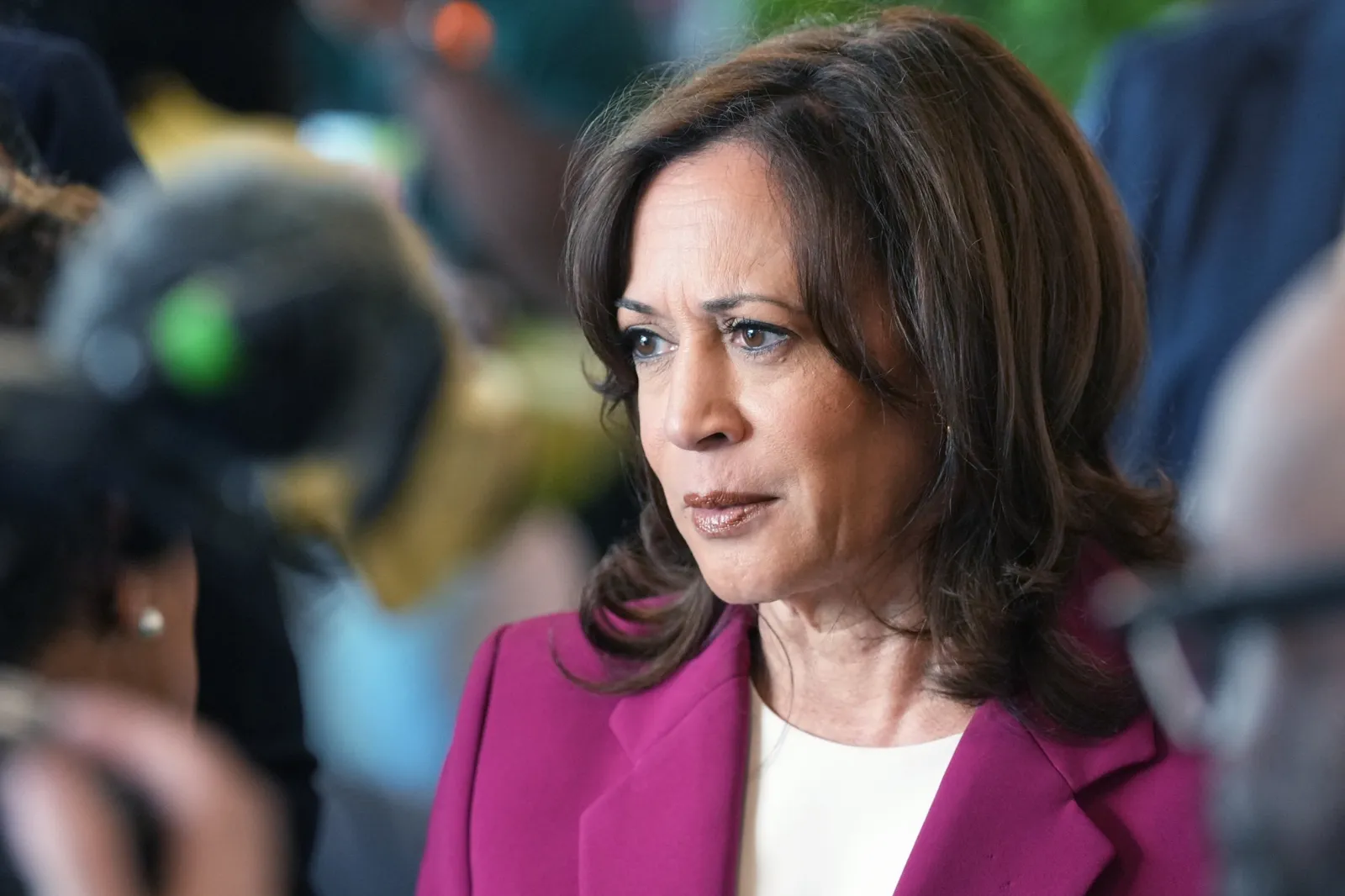
The survey found Harris ahead of Ocasio-Cortez by 16 percentage points, 25 percent to 9 percent, with Ocasio-Cortez polling in fourth place. About four percent of participants were unsure of which candidate they would support.
...
In another ranked-choice voting simulation that narrowed the field to the top five candidates—Harris, Newsom, former Transportation Secretary Pete Buttigieg, Ocasio-Cortez and Senator Mark Kelly—Harris maintained her lead with 30 percent support. Ocasio-Cortez and Kelly were tied for last at 12 percent, while Buttigieg had 22 percent and Newsom 24 percent.
The poll was conducted between May 6-11 and has a margin of error of (MOE) plus or minus 3.5 percentage points.
Early polls are not always predictive of final outcomes, but they do have major implications for candidates. Donors and voters use polls to gauge whether a candidate is viable, so the numbers matter to a candidate's ability to fundraise and garner media attention. They also measure initial name recognition among potential candidates.
What the Poll Shows About Harris and Newsom
In the first-choice ballot test, Harris led with 25 percent support, compared with 17 percent for Newsom. In a separate ranked-choice voting simulation featuring a five-candidate field, Harris again led Newsom, 30 percent to 24 percent, with Newsom finishing as the runner-up.
In the final round of the ranked-choice voting simulation, Harris received 52 percent support to Newsom’s 48 percent.
Potential 2028 Democratic Candidates Included in Poll
Several Democratic figures have been floated as potential 2028 presidential contenders. While the poll tested support for the following individuals, no candidate has formally announced a candidacy:

...
What Other Democratic Primary Polls Show
Data from other recent surveys paint a nuanced—and sometimes contradictory—picture of the early 2028 landscape:
- Echelon Insights (Mid-May): A poll of 460 likely Democratic primary voters (conducted May 14–18, MOE ±3.5 percent) placed Harris ahead with 23 percent, followed by Newsom at 17 percent, and Ocasio-Cortez at 11 percent. Buttigieg (10 percent), Kelly (6 percent), and Shapiro (5 percent) rounded out the top tier. About nine percent were unsure.
- AtlasIntel (Early May): Conversely, an AtlasIntel poll of 2,069 U.S. adults (conducted May 4–7, MOE ±2 percent) showed Ocasio-Cortez leading the pack with 26 percent—the first survey to position the New York progressive ahead of her potential rivals. Buttigieg followed at 22.4 percent, Newsom at 21.2 percent, and Harris at 12.9 percent.
- Echelon Insights (April): An April 17–20 poll of 1,012 likely voters (MOE ±3.5 percent) found a much tighter margin at the top, with Harris leading Newsom 22 percent to 21 percent, followed by Buttigieg at 12 percent and Ocasio-Cortez at 10 percent. Another 10 percent of respondents are unsure.
- Harvard/Harris (Late April): A broader survey of 2,745 registered voters (conducted April 23–26, MOE ±1.87 percent) gave Harris a commanding 50 percent majority among Democrats. Newsom followed at 22 percent, Shapiro at 9 percent, Ocasio-Cortez at 8 percent, and Pritzker at 6 percent. Not all potential 2028 candidates were included in the survey, like Buttigieg and Beshear.
- YouGov (Early April): A poll of 2,189 adults (conducted April 8–13, MOE ±2.8 percent) placed Harris in the lead at 24 percent, followed by Newsom at 12 percent. Ocasio-Cortez and Buttigieg tied at 9 percent, trailing independent Vermont Senator Bernie Sanders at 7 percent and Kelly at 5 percent.
What Has Ocasio-Cortez Said About Running?
Ocasio-Cortez was also recently asked about a potential 2028 bid by David Axelrod, former adviser to ex-President Barack Obama. The New York lawmaker said in part that she does not want to make decisions as a lawmaker with the idea of one day becoming a senator or president weighing in the back of her mind.
"My ambition is to change this country. Presidents come and go. Senate, House seats, elected officials come and go. But single-payer healthcare is forever. A living wage is forever, workers' rights are forever, women's rights, all of that, and so anyways ... to a finer point to your question is that when you aren't attached, right, when you haven't been like fantasizing about being this or that since the time you were 7 years old, um, it is tremendously liberating."
She has not confirmed plans to run for president and has also been named as a potential Senate candidate, as Senate Minority Leader Chuck Schumer is up for reelection. He could retire, but some on the left have said Ocasio-Cortez should challenge him in a primary if he chooses to run again.
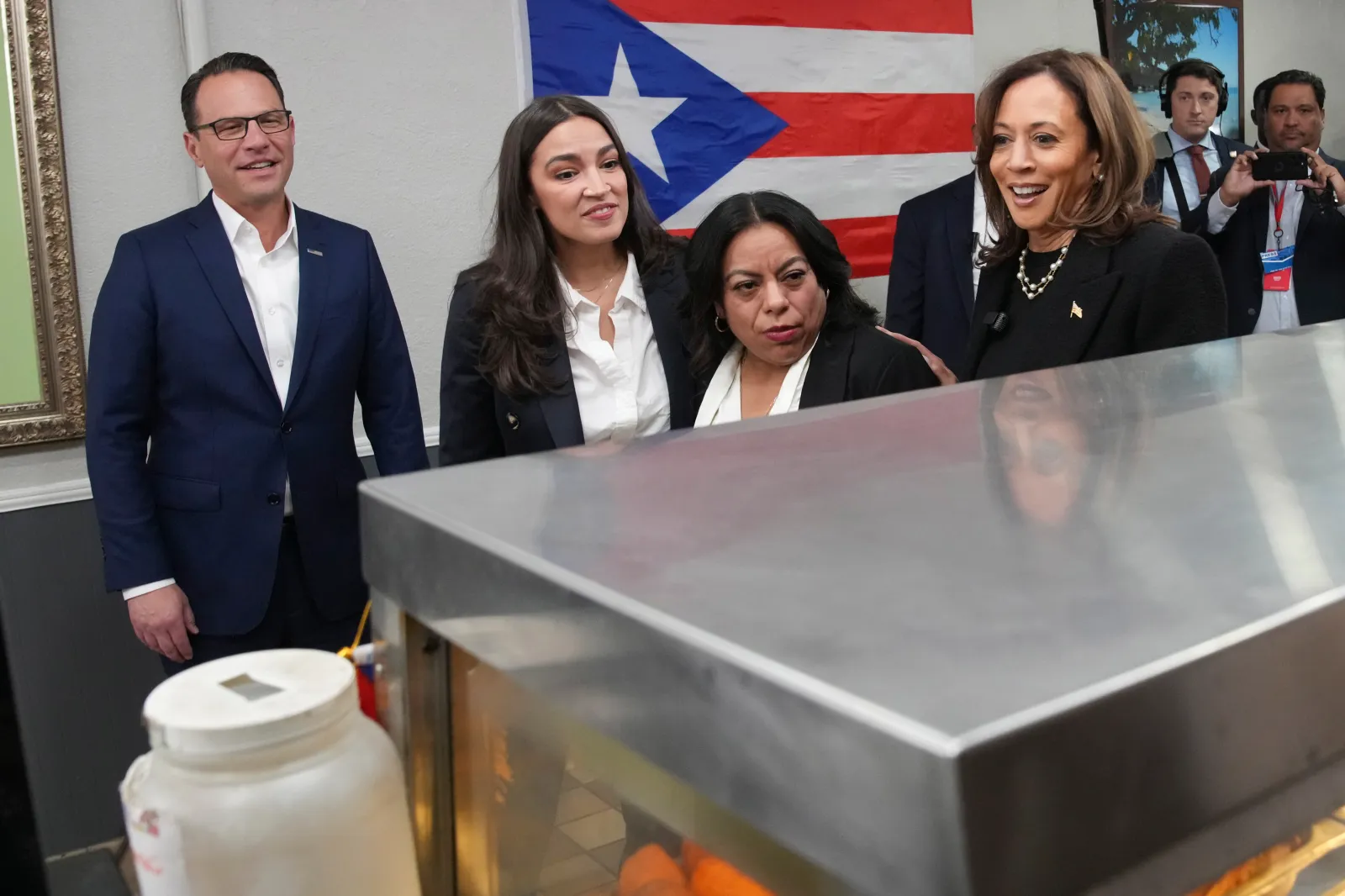
Ocasio-Cortez is a favorite among progressive voters, who view her as perhaps the most viable left-wing option to secure the White House in 2028, as other polls show more centrist candidates like Harris or Newsom with a lead.
...
What 2028 Presidential Election Polls Show
Outside of the Democratic primary, some early polls have shown Harris leading potential Republican candidate Vice President JD Vance and other Republican leaders. Most polls however have focused on the Democratic or Republican primary to determine the next nominee, rather than the party match up.
A recent Public Sentiment Institute poll of 893 likely voters (conducted May 21, MOE ±3.8 percent) tested top Democratic contenders against high-profile Republican figures:
- Harris leads hypothetical matchups against Vance (47.2 percent to 38.9 percent), Florida Governor Ron DeSantis (47.2 percent to 38.8 percent), Secretary of State Marco Rubio (46.9 percent to 38.9 percent), and Texas Senator Ted Cruz (46.1 percent to 38.5 percent).
- Newsom similarly leads all tested Republican opponents, leading Vance 45.1 percent to 38.6 percent, Rubio 45.9 percent to 39.1 percent, and Cruz 44.4 percent to 39.4 percent.
- Buttigieg also maintains a consistent lead over the Republican field, leading Vance 45.7 percent to 39.8 percent, Rubio 44.3 percent to 39 percent, DeSantis 45.2 percent to 37.3 percent, and Cruz 45.5 percent to 37.5 percent.
...
View 0 Comments
Submit Correction
View Editorial & AI Guidelines