10
Loading video...



By Anna Skinner, Steven Frank, and Jordan King
Share
Newsweek is a Trust Project member
See more of our trusted coverage when you search.Prefer Newsweek on Googleto see more of our trusted coverage when you search.
Republican U.S. Representative Ashley Hinson and Democratic state Representative Josh Turek sparred over Iran, tariffs, immigration and the economy Tuesday night in their final debate before Iowa voters decide the state's next U.S. senator.
The Hawkeye State is among this year's most competitive Senate races, as Turek and Hinson vie for the open seat left by retiring Republican Senator Joni Ernst. Polls continue to show a tight race between the two candidates after their first debate last week, where tariffs, immigration and voting records played a major role.
The second and final debate featured sharp disagreements over foreign policy, trade, health care and immigration, though the candidates largely avoided personal confrontations.
Read More on Politics
What Happened in the Iowa Senate Debate?
The candidates also sparred over tariffs. Turek argued tariff authority should primarily rest with Congress rather than the president and criticized Hinson's support for Trump-backed trade measures. Asked whether she would support legislation limiting presidential tariff authority, Hinson said she would want to review the proposal before deciding how she would vote.
Immigration also surfaced during the debate. Asked whether the administration of President Donald Trump had gone too far on immigration enforcement, Hinson pointed to border security as "the defining issue" of the 2024 election.
The candidates traded attacks on taxes, health care and Social Security. Turek accused Hinson of supporting policies that benefited large corporations and pledged to protect Social Security and Medicare if elected. Hinson argued Turek would support the agenda of Democratic leaders in Washington.

...
One of the sharper exchanges centered on Turek's attendance record in the Iowa Legislature. Moderators asked Turek about missed votes, and he replied that he had been campaigning. Hinson later argued that elected officials should be judged on whether they show up to do their jobs.
The debate also touched on transgender participation in women's sports. Turek said he did not believe biological males should compete in female sports, adding that athletic governing bodies should establish standards rather than individual states.
At another point, both candidates were asked whether control of the Strait of Hormuz should be left to Iran, though neither directly answered the question and instead pivoted to broader arguments about U.S. policy and the regional conflict.
Who Won the Iowa Senate Debate?
Political analysts reviewing the debate offered a divided verdict, though several said Hinson's experience and command of policy details gave her an edge.
Timothy Hagle, an associate professor of political science at the University of Iowa, told Newsweek by email that Hinson "did a better job," crediting the former news anchor's previous television experience and time in Congress with giving her a stronger grasp of the issues.
Hagle said Turek struggled to turn his answers into effective attacks and appeared to dodge one question by redirecting criticism toward Hinson.
Hagle also identified Turek's missed votes in the Iowa Legislature as a potentially damaging moment.
After moderators pressed him, Turek acknowledged that he had missed votes while campaigning.
"I have to imagine that will be the focus of some attack ads," Hagle said. However, he added that Turek did not make a serious enough mistake to transform the race and said debates rarely move many voters.
Karen Kedrowski, a professor of political science at Iowa State University and the director of the Carrie Chapman Catt Center for Women and Politics, said Turek was "well rehearsed and came off well," while Hinson appeared confident on television.
Kedrowski said the candidates became increasingly frustrated as the debate progressed, trading "pot shots, attacks and talking points" as well as accusations of lying.
Kedrowski said Turek had greater credibility when discussing health care, but described his attendance record as a continuing weakness that he has "never answered well."
She also noted that Hinson broke with Trump by criticizing the purchase of Russian diesel, an issue with particular resonance in an agriculture-heavy state where diesel prices matter to farmers and other rural voters.
John Geer, a political scientist at Vanderbilt University, said both candidates were prepared and "each scored a few points," but concluded that the exchange was unlikely to alter the fundamentals of the contest.
"This is a close race with two quality candidates," Geer told Newsweek by email, adding that Trump's unpopularity continued to loom over the campaign as Election Day approached.
Steffen W. Schmidt, a political science professor at Iowa State University, said Turek's attacks could help him close the gap in the tight race.
"In a contest that's this tight and close, I would not be surprised to see Turek catch up with and pass Hinson, especially since he effectively connected her to wealthy Americans and Trump-related gas and diesel price hikes," Schmidt told Newsweek by email.
Ashley Hinson vs. Josh Turek: Latest Poll Results
Current polls show a tight race between the two candidates, although no new polls have been released in which voters were surveyed after the first debate, according to several poll aggregators.
The most recent poll tracked by aggregators was Emerson's, with results announced on October 9, two days after the first debate. However, voters were surveyed between October 5 and 6, before the debate occurred. In the poll, Hinson led Turek by two points, 47 percent to 45 percent. Seven percent of respondents were still undecided.
The poll surveyed 650 people with a margin of error of 3.8 percent.
Meanwhile, a Suffolk University poll conducted between October 1 and October 4 gave Turek a four-point lead over Hinson, with 48 percent saying they planned to vote for Turek compared to 43.6 percent who said Hinson. More than 5 percent of respondents were still undecided. The poll surveyed 500 likely Iowa voters.
RealClear Polling's average of recent polls conducted since late September, including by CNN, The New York Times, Fox News, Quantus Insights, Rasmussen Reports, and InsiderAdvantage, gave Turek a narrow 0.6 percent lead over Hinson.

...
What Prediction Markets Show
Prediction markets show a less tight race. Both Polymarket and Kalshi show Hinson with a generous lead over Turek.
On Polymarket, Hinson is favored to win the Senate race at 57 percent to Turek's 43 percent. She has a greater lead on Kalshi, where she is favored to win at 60 percent to Turek's 41 percent.
Related Story
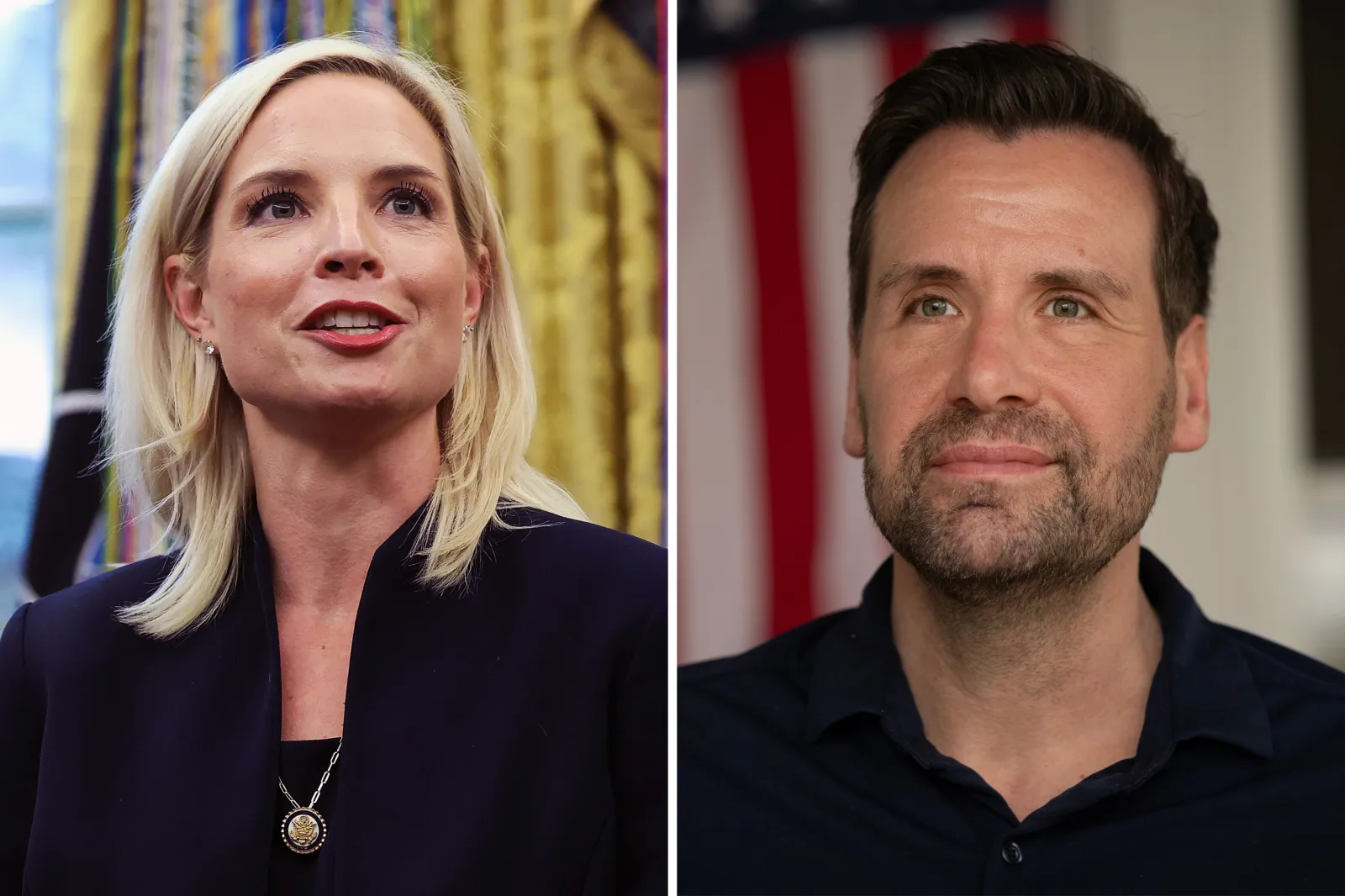
Hinson and Turek’s Voting Records Compared as Iowa Candidates Take Swipes
Newsweek’s reporters and editors used Martyn, our AI assistant, to produce this story. Learn more about Martyn here. Contact Newsweek editors on this story: Kate Nalepinski, Sam Wilson, Edward T. Cummins and Shakeema Edwards.
Update 10/14/26, 2:22 a.m. ET: This article was updated with expert comments following the debate.
Submit Correction
View Editorial & AI Guidelines