...

By Matt Cannon
News Editor
0
Share
Newsweek is a Trust Project member
See more of our trusted coverage when you search.Prefer Newsweek on Googleto see more of our trusted coverage when you search.
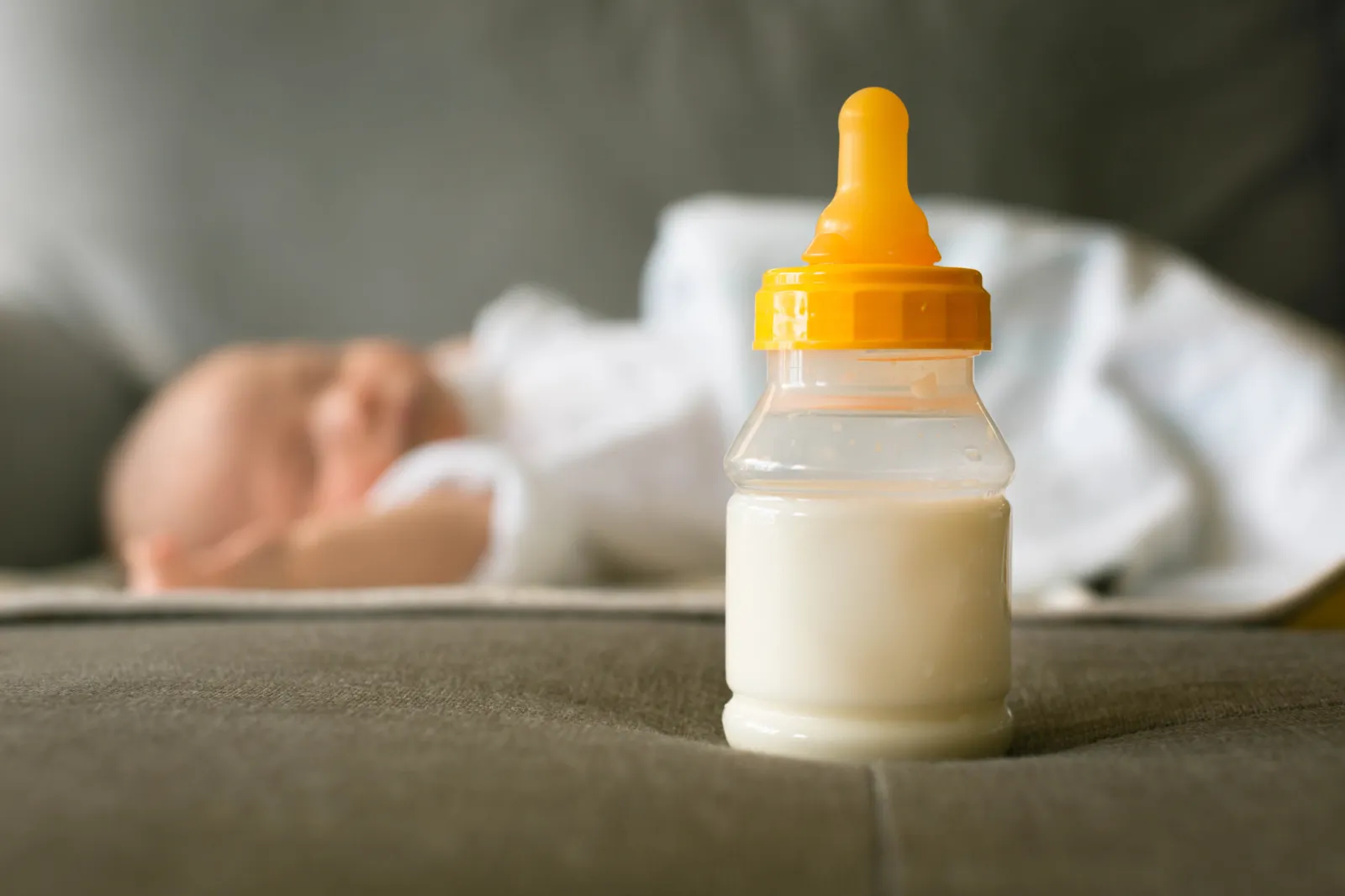
A recent recall of human donor milk distributed across nine states has been classified as the second-highest risk level—of three—by food inspectors.
The milk was voluntarily recalled by Columbus-based nonprofit OhioHealth Mothers' Milk Bank on July 14 after an inaccurate temperature reading from a thermometer on one pasteurization machine.
The recall affects a total of 5,735 bottles of milk distributed in Minnesota, Missouri, New Jersey, North Carolina, Ohio, Pennsylvania, South Carolina, Vermont and West Virginia, the U.S. Food and Drug Administration said.
Read More on News
FDA inspectors issued a Class II status on August 4, indicating a possibility of temporary or reversible health issues, or a remote chance of serious consequences.
An OhioHealth spokesperson told Newsweek via email on Tuesday that the Milk Bank tests every batch of milk sent to its facility for bacterial contamination and all batches recalled tested negative. The recall was issued "out of an abundance of caution... to ensure the highest standards of safety and care," they added.
...
Why It Matters
The recall highlights recurring public health concerns surrounding safety and labeling of vital products intended for infants and medically vulnerable populations.
FDA recall classifications are directly linked to the potential health consequences, with a Class II status indicating a possibility of temporary or medically reversible health issues, or only a remote chance of serious consequences, should consumers use the implicated product.
What To Know
Many mothers rely on donated or purchased human donor milk when not producing enough milk or when parents have adopted. It is also often given to premature or low birth weight infants.
The recall affects:
- 4,006 units of OH MMB Human Donor Milk, 20.00 Cal/oz., 1.00 g/dl. Protein, packaged in 3 oz. plastic bottles
- And 1,729 units of OH MMB Human Donor Milk, 20.00 Cal/oz., 0.80 g/dl. Protein, packaged in 6 oz. plastic bottles
The FDA said in its August 4 classification update that exact concentration of protein can vary.
Affected customers are advised to check any recently received milk bank products for recall status and contact OhioHealth Mothers' Milk Bank or their state health department for further instruction.
What People Are Saying
A OhioHealth spokesperson told Newsweek on Tuesday: "The Milk Bank tests every batch of milk that is sent from our facility for bacterial contamination. All batches recalled tested negative for bacterial contamination pursuant to Human Milk Banking Association of North America (HMBANA) standards prior to distribution.
"Nonetheless, out of an abundance of caution, OhioHealth Mothers' Milk Bank has taken the proactive step to recall a limited number of batches to ensure the highest standards of safety and care and has been working closely with the U.S. Food and Drug Administration on this process.
"OhioHealth Mothers' Milk Bank notified those entities and people who received the recalled product and is dedicated to continuing to meet or exceed HMBANA guidelines for milk processing, testing, and distribution."
The U.S. Food and Drug Administration has three risk categories for food recalls. They are described on the agency's website as follows:
- "Class I—a situation in which there is a reasonable probability that the use of, or exposure to, a violative product will cause serious adverse health consequences or death.
- "Class II—a situation in which use of, or exposure to, a violative product may cause temporary or medically reversible adverse health consequences or where the probability of serious adverse health consequences is remote.
- "Class III—a situation in which use of, or exposure to, a violative product is not likely to cause adverse health consequences."
What Happens Next
The donor milk recall remains active and listed as ongoing by the FDA as of August 5. Subsequently, consumers in the affected states are urged not to use the recalled products and to consult with relevant health providers regarding possible exposure.
If you are interested in donating your breast milk to Ohio Health, call (614) 566-0630 or email MilkBank@OhioHealth.com to begin the donor screening process.
Update 8/5/25, 3:24 p.m. ET: This article has been updated with comment from OhioHealth.
View 0 Comments
Submit Correction
View Editorial & AI Guidelines