...

By Newsweek Editors
0
Share
Newsweek is a Trust Project member
See more of our trusted coverage when you search.Prefer Newsweek on Googleto see more of our trusted coverage when you search.
Washington is pouring energy into a sweeping “Golden Dome” missile shield to detect and defeat the most catastrophic threats to the U.S. homeland.
But in March, a far cheaper—and arguably more revealing—test of American defense played out at ground level, one with alarming consequences for the homeland.
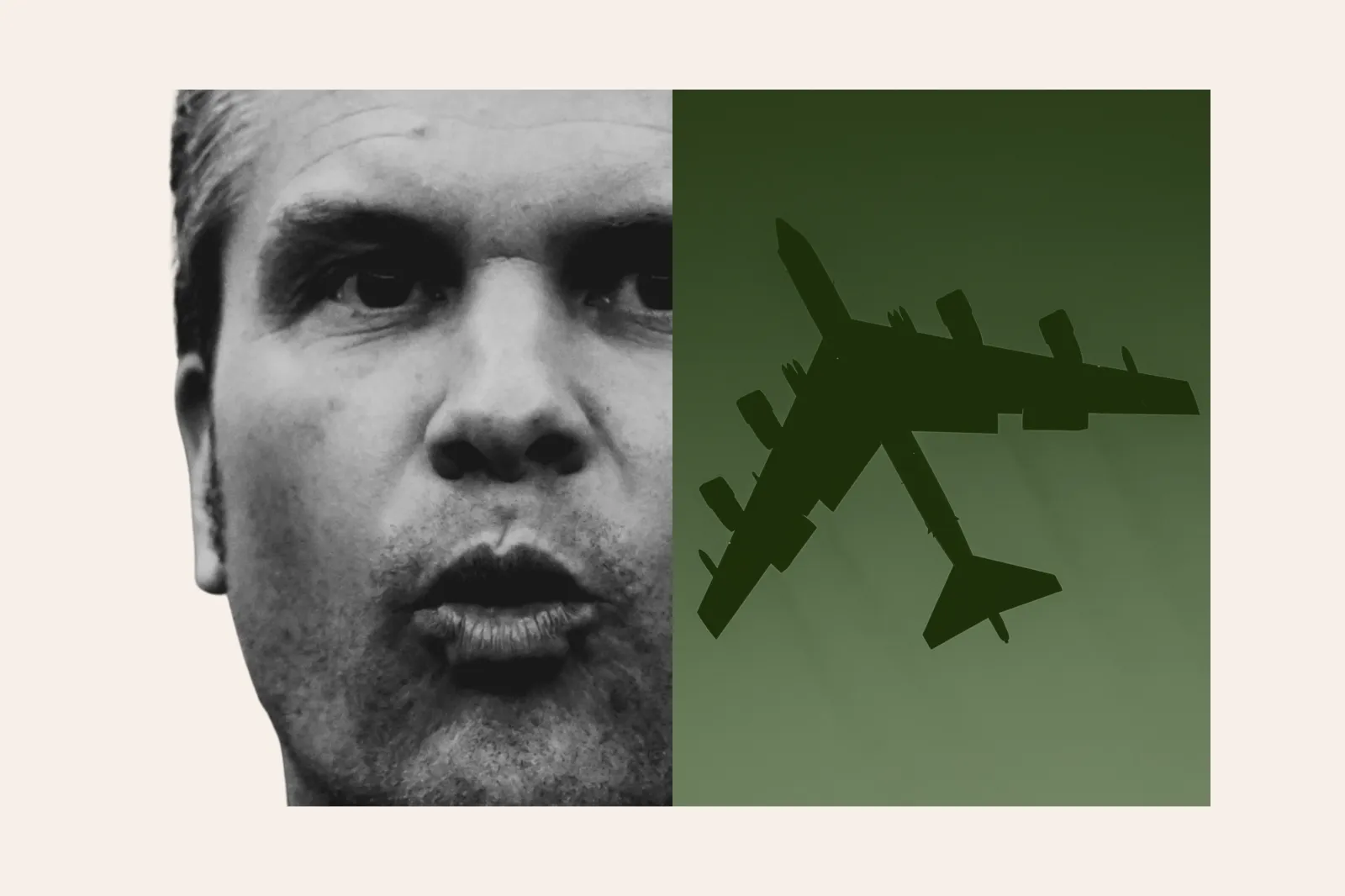
Waves of unauthorized drones flew over Barksdale Air Force Base in Louisiana, one of the most strategically important U.S. military installations. Barksdale sits at the intersection of nuclear deterrence, long‑range power projection, and global command‑and‑control.
Read More on Analysis
It operates B‑52H Stratofortress bombers and hosts Air Force Global Strike Command, which oversees all U.S. nuclear‑capable bombers and intercontinental ballistic missiles, two legs of the nuclear triad.
This troubling drone episode doesn’t reduce the Golden Dome to redundancy. But it does highlight a blind spot in America’s defenses.
The U.S. is discussing its glittering space-based missile shield while struggling to police the low-level airspace directly above some of its most sensitive installations. That mismatch may be the more urgent homeland security story in a world where drone warfare is the new norm.
A Different Kind of Incursion
A confidential internal briefing document reviewed by ABC News said Barksdale security forces observed multiple waves of 12–15 drones between March 9 and March 15.
The drone flights were operating over sensitive areas including the flight line, with aircraft displaying “non-commercial signal characteristics,” “long-range control links,” and “resistance to jamming,” according to the leaked document.
Barksdale had issued a shelter-in-place order on March 9 after a report of an unmanned aerial system operating over the installation, lifted it later the same day, and then saw additional drone activity persist for nearly a week.
It is part of a broader pattern of drone overflights of U.S. bases in recent years.
The risks are plain to see. These drones can conduct extensive surveillance, map secret areas, interfere with flights and other operations, and, worst of all, be weaponized for attack.
Barksdale is not a one-off nuisance flight by an overexcited drone enthusiast. The signs are of a much more sophisticated, possibly state-backed operation.
It is also part of a sustained pattern of activity designed, at a minimum, to probe and pressure base defenses. The U.S. cannot afford to fail these tests.
What Golden Dome Is (and Isn’t)
Barksdale is not a referendum on Golden Dome. At least, not directly.
Golden Dome is a highly advanced and integrated “system of systems” launched by executive order in January 2025.
It is intended to protect the U.S. from “aerial attacks from any foe,” the Congressional Research Service (CRS) says.
The program’s center of gravity is national missile defense. It will track and intercept ballistic, cruise, and hypersonic threats across phases of flight.
But there is a critical practical challenge: providing enough warning and discrimination to intercept low-flying threats, including cruise missiles and UAS.
Therein lies a basic truth that rarely drives big-budget debates.
Even as Golden Dome aims high, the hardest day-to-day defense problem may sit lower, with small objects in cluttered airspace, hovering at the seam where military response, law enforcement authority, and civil aviation rules overlap.
So do drones make Golden Dome obsolete?
No. The hypersonic missile threat is real and must be checked. But drones reinforce that homeland defense is two problems at once.
It is both stopping catastrophic missile attacks and preventing persistent, below-the-threshold intrusions that can disrupt operations, gather intelligence, and test responses.
Drones Don’t Beat the Shield—They Go Around It
Drones are strategically powerful because they sidestep the logic of national missile defense. Their value lies in persistence, ambiguity, and cost.
Even if Golden Dome matures into a robust architecture, drones can still loiter over infrastructure, map routines, identify blind spots, and impose operational pauses at a fraction of the cost of traditional threats.
The economics are punishing. Cheap drones are reshaping modern warfare.
Inexpensive systems, often launched in volume, can strain defenses built around costly interceptors and finite magazines.
A single Patriot missile costs millions of dollars. A drone costs thousands.
Thus, drones force defenders into inefficient choices that mean expensive shots, depleted capacity, and constant readiness.
In a domestic setting, the cost of defending against drones goes beyond interceptor rounds.
It’s also about disruption. They can shut down a runway, trigger a shelter order, create uncertainty, and more.
The enemy achieves effects disproportionate to the tool.
Barksdale’s reported characteristics—particularly the description of long-range links and resistance to jamming—also point to adaptation.
These systems were not off-the-shelf consumer drones. They had capabilities that require advanced knowledge of signal operations.
Many counter-drone defenses depend on identifying and interrupting control links or navigation.
Sophisticated jamming can enable adversaries to respond with autonomy, novel waveforms, or operational tactics that complicate attribution and defeat.
The drone threat is already flying under Golden Dome before it’s even completed.
The Real Blind Spot
If Golden Dome is a debate about architecture and investment, Barksdale is a reminder that homeland defense still comes down to detection, decision, and authority in real time.
A separate CRS report on DoD counter-UAS policy warns that drones pose “significant technical and operational challenges,” and highlights issues including domestic authorities, coordination, testing, and the maturity of proposed counter-UAS solutions.
In practice, that often means installations can detect drones yet struggle to respond decisively, especially when operators may be off-base, mobile, or using methods designed to avoid being located.
This is where Barksdale becomes bigger than Louisiana.
The U.S. can pursue ambitious national systems while still lacking a uniform, scalable homeland posture for countering small drones across bases, ports, power infrastructure, and public airspace.
The blind spot is covered in the unsexy integration work. It’s about firming up sensor fusion, rules of engagement, interagency lanes, and rapid response that can function inside the U.S.
As Barksdale shows, the time to complete that work was yesterday. The next best time is today.
Buying Proximity
Golf clubs near Barksdale add another layer of concern about security. It's one that raises urgent questions all across the U.S.
In January, the Daily Caller News Foundation reported that two golf courses near Barksdale, roughly two miles away to the north and south, have been owned since 2013 by Eugene Ji.
The report by Philip Lenczycki, a journalist and former professor of Mandarin and East Asian civilizations, described Ji as a Chinese-American businessman who held roles linked to China’s United Front Work Department, an intelligence agency of the Chinese Communist Party (CCP).
There have been no reported espionage incidents involving the golf courses, and Ji’s daughter said the family’s business is only focused on golfing operations.
But the eyebrow-raising ownership speaks to a broader security concern in the U.S. about the ability for foreign powers to essentially buy proximity to sensitive facilities via land ownership.
It exposes any defensive blind spots near installations and enables adversaries, such as the CCP, to exploit them.
Land ownership alone does not imply guilt, of course. But the vulnerability is real.
AI, Drones, and the End of Territorial Depth
There is another rapidly evolving technological factor at play here: artificial intelligence.
AI enhances drones by enabling autonomy, real-time sensor fusion, and adaptive decision-making.
Machine vision improves target recognition and navigation, while onboard learning allows route optimization and jamming resistance. Swarm algorithms coordinate massed flights and predictive analytics extend endurance and effectiveness.
All this transforms drones from remotely piloted platforms into networked, self-directing systems across modern battlefields.
AI-enabled drones weaken the traditional advantage of territorial depth by enabling small actors to penetrate states deep within their borders and threaten critical infrastructure without conventional invasion.
Barksdale reads like a domestic echo of that logic.
The homeland is not a sanctuary if small systems powered by advanced AI can repeatedly enter restricted airspace, test responses, and force disruptions, whether that be for mischief or malevolence.
House With Broken Windows
Golden Dome, at its best, is a hedge against the worst day imaginable. Barksdale is a warning about the bad days that can happen cheaply, repeatedly, and ambiguously—right now.
If America builds a roof without fixing the windows, it could end up with a national shield that reassures on paper while leaving everyday vulnerabilities exposed in practice.
Hey gang, Carlo Versano here. I hope you enjoyed this article. As Newsweek's Director of Politics and Culture and editor of the 1600 newsletter, I'm keen to hear what you think. Now, Newsweek is offering a new service to allow you to communicate directly with me in the form of a text message chat. You can sign up and get a direct line to me, as well as the reporters who work for me. You can shape our coverage.
As a Newsweek member, we're offering this service to you for free. You can sign up below, or read more about how it works here. Let's talk!
View 0 Comments
Submit Correction
View Editorial & AI Guidelines