
Photo-illustration by Newsweek/Courtesy of Alexis Barad-Cutler

By Alexis Barad-Cutler
0
Share
Newsweek is a Trust Project member
See more of our trusted coverage when you search.Prefer Newsweek on Googleto see more of our trusted coverage when you search.
Walking past the gift shop at the resort where we stayed over winter break, I heard someone call out: “Everyone’s talking about you.”
It was the hotel manager, leaning out the door of the shop, waving at me.
“Your body,” she said, rubbing her hands over her own biceps and then pointing to mine. “You must be working out a lot!”
Read More on My Turn
My Husband Froze His Eggs Before He Transitioned. Now I’m Having His Baby6 min read

I Was Single at 37 and Had Given Up on Love—One Message Changed Everything10 min read

I Thought Going Gray Meant I’d Stopped Caring about My Looks. Then the Compliments Started6 min read

...
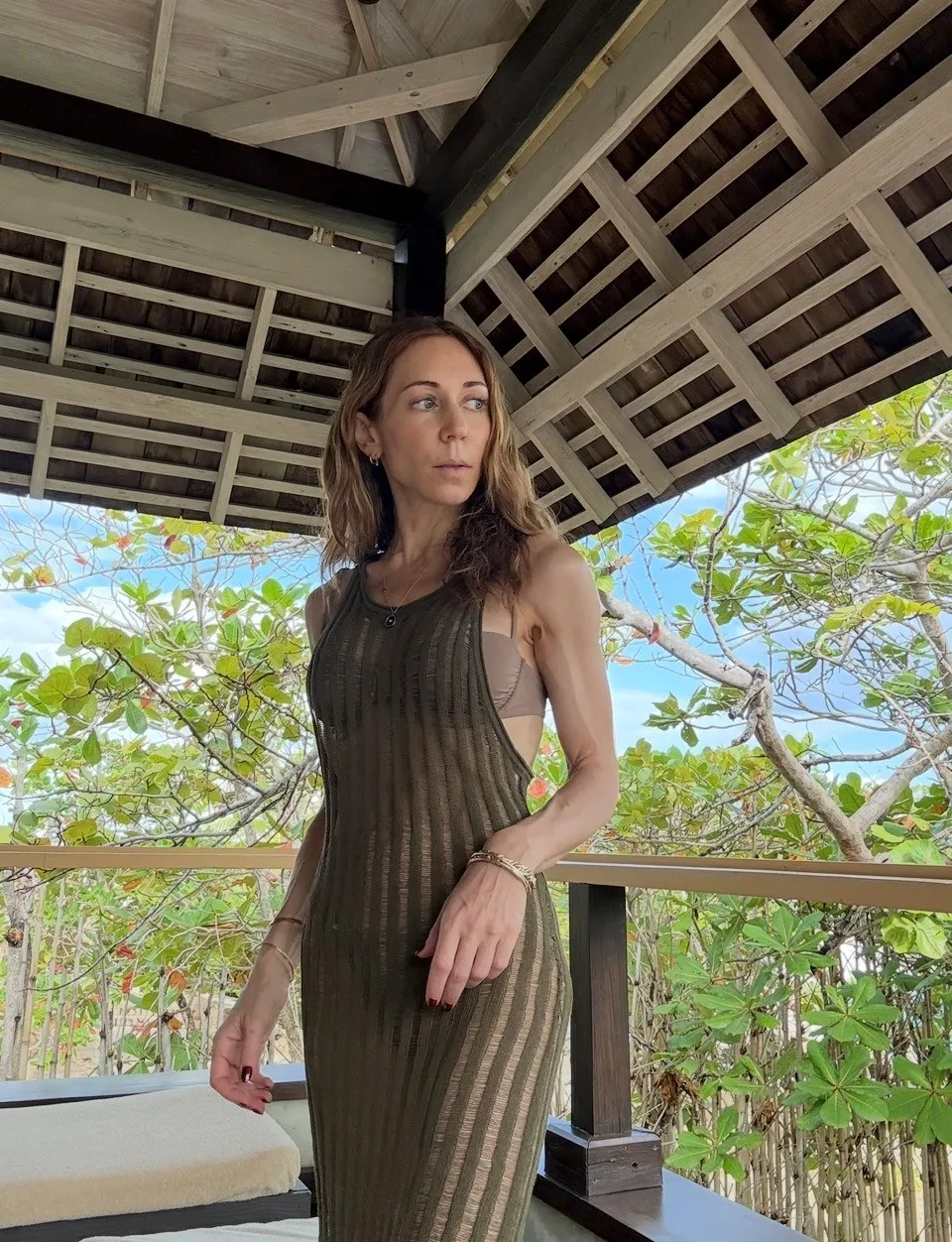
Since arriving in Jamaica, I had received a few comments about my “new” body. Many of the hotel guests return every year, so they knew what I normally looked like: athletic, muscular, slim. But my recent weight loss made my existing muscles look even more prominent and my body sinewy.
“Yeah, lots of weight lifting,” I lied, and quickly excused myself to meet my family by the beach. I was wearing a floor-length swimsuit cover-up, but I felt exposed.
No one knew my shameful secret.
I’d begun taking tirzepatide, a GLP-1, several months earlier for my chronic migraines, an off-label use. I had brought it up with my neurologist after reading that GLP-1 medications, which treat type 2 diabetes and have become popular for weight loss, may reduce the need for emergency migraine treatment like triptans (a heavy-duty migraine drug). I typically take a triptan 12 to 15 times a month and the side effects—tingling, dizziness, heaviness in the chest—are awful. My doctor said it was worth a try: A few of his patients on GLP-1s reported that their migraines improved.
But there was one stipulation: My doctor was aware of my history of anorexia and warned that I’d have to really be mindful of my calorie intake. “You don’t have any weight to lose as it is,” he told me. He explained how another patient, a teen who was quite thin and taking a GLP-1 for her weed addiction, had to visit for weekly weigh-ins. He told me that if I noticed I was losing weight, I would need to eat more.
How hard could it be to consume more calories? I promised my doctor I’d be a responsible adult and stay on top of my diet.
Then, I broke my promise.
If I had been honest—with myself and my doctor—I wasn’t exactly opposed to the possibility of dropping a few pounds. Up until then, I hadn’t weighed myself in 20 years, a streak I took pride in. But I’m a human woman living in a beauty-and-weight-obsessed culture steeped in patriarchy and misogyny, and messaging that nearly everyone could stand to lose a few pounds. I decided that if this drug could help with my migraines and help me feel better in my clothes, it was a win-win.
I thought I’d recovered from the restrictive eating disorder that consumed me in my teens and 20s, a time when I was so frail I couldn’t think straight and had to drop out of my pre-med track in college. Sure, I had remained painfully conscious of my size and hyper-aware of my food intake over the years, but I thought the darkest days of my insecurities were over. Up until taking the GLP-1, I had maintained a healthy weight for my height, which felt like proof that I was “healed” from my anorexia. I didn’t know it had been waiting in the wings for its big comeback—to slide to the center of the stage wearing a top hat and cane, with a hearty, “It’s good to be back, folks!”

...
After just a few weeks of taking the medication I was swimming in all of my pants. I looked up TikToks on how to tighten the waist of jeans without a seamstress—unsurprisingly, there were many such tutorials. But was I happy with the result? Yes, of course. No more food noise or tallying calories or planning out my meals. No impulse to grab that extra sweet treat after dinner even though I wasn’t hungry, and then feeling bad about it. Knowing exactly when to stop eating, because the signal of fullness was so much clearer.
By Christmas, I had lost about 20 pounds. I was as thin as I’d been at the worst point of my eating disorder. And I was overjoyed about it.
GLP-1s are starting to be studied for their effects on binge-eating disorders, where they actually may help. When it comes to food-restrictive disorders like anorexia, however, the research is scarce. But the danger is easy to imagine: Research has suggested that inadvertent weight loss can trigger a relapse in anorexia.
These medications are increasingly being marketed to women in midlife and beyond who are experiencing symptoms of perimenopause and menopause, such as weight gain. Women my age (30-49) are among the heaviest users of GLP-1s, according to RAND. Women aged 50–64 report the highest overall use. And not only are doctors prescribing these medications at great rates, they’re endorsing them: Menopause whisperer Dr. Mary Claire Haver described them in her Substack as a “one of the most effective, evidence-based strategies we have” for managing menopause-related weight gain, especially when paired with hormone therapy.
All of this made it easier to reassure myself I was OK. I was doing something responsible—something medically sanctioned—even when I’d folded in a second motive that didn’t belong there: losing weight I didn’t need to lose.
The night after the hotel manager’s comment, my husband, one of the few who knew about my GLP-1 use, and my history, gently rested his hand on my shoulder and asked, “What does it feel like to have people talking about your body?” It took me a few moments to articulate my true feelings.
“It feels like they’re talking about somebody else,” I said. “Like this body isn’t something I made myself. It feels fake, like a body on loan.”
I knew I didn’t owe anyone an explanation for how I looked. Yet I felt like I was misleading people into thinking my lean and toned body was just the product of a rigorous weight lifting regimen. But what was I supposed to say? Should I have given them the whole rundown of my health history?
I also felt mildly ridiculous. It’s one thing to have anorexia in your teens and 20s. There’s even a weirdly romantic Sylvia Plath-like aspect to it—think about the anorexic character in Girl, Interrupted. She’s fragile, she’s the manic pixie, you want to fix her.
It’s different when you’re a middle-aged anorexic. I was just another privileged white woman obsessed with being thin. So original.
And yet.
...
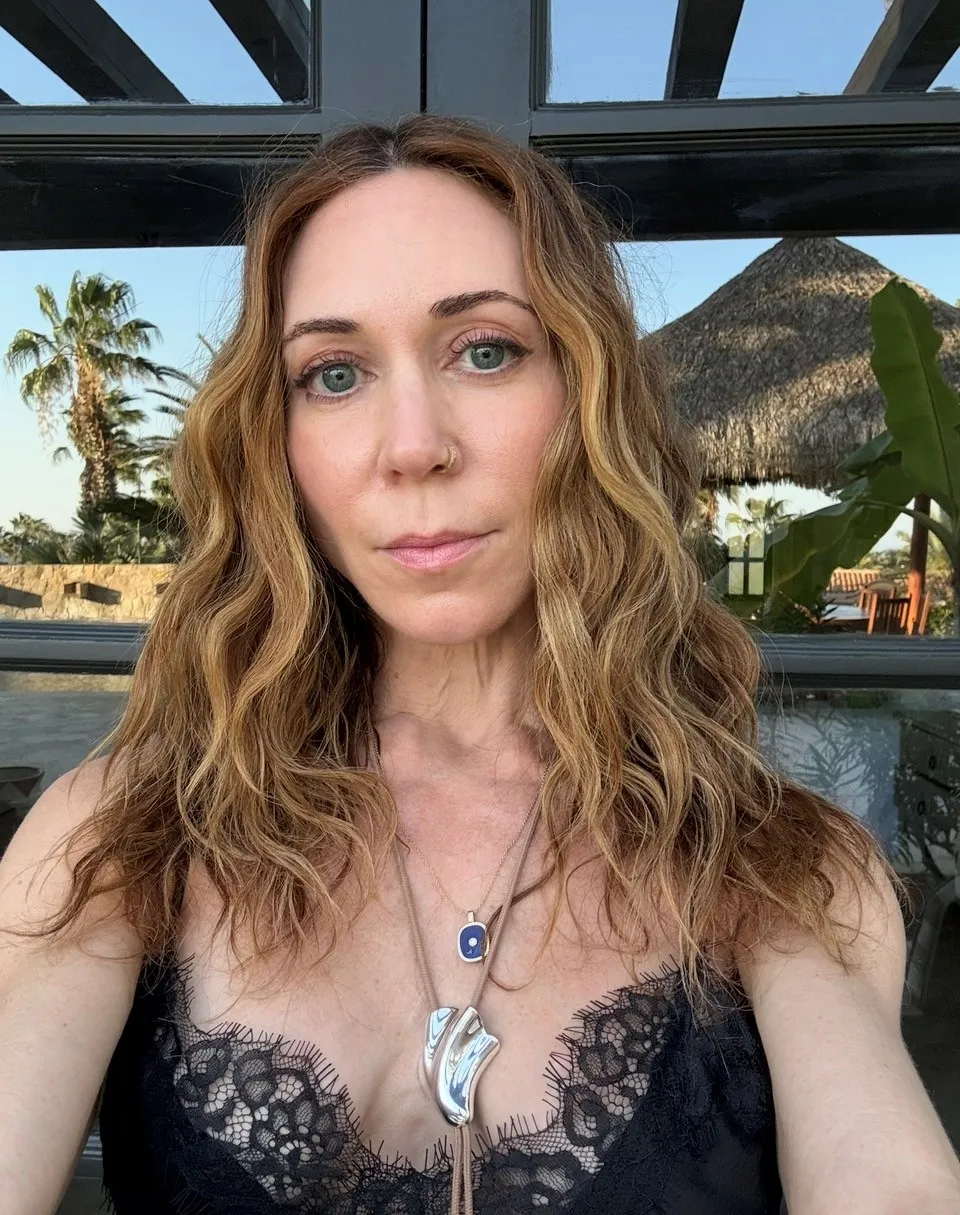
When we returned to New York, I couldn’t stop thinking about the fuss people had made about me back in Jamaica. The initial thrill of watching my body transform began to diminish, replaced by a nagging worry that maybe I had lost too much weight. The news articles and content showing up in my algorithm reminded me daily that menopause accelerates muscle loss. As I read more about the downsides of GLP1s, I learned that users of the drug have a significantly higher risk of developing osteoporosis.
I didn’t want a broken hip in my future and had worked too hard for my strong muscles to lose them when I needed them most. I told myself and my therapist I would become intentional about maintaining my weight and maybe even gain back a few pounds. Most importantly, I vowed to lower my dose of tirzepatide. My mother, who said I’d “lost my looks,” was happy to hear this.
I bought loads of protein powder and stocked up on cottage cheese, determined to meet my protein goals. I lifted heavier weights and increased my training days. I spaced out my injections and finally reduced my dosage. It felt like a compromise.
It wasn’t an easy one. My disordered thinking tried to sabotage my plans. I weighed myself, unable to fight my curiosity about the effects of the protein, weights and reduced dosage. I’d gained two pounds. Suddenly I was overwhelmed with worry that the scale would only continue to go up, until I was the same weight as before taking the GLP-1. The food noise returned: I fixated on what every bite, every carb or every ounce of sodium might do to my body without the help of the full dose of medication that had led to such rapid weight loss in the first place. One night, I locked myself in the bathroom after everyone had gone to bed to talk to ChatGPT. I was too embarrassed to tell anyone, even my husband, my racing thoughts. On the floor, my back pressed against the cool, steady wall of our bathtub, I typed questions like: "If I went up 8 ounces since yesterday, does that mean I gained real weight or just water? Will decreasing my dose make me gain weight immediately, and by how much?”
Of course, the AI chatbot tried to reassure me that bodies naturally fluctuate, and that any increase on the scale from day to day was almost certainly water weight. I remained skeptical. Still, I challenged myself to push ahead, to stay on the lower dose and to avoid the scale from then on.
At a recent Passover seder, I was carrying platters of pot roast back to the kitchen when my aunt leaned in and asked if the GLP-1 was actually helping my headaches. I felt put on the spot. “Maybe?” I shrugged. “Well, you kind of look like a 15-year-old,” she said. Then my mother appeared in the doorway, gesturing toward my legs, exposed in a skirt for the occasion. “I’m not going to say it,” she said. "But you know what I’m going to say.”
That night, I lay awake in bed from the seemingly neverending roadwork happening outside my apartment. I thought about what my aunt said, and what my mother had left unsaid, and this was my takeaway: I may have put a tiny bit of weight back on, but at least I was still thin enough to worry my family.
If I were my friend talking to me, I would say to get over myself already. That I am too old for this nonsense, that I should reduce my dosage even more—or stop entirely—and go back to the size my body had more or less maintained for two decades. And yet I still actively choose to be here, to take a drug that I know is risky for people with my health history. At this point, I don’t know if the GLP-1 is helping my migraines. But I do know it’s keeping me very thin, and that’s a value high enough for me that I haven’t stopped.
Eating disorders in midlife are quite common. By age 40, one in five women has dealt with one, according to a 2019 study. And since GLP-1s have handed a generation of middle-aged women with past eating disorders a socially (on the surface) acceptable way back in, I’m probably not the only one contending with a midlife eating disorder relapse after going on the drug.
I don’t think GLP-1s are inherently bad. I have several friends who are on them for various reasons (none diabetes or obesity) and feeling better than ever. What brings me shame is the fact that, with my history, I knew I was playing with fire, and I took the drug anyway.
I thought I was strong enough to resist being seduced to a place I thought I’d never revisit.
It turns out, I was wrong.
Alexis Barad-Cutler is a writer, founder of Not Safe For Mom Group, and author of the Substack newsletter In Our Own Skin, which explores how beauty culture shapes the bodies we inhabit. She lives in Brooklyn with her two children, husband and a very grumpy dog.
All views expressed in this article are the author's own.
Do you have a personal essay you want to share with Newsweek? Send your story to MyTurn@newsweek.com.
View 0 Comments
Submit Correction
View Editorial & AI Guidelines