

By Meghan Holohan
0
Share
Newsweek is a Trust Project member
See more of our trusted coverage when you search.Prefer Newsweek on Googleto see more of our trusted coverage when you search.
As I woke, I rolled onto my back, not quite ready to get up for the day. I mindlessly placed my hand on my belly; it felt wet. Confused, I looked at my hand and saw bright red. I jumped from bed to look at myself in the mirror and saw that my belly button had filled with blood.
As someone with Stage 4 endometriosis, aka deeply invasive endometriosis (DIE), I have experienced a variety of horrible and weird symptoms associated with this disease. When I texted my friend, an OB-GYN, about what had happened, he replied, “You’re having a belly button period.” Truly, a sentence no one wants to hear.
Endometriosis is a condition where tissue similar to the lining of the uterus grows outside the uterus. It’s staged from 1 to 4, from least to most severe. Stage 4, or DIE, the type I have, burrows deep into the tissues and organs, growing aggressively. But the severity of symptoms doesn’t always match the stage of the disease. People with Stage 1 can experience intense pelvic pain, fatigue, bloating and back pain while people with Stage 4 might never experience symptoms. Sadly, I have always been symptomatic.
Read More on My Turn
When My 5-Year-Old Told Me She Went Blind, I Had to Make a Difficult Decision6 min read

I Knew Something Was Wrong With My Baby—Then My Worst Fears Came True7 min read

My Daughter’s Fevers Kept Coming Back. Tests Revealed Our Worst Nightmare6 min read


...
I took a photo of my belly button and emailed it to my gynecologist, a minimally invasive gynecological surgeon (MIGS), asking what to do. I knew that in some rare cases, people can develop endometriosis in their belly buttons, which can cause cyclical bleeding that aligns with their menstrual cycle—a belly button period.
My doctor’s office recommended a visit to the emergency room at the women’s hospital. I underwent a CT scan, which ruled out the more common umbilical hernia. But it found mild cellulitis, a type of skin infection. The ER doctor prescribed an antibiotic but my discharge nurse urged me to follow up with my doctor because it was possible I also had belly button endometriosis.
My doctor agreed and prescribed me progesterone to prevent bleeding. This was the second time my belly button bled. Three months after my hysterectomy in 2023, I woke to a similar scene. At the time, my doctor thought the bleeding was a delayed side effect from surgery, that a tiny hole that hadn’t healed properly was allowing the blood to leak into my belly button. For a week, I visited the office every day where a kind nurse patiently packed the pinpoint-sized wound with gauze until it healed.
Following my ER visit, I hoped that this problem would disappear. It had only been a year since I underwent my hysterectomy to treat adenomyosis—a condition similar to endometriosis where the lining of the uterus grows into the walls of the organ—and I wasn’t anxious to have another surgery.
For about a year after my ER visit, I felt OK. Everything changed in the spring of 2025 when I felt burning in my belly button. I made an appointment with a nurse practitioner, worried that I had an infection or I’d bleed again. Everything looked fine, but she prescribed me a new type of progesterone to see if it improved how I felt.
Soon after, my symptoms became more frequent.
I never realized how little most people think about their belly buttons until mine became a problem. Even though I had a hysterectomy, I have a lone ovary and experience what feels like a monthly cycle. Now instead of simply having painful menstrual cramps, I also had belly button cramps. Sometimes it felt like a sharp stabbing pain. Other times it burned. Sometimes my belly button and the skin around it would pulsate in such a way I thought an “Alien” chestburster might tear out of my abdomen. It always felt like something was in my belly button, and wearing pants with buttons hurt. Often, I found dried blood there.
When I felt sharp stabs of pain or pressure, like my belly button might rupture, I’d investigate. But it often looked normal. Well, as normal as my belly button looked. Since my hysterectomy, I had developed a new puffy growth in my belly button.
By fall, I felt exhausted by the outsized role my belly button played in my life. I asked for an MRI to look for endometriosis. It uncovered a pencil-eraser sized nodule nestled behind my belly button, what my doctors suspected was umbilical endometriosis. I felt both frustration and relief. There was something under my belly button causing these symptoms. It wasn’t in my head. But to treat it, I’d have to undergo my fourth abdominal surgery in 10 years.
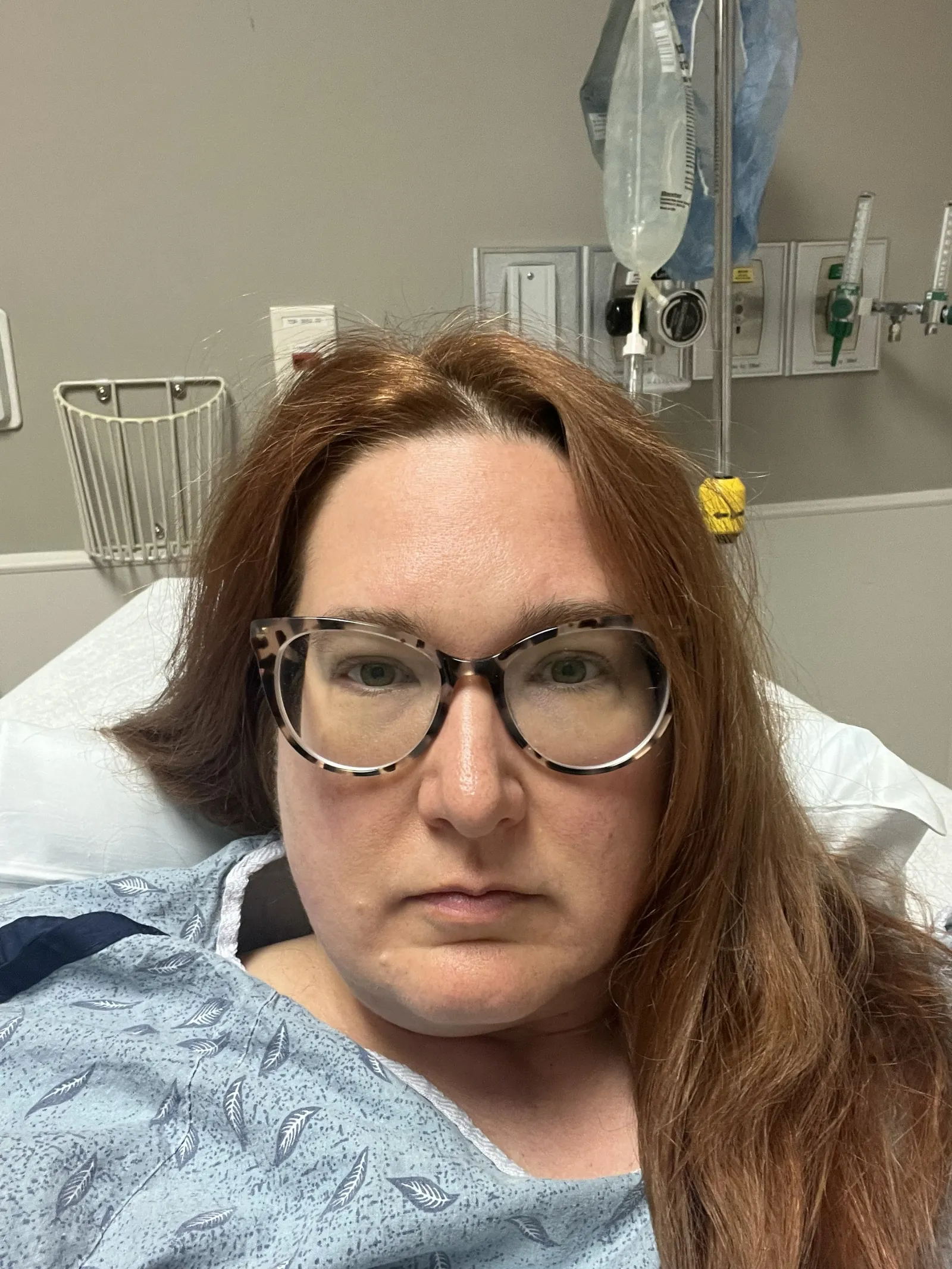
Before my surgery in March 2026, doctors and nurses filed into my room asking what procedure I was having. Each time, I said the doctor was removing endometriosis from my belly button. A nurse looked at me with concern and said it’s rare but sometimes happens.
...
When I woke, my husband told me that he’d spoken to the surgeon, who removed two nodules and fixed a tiny hernia. The surgeon couldn’t save my belly button and my husband joked that now I’d look like a Ken doll. When I dressed to go home, I saw that the surgeon closed my incision in such a way that it looks like I have a shallow belly button.
As I recover, the swelling lessens and the bruises fade. While I feel pain in the incision sometimes, it feels different than what I experienced before surgery.
When I met with my doctor for my two-week follow-up, though, I learned something shocking. I did not have umbilical endometriosis after all. I had two epidermal inclusion cysts, harmless masses that fill with fluid when something blocks a hair follicle. While they’re fairly common on the face, torso, back and limbs, they occur less often in the belly button. Cleveland Clinic says that when these cysts develop in areas without hair follicles, such as inside your belly button, it’s likely due to injury. My belly button has been through a lot—three laparoscopic surgeries.
My surgeon said the cysts could cause the same discomfort I described. But the pain is also consistent with what I know about living with endometriosis. If there’s an injury, it feels worse. My body remembers my past hurt. When I have an endometriosis flare, I feel a sharp twinge in my right ovary from where my doctor removed a golf-ball sized endometrioma. My right flank often aches since my doctor excised endometriosis from my ureter, the tube that carries urine from the kidney to the bladder. There’s another possibility, too. I have microscopic endometriosis somewhere in my body that the MRI couldn’t detect.
While surprised, I’m grateful I didn’t actually have endometriosis in my belly button. It’s an insidious disease that has caused me intense pain and dysfunction throughout my life. I’m not alone. The World Health Organization estimates that, worldwide, 10% of women of a reproductive age, about 190 million women, have endometriosis. People with endometriosis spend more on health care and need to take more time off work: one paper estimates the annual economic burden from endometriosis costs the United States $119 billion.
Even when surgeons expertly excise endometriosis, there can be microscopic or clear lesions that remain and require a future surgery. I wish there was more funding for endometriosis research so doctors could better understand the disease and could treat it less invasively. While experts know that having a mother or sister increases your chance of having endometriosis, they don’t really know what causes it. In 2022, the National Institutes of Health awarded $16 million for endometriosis research, about $2 per person with the diagnosis. Diabetes, which 12% of U.S. women have, received $31.30 per patient from the NIH that year.
As a health reporter, I’ve covered illnesses that don’t get enough attention, such as endometriosis. Even though it impacts so many women, it often takes up to 10 years to receive a diagnosis. For many, it takes longer. It took me more than 20 years to receive a diagnosis, which is baffling. My mother had endometriosis so I’d ask my doctors if my intense pain, extreme bloating, fatigue and heavy periods could be because I had endometriosis, too. Still, they dismissed me.
Umbilical endometriosis occurs in about 0.5% to 1% of patients. I knew it could happen so I wasn’t as worried when my belly button bled (though it certainly looked gruesome). But others do not. When I Googled the condition, I found few articles; even medical sites had very little information. It felt lonely to experience something so unusual and have symptoms people don’t understand. Women deserve to know about their bodies. Patients deserve quicker diagnoses, a better understanding of endometriosis and less invasive treatments that improve quality of life. We simply can’t afford to ignore the condition any longer.
Meghan Holohan is a freelance health reporter who focuses on patient-centered stories about cancer, rare disease, disability and women’s health.
All views expressed in this article are the author's own.
Do you have a personal essay you want to share with Newsweek? Send your story to MyTurn@newsweek.com.
View 0 Comments
Submit Correction
View Editorial & AI Guidelines