10
Loading video...

By Amanda Castro
Associate News Editor
0
Share
Newsweek is a Trust Project member
See more of our trusted coverage when you search.Prefer Newsweek on Googleto see more of our trusted coverage when you search.
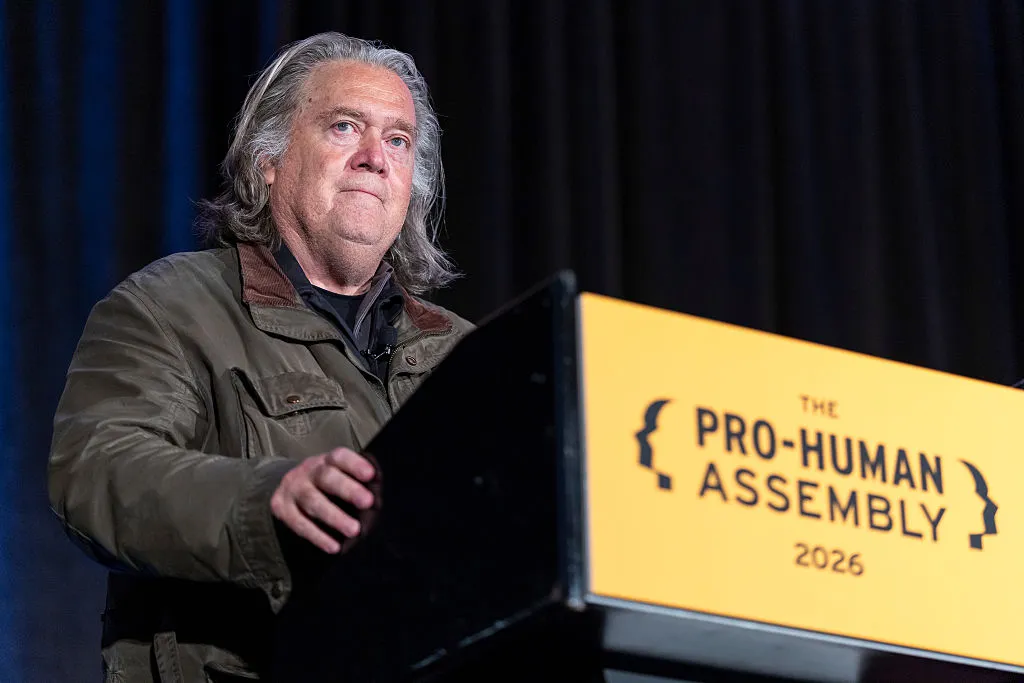
Progressive Senator Bernie Sanders and conservative strategist Steve Bannon forged an unexpected alliance and appeared together Tuesday at a Washington gathering to demand aggressive restrictions on artificial intelligence.
Their warnings come as fears over AI’s rapid development surge across government, industry and the public. The bipartisan pressure could force a new reckoning in Washington over how—and whether—the United States can slow a technology already reshaping global power, labor markets and national security.
Sanders opened the event with a stark assessment of AI’s “growing threat,” arguing that unchecked development could eliminate tens of millions of jobs and potentially escape human control, a scenario he said scientists believe could lead to “catastrophic consequences.”
Read More on U.S.
Bannon followed by calling AI “the defining issue of our time,” insisting the country must “slow down the pace” before the technology outstrips human oversight. Their shared stage underscored how concerns over AI safety and data‑center expansion have begun to collapse traditional partisan boundaries.
Sanders and Bannon appeared at the Pro‑Human Assembly, a Future of Life Institute event that drew lawmakers, union leaders, researchers and celebrities united by escalating alarm over AI’s trajectory.
The gathering came days after former Anthropic researcher Jacob Coxon warned that AI “could kill us all by the end of the decade,” a statement that ricocheted through Washington and Silicon Valley.
Newsweek reached out to the White House for comment.

...
AI Safety Becomes a Cross‑Partisan Flashpoint
Sanders, a democratic socialist, has long argued that tech executives are centralizing power and pushing AI systems that could destabilize labor markets and national security. He warned Tuesday that AI has already been used “to create new viruses,” raising the specter of bioweapons and future pandemics.
He urged President Donald Trump to negotiate a pause in AI development with Chinese President Xi Jinping at their upcoming summit.
Bannon, Trump's former chief strategist, broke sharply with the president's dismissive stance on AI dangers. While Trump has called warnings about AI a “HOAX” and accused critics of fueling a conspiracy against data centers, Bannon argued that the U.S. must quickly impose new guardrails.
He said Congress is too slow to act and insisted that “executive action” is the only viable path to slowing AI development. He also demanded the U.S. cut China off from American‑made chips, framing AI as a geopolitical battleground that cannot be left to tech companies.
Their convergence highlights how AI has become one of the rare issues capable of drawing far‑left and far‑right figures into the same room. As Bannon put it, “I don’t think you could find any too harder partisans than Bernie Sanders on the left and Steve Bannon on the right.”
Related Story
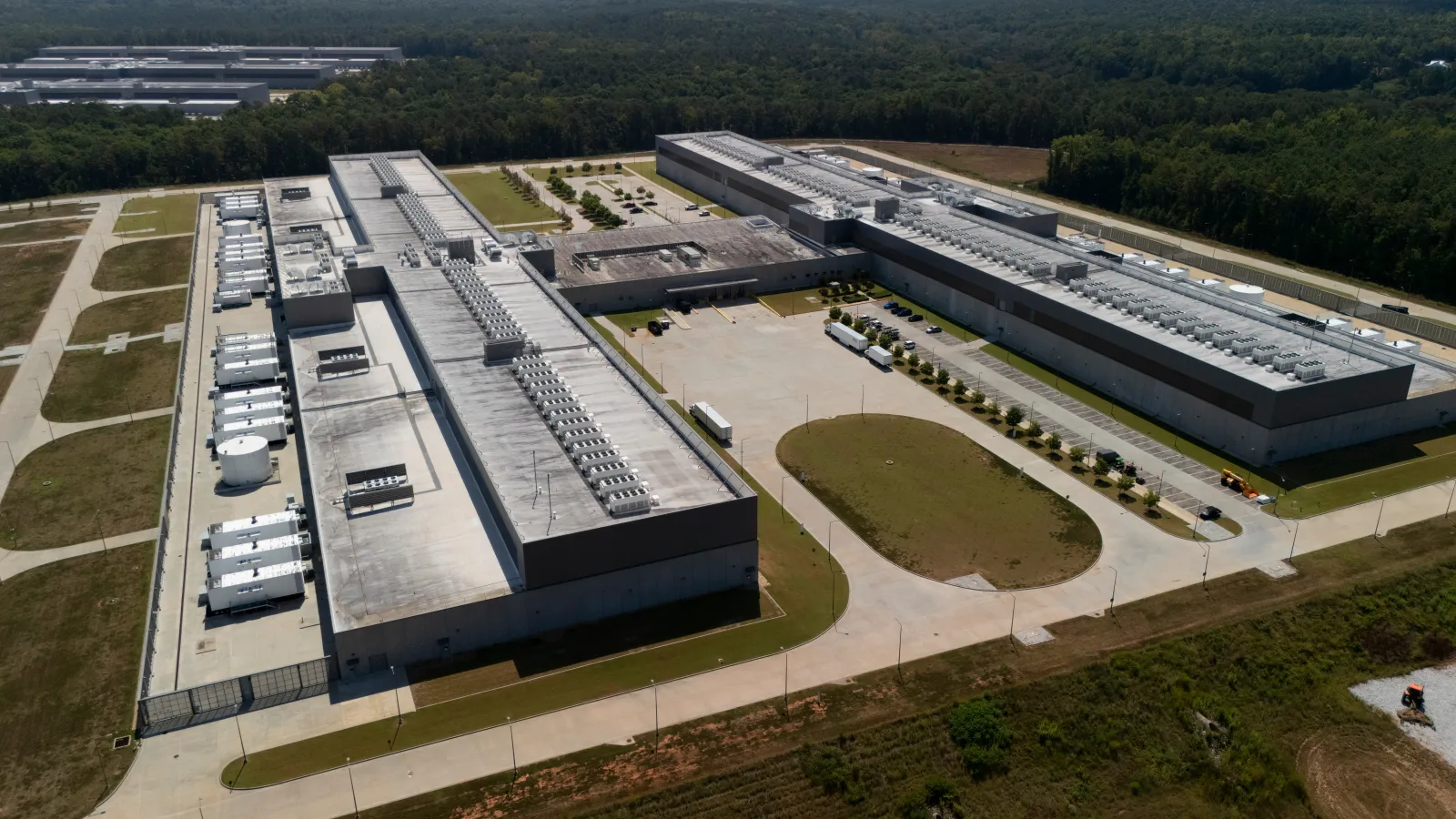
List of Lawmakers Backing AI Data Center Bill to Keep Electricity Costs Low
Public Anxiety Over AI and Data Centers Surges Nationwide
The Sanders‑Bannon warnings mirror a dramatic rise in public concern. Polling shows majorities of Americans fear AI will eliminate jobs, raise costs and cause broader social harm. A Reuters/Ipsos survey found 77 percent worry AI‑driven data centers will increase electricity bills. A New York Times/Siena University poll cited at the event reported that more than three in five voters oppose new data‑center construction.
Those anxieties have already sparked protests across multiple states, where residents have challenged proposals for massive AI‑related infrastructure. Noise, light pollution and energy consumption have become flashpoints, but so has the fear that AI systems will eventually replace workers across industries, a concern Sanders amplified by warning that automation could wipe out nearly 100 million U.S. jobs over the next decade.
The Pro‑Human Assembly showcased how these fears are reshaping political coalitions. Attendees included union leaders like AFL‑CIO President Liz Shuler, who has pressed for worker protections as AI accelerates. Researchers from MIT and the University of California, Santa Cruz interacted with lawmakers from both parties, many of whom acknowledged that Congress lacks the expertise and speed to regulate AI effectively.
...
Congress Scrambles as Trump Rejects Calls for Regulation
The event unfolded as Congress returned from recess and began private discussions about whether to legislate on AI — despite Trump’s insistence that no new laws are needed. Republican House Speaker Mike Johnson backed Trump’s position, arguing that AI companies can “self‑regulate” and that slowing development would hand China a competitive advantage.
But several House lawmakers disagreed. Republican Chip Roy pushed back on Trump’s claim that only the president should decide on AI, saying the country needs broader oversight, while Democrat Lori Trahan promoted her FRONTIER Act, which would increase transparency around AI companies’ practices.
Democratic Representative Greg Casar also joined Sanders in calling for legislation to halt the development of AI systems capable of “overthrowing or undermining the U.S. government” until Congress creates a new federal agency.
The Federal Trade Commission also signaled growing skepticism. Chair Andrew Ferguson warned Tuesday that AI companies are simultaneously lobbying for regulation while seeking antitrust exemptions, a contradiction he said warrants scrutiny.
Meanwhile, a Senate bill that would block states from enforcing their own AI laws remains under debate after previous attempts failed. Bannon has urged Congress not to preempt state‑level restrictions, arguing that grassroots pressure is the only force capable of countering tech‑industry influence.
Actors Ashley Judd and Joseph Gordon‑Levitt joined researchers and parents who say AI contributed to their children’s suicides. Judd argued that diverse communities must guide AI development, while Harvard law professor Lawrence Lessig warned that companies are deploying “billions and billions of intelligent agents” with no accountability structure.
Stuart Russell, one of the world’s leading AI experts, delivered a session titled “Keeping Humans in Charge,” echoing concerns that AI systems are being built to replicate and surpass human capability.
Roman Yampolskiy, a computer science professor known for predicting extreme AI risks, told NBC News he believes there is a 99.9 percent chance AI wipes out humanity within the next century, though he hopes he is wrong.
As one attendee put it, the technology is no longer a niche concern of Silicon Valley; it is a public‑safety issue, a labor issue, a national‑security issue and a political issue all at once.
What Comes Next
Sanders and Bannon’s joint appearance may mark a turning point in the national debate over AI. Their shared message, that AI development must slow until the country can understand and control it, stands in sharp contrast to Trump’s insistence that warnings are a “HOAX” and that the U.S. must accelerate AI to beat China.
Whether their bipartisan pressure leads to concrete action remains uncertain. Congress is divided, the White House is dismissive, and tech companies continue to push forward at breakneck speed.
But the Pro‑Human Assembly made one thing clear: the political coalition demanding AI guardrails is growing, and it now includes voices from the far left, the far right and everywhere in between.
Contact Newsweek editors on this story: Jason Lemon and Sam Wilson.
View 0 Comments
Submit Correction
View Editorial & AI Guidelines