...

By Shannon Power
Pop Culture & Entertainment Reporter
0
Share
Newsweek is a Trust Project member
See more of our trusted coverage when you search.Prefer Newsweek on Googleto see more of our trusted coverage when you search.
Beyoncé rocked the country music world with March's Cowboy Carter album, but whether she has been fully accepted by the country community remains to be seen.
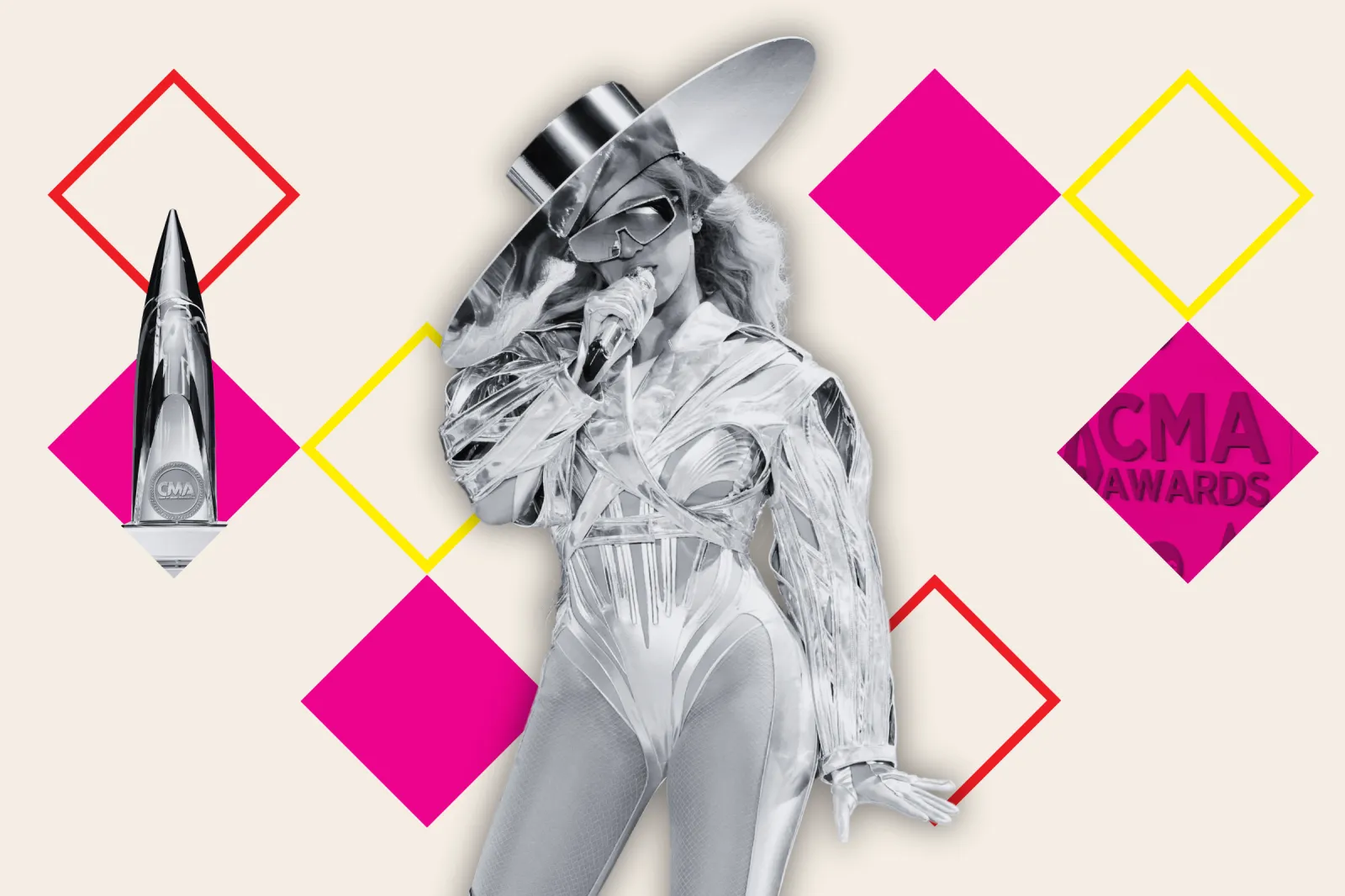
That could all become clear in November at the Country Music Association's (CMA) annual awards. Whether or not Beyoncé is nominated in any category, let alone wins a major award, will speak volumes about whether she has made a dent in the genre. Nominations will be announced late summer.
"The presence or absence of Cowboy Carter from the roster will have much greater import than the success or failure of a single album by a single artist," Aram Sinnreich, professor of communication at American University told Newsweek.
Read More on Entertainment
"It will be a referendum on our nation, and a bellwether for our future prospects as a racially integrated and pluralistic nation that values its Black citizens as much as its white ones."
Beyoncé released Cowboy Carter as the second act in a trilogy of music many believe is about reclaiming the Black roots of various music genres. The first chapter was the album Renaissance, a tribute to Black LGBTQ+ people and their role in developing house music.
But Beyoncé's mission with Cowboy Carter was personal and came from a time when she felt excluded from country music.
"This album has been over five years in the making. It was born out of an experience that I had years ago where I did not feel welcomed...and it was very clear that I wasn't," she wrote on Instagram when announcing the album.
She may have been referring to her performance with the Chicks at the 2016 CMA awards and her song 'Daddy Lessons' from the album Lemonade. Beyoncé and the Chicks performed that song at the CMAs but her move into country music and invitation to sing at the event were widely criticized. Some have said she was even booed during the performance.
While inviting some legendary and more modern country stars to feature on the album, from Dolly Parton to Miley Cyrus, Beyoncé made sure to showcase Black artists such as Tanner Adell and Shaboozey. The album even featured Linda Martell, the first Black woman to perform at Nashville's legendary Grand Ole Opry.
Despite doing the leg work in paying homage to the legends of the genre, some country radio stations refused to play any of the album, and others slammed Beyoncé for her foray into country.
November's CMA awards could be a chance for country music to right its reported wrongs against Beyoncé, but whatever happens on the night will speak volumes not just about the genre, but the state of the nation more generally, according to Sinnreich.
...
"Her foray into country music has mirrored America's larger struggle over what 'country' means and, more specifically, what our country means. This has been a decade of racial reckoning in the United States, as evidenced by the Black Lives Matter movement...and the Republican Party's escalating nativist rhetoric," he said.
"Country music has always served as a screen upon which America projects its struggles over race and belonging, and, consequently, cultural moments during which Black people are unwelcome to and excluded from the country music marketplace, such as 2016, have mirrored some of our most segregationist moments as a nation."
Newsweek contacted Beyoncé's representatives and the CMA by email for comment.
On paper, Beyoncé is well and truly eligible to be nominated for a number of CMA awards, from album of the year, to song of the year and even entertainer of the year.
Also, Cowboy Carter was released within the window of award eligibility, which runs from July 1, 2023 through June 30, 2024.
But "whether or not a nomination is secured depends upon numerous factors, which is why the final nominees can be surprising and unpredictable," according to Tammy Donham, an associate professor at Middle Tennessee State University.
Donham is an expert in country music and music marketing, and for nearly 17 years worked for the CMA, eventually becoming vice president of marketing.
"It's important to keep in mind that the voting population for the awards is comprised of more than 7,000 individual, international members of the association representing every facet of the country music industry such as producers, venue operators, publicists, managers, artists, music publishers and more, so it's a very diverse body that is eager to recognize great musical works," she told Newsweek.
Even though the final nominations might be unpredictable, Donham pointed out the CMA itself may be keen for Beyoncé to return to its stage because its awards broadcast "depends upon pulling in a wide audience for ratings success, which is why you will often see award shows featuring cross-genre collaborations."
"I suspect the organization and show producers will make every effort to have her participate in this year's event. As one of the top artists in the world, Beyoncé can pull in viewers who may not otherwise tune in to the broadcast," she said.
Even if Beyoncé doesn't win or even get nominated for a CMA award, Cowboy Carter has made an important mark on the culture.
"We can only interpret Cowboy Carter as a powerful political statement: one that says country music has African-American culture at its heart, and that America has Black people at its heart," said Sinnreich.
"It means that not only do Black Lives Matter, but Black people belong, that America wouldn't be America without them."
He added: "And that political statement is understandably unwelcome among many—possibly the majority of—country music fans who flock to the genre because for them it represents a vision of a white America, separate from the influence of Afro-diasporic culture and a haven fromBlack people themselves."
View 0 Comments
Submit Correction
View Editorial & AI Guidelines