10
Loading video...

By Hannah Parry
Associate News Editor
0
Share
Newsweek is a Trust Project member
See more of our trusted coverage when you search.Prefer Newsweek on Googleto see more of our trusted coverage when you search.
The first three weeks of Lindsay Clancy's murder trial have brought emotional courtroom breakdowns, compelling evidence about her mental state and discussions over what the jury can infer from her actions before the deaths of her three children.
The trial has reached a pivotal stage after 13 days of testimony in Plymouth Superior Court, with prosecutors nearing the end of their case and the defense preparing to make its own that Clancy was not criminally responsible because she was suffering from severe mental illness.
Clancy, 36, is charged with killing her three children—Cora, 5, Dawson, 3, and Callan, 8 months—in their Duxbury, Massachusetts, home on January 24, 2023.
Read More on News
The defense does not dispute that Clancy killed the children. Instead, attorney Kevin Reddington has argued that she was experiencing postpartum psychosis, bipolar disorder and a severe psychiatric crisis that was exacerbated by medications.
Prosecutors have argued that Clancy remained capable of making decisions and understanding her actions, and have presented evidence they say points to planning and intentional conduct.
Here are eight of the biggest bombshells from the first three weeks of testimony.
...
Patrick Clancy's 911 Call Gave Jurors a Harrowing Account of the Discovery
Earlier in the trial, jurors heard the seven-minute 911 call made by Patrick Clancy after he returned home on the day of the killings.
The call, played on July 29, captured the immediate aftermath of the discovery of his children and Patrick's desperate attempts to get help.
At the start of the call, Patrick can be heard outside in the snow trying to keep wife Lindsay Clancy conscious after finding her injured.
"Lindsay, look at me ... say my name," he said.

...
Still connected to the dispatcher, Patrick then ran inside to check on the couple's children. The recording captures the sound of hurried footsteps before his voice suddenly shifts as he discovers the scene in the basement.
"She killed the kids! She killed the kids!" he shouted.
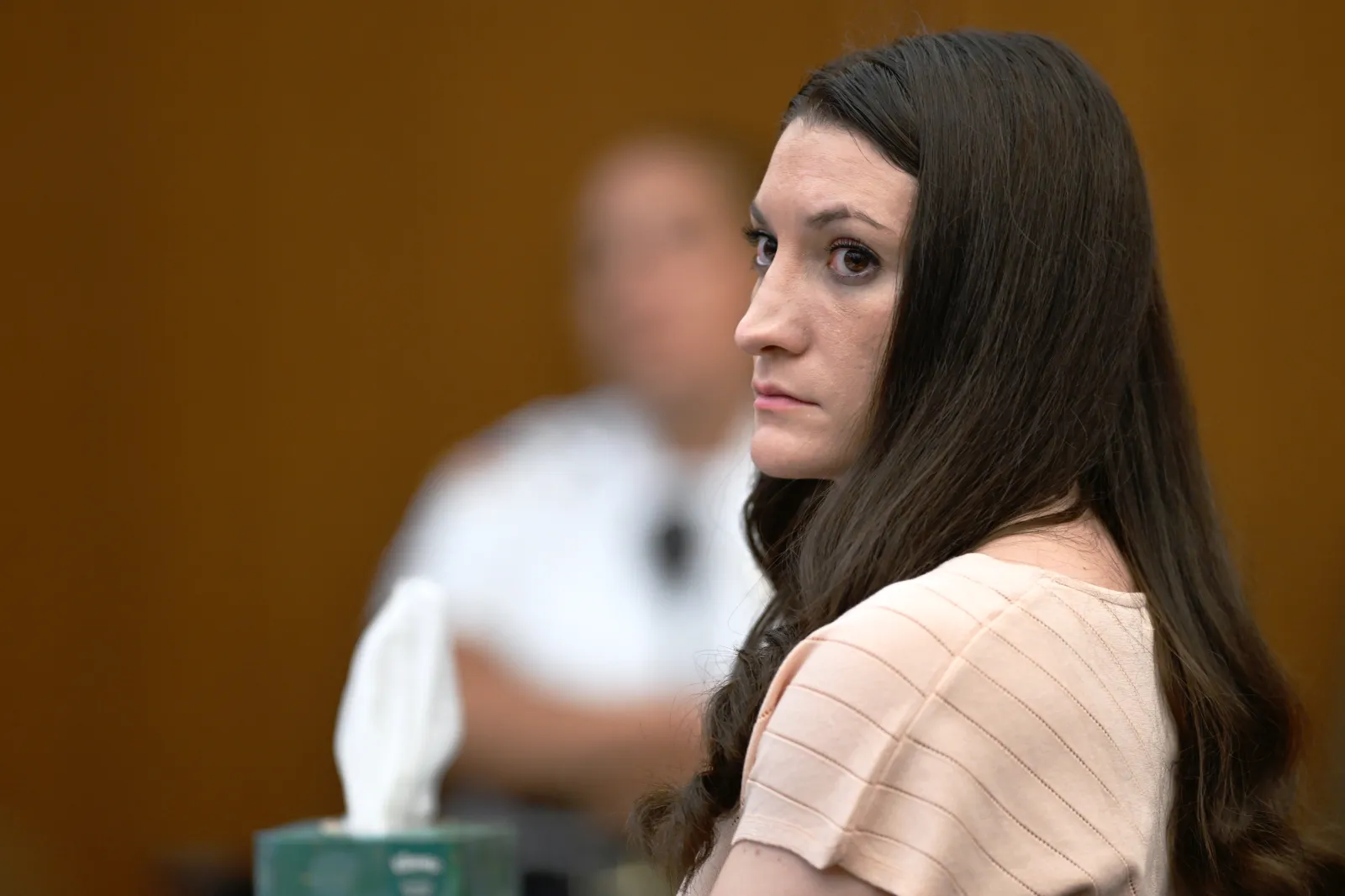
The recording had a visible impact inside the courtroom. Lindsay began sobbing and after a brief interruption in proceedings, was wheeled from the courtroom during an emergency recess.
Clancy Broke Down in Tears During Graphic Testimony About Her Children
The most dramatic courtroom moment came Wednesday August 12, when medical examiners testified about the injuries suffered by the three children.
Clancy began sobbing as Dr. Renee Stonebridge and Dr. Barbara Olson described their findings. The judge eventually sent jurors out of the courtroom as Clancy became overwhelmed.
At one point, she was heard saying, "I can't do it."

...

...
Reddington consoled her as she cried. The judge eventually called a recess after Clancy was heard sobbing loudly with her head in her hands.
After the courtroom returned, Judge William Sullivan reminded jurors that they could not allow their emotional reactions to the testimony influence their verdict.
“Your verdict in this case is going to have to be based solely on the evidence and it cannot be based on sympathy, or anger, or passion or prejudice,” Sullivan told the jury.
The prosecution's forensic evidence was nonetheless allowed to continue, giving jurors detailed evidence about the deaths.
Defense Says Voice Told Clancy: 'Kill The Children So You Can Kill Yourself'
One of the most consequential claims in the murder trial has come from the defense's account of what it says was happening inside Clancy's mind in the final moments before her three children were killed.
Reddington told jurors that Clancy was experiencing a psychotic episode on January 24, 2023, and that she heard a voice giving her a terrifying command: “This is your last chance. Kill the children so you can kill yourself.”
On the afternoon of January 24, Clancy appeared outwardly functional. Patrick Clancy testified that she had spent time with the children, including building a snowman, and described the day as one of her best.
But Reddington said Clancy entered what she characterized as a “dream-like state,” in which she believed she was being commanded to act. The defense's account is that she was not killing her children because she wanted them dead, but because psychosis had fundamentally distorted her perception of reality.
The alleged command is important because it connects the two things that happened that evening: the deaths of the children and Clancy's subsequent suicide attempt.
The defense says the voice effectively presented Clancy with a single course of action—kill her children and then kill herself.
After the children were attacked, Clancy attempted to take her own life and ultimately jumped from a second-story window. She survived but suffered catastrophic spinal injuries that left her paralyzed.
That sequence is part of the defense's effort to show that the killings and suicide attempt were components of the same psychiatric episode rather than separate acts motivated by ordinary intent.
Police Theory That Psychologist Prompted 'Voices' Claim Is Challenged
The defense placed significant weight on Clancy's reported claim that she heard a voice telling her to kill her children and then herself.
But prosecutors challenged the timing and credibility of that account, suggesting the hallucination account had been manufactured or coached after the killings. Police investigators even had a theory that psychologist Paul Zeizel, who treated Clancy while she was hospitalized following the deaths of her children, may have influenced Clancy's statements.
That theory was challenged in court this week when State Police Sgt. Dan Lawlor acknowledged, on cross-examination, that there was no investigative basis for the suggestion that Zeizel prompted Clancy to claim she heard voices.

...
Lawlor said that idea was another investigator's speculation.
That exchange was a meaningful defense victory because it weakened one explanation prosecutors had explored for the origins of the hallucination account. It does not, however, establish that Clancy actually was experiencing auditory hallucinations at the time of the killings. That remains a disputed issue for the jury.
A Psychiatric Provider Did Not Believe Clancy Had Postpartum Psychosis
Psychiatric nurse practitioner Rebecca Jollotta provided testimony that could benefit both the defense and prosecutors during the trial.
Jollotta initially described Clancy as struggling with insomnia, racing thoughts, pressured speech, emotional numbness and intrusive thoughts. She said she was concerned Clancy was experiencing a mixed manic or hypomanic state and repeatedly recommended that she obtain a higher level of psychiatric care. Jollotta also testified that she believed Clancy had bipolar disorder.
Her testimony gave the defense a detailed account of a woman whose mental health appeared to be deteriorating in the months before the killings.
But Jollotta also delivered testimony prosecutors could use to attack the defense's central theory.
Despite describing serious psychiatric symptoms, Jollotta testified that she did not believe Clancy had postpartum psychosis when she treated her.
She said Clancy's thinking remained "linear and goal-directed" and that Clancy had not reported hearing voices during a key appointment.
That distinction could become one of the most important pieces of testimony when psychiatric experts eventually testify.
The defense does not merely have to establish that Clancy was mentally ill. Its theory is that her illness was sufficiently severe to make her legally not responsible for the killings.
Jollotta's testimony therefore cut both ways: It established substantial mental-health problems while providing prosecutors with a treating provider who rejected the specific diagnosis at the center of the defense's case.
Internet Search History Reveals Searches For Suicide Methods and 'Can You Treat a Sociopath?'
Thursday produced one of the prosecution's most striking pieces of digital evidence.
Massachusetts State Police Sgt. Timothy Chiappini testified about his forensic examination of Clancy's iPhone.
Among the searches investigators found was one from January 20—just four days before the killings—that asked: "Can you treat a sociopath?"
Investigators also testified about searches involving psychosis, schizophrenia, bipolar disorder, hallucinations and suicide.
For prosecutors, the searches potentially support an argument that Clancy was researching psychiatric conditions and suicide-related subjects shortly before the killings.
State Police Sgt. Kyle Pavao also testified about internet searches on the family computer, including one for "suicide methods" in August 2022.

...
Reddington aggressively challenged whether every piece of digital evidence could definitively be attributed to Lindsay.
Reddington established that the search occurred around the same time as a search for singer-songwriter Tom T. Hall, who died by suicide. He also raised evidence that Patrick Clancy was a fan of Hall.
Pavao acknowledged that investigators could not establish that Lindsay was the person using the computer at the time.
The exchange gave the defense an important argument: the existence of a search is not necessarily proof that Lindsay made it.
That qualification could matter when jurors assess the prosecution's broader argument that Clancy's internet history demonstrates deliberate preparation.
Clancy's Messages Showed Her Repeatedly Telling Providers Something Was Wrong
Jurors have been shown messages between Clancy and her mental-health providers that provide a contemporaneous record of her deteriorating condition.
She described severe insomnia, intrusive thoughts, anxiety, medication side effects and emotional numbness. She also expressed concern that she had become dependent on Ativan and said she felt doctors were not listening to her concerns.
The messages have become a major part of the defense's case because they show Clancy actively seeking help and describing symptoms before the killings.
But prosecutors have another interpretation.
They can argue that the same messages show Clancy was capable of communicating clearly, identifying problems, seeking medical treatment and making decisions about her medication.
That tension has emerged repeatedly throughout the trial.
Key Wins for the Defense
The defense has emerged from three weeks with several significant pieces of evidence.
- Clancy's treating providers documented serious psychiatric symptoms. Jollotta described her as "clinically acute, unstable" and testified about possible bipolar disorder and a mixed manic state.
- Her medical messages provide a contemporaneous record of distress. Clancy repeatedly reported intrusive thoughts, insomnia, medication problems and emotional numbness.
- The prosecution's theory about the origins of the "voices" account was weakened. A state police sergeant acknowledged there was no investigative basis for saying the psychologist prompted Clancy to make the claim.
- The defense raised legitimate questions about attribution of some computer searches, preventing prosecutors from presenting every search as definitive evidence of Clancy's own actions.
Key Wins for the Prosecution
Prosecutors have also secured several important moments.
- The most significant may be Jollotta's testimony that she did not believe Clancy was suffering from postpartum psychosis, despite her concerns about other psychiatric symptoms.
- The prosecution introduced digital evidence including the January 20 search asking whether a sociopath could be treated, along with searches involving suicide and psychiatric conditions.
- Jurors heard evidence about Clancy's communications with Patrick on the day of the killings, as well as evidence prosecutors say shows she was capable of ordinary planning and communication immediately before the deaths.
- Forensic testimony about the children's injuries has provided the jury with direct evidence of the physical consequences of the killings.
The Biggest Question Still Hasn't Been Answered
For all the dramatic testimony, the central issue remains unresolved.
The defense has established that Clancy was experiencing significant psychiatric problems before January 24, 2023.
The prosecution has established that she was also communicating with others, seeking treatment and, according to some witnesses, demonstrating organized and goal-directed thinking.
The eventual expert testimony is expected to become critical in determining how those facts fit together.
The jury will ultimately have to decide whether Clancy's mental illness was so severe that she was not criminally responsible when she killed her children.
What's Next
There is no testimony Friday, and the trial is expected to resume Monday. The prosecution is continuing its presentation before the defense gets its opportunity to call witnesses and experts.
The coming testimony is expected to focus even more heavily on Clancy's psychiatric history and mental state, setting up the expert battle that could ultimately determine whether the jury accepts the defense's insanity argument.
The weeks ahead are expected to focus increasingly on the question: what was happening inside Lindsay Clancy's mind when it happened?
If you or someone you know is considering suicide, please contact the 988 Suicide and Crisis Lifeline by dialing 988, text "988" to the Crisis Text Line at 741741 or go to 988lifeline.org.
View 0 Comments
Submit Correction
View Editorial & AI Guidelines