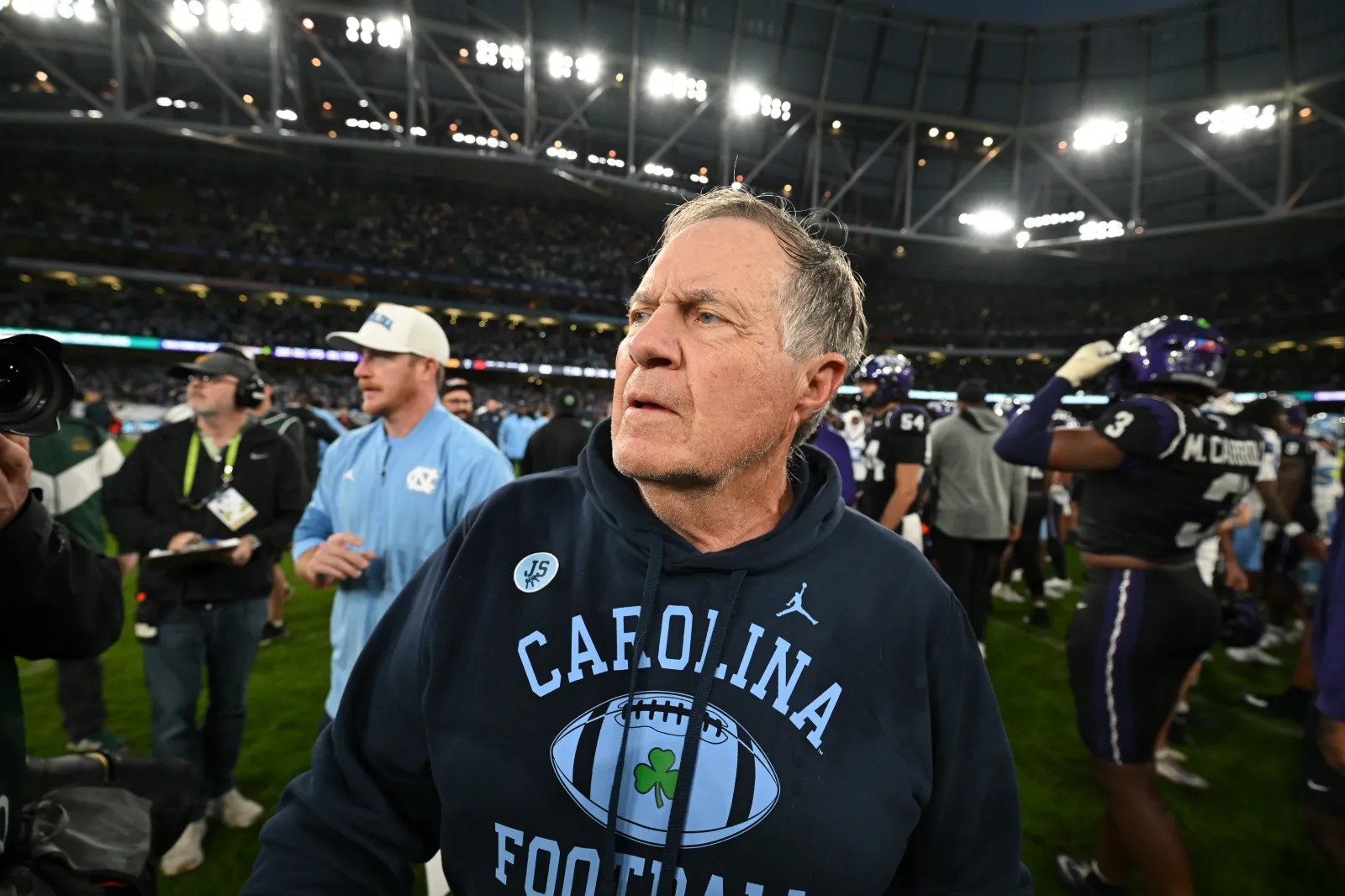
...

By Anna Rahmanan
0
Share
Newsweek is a Trust Project member
See more of our trusted coverage when you search.Prefer Newsweek on Googleto see more of our trusted coverage when you search.
North Carolina keeps insisting it does not have a Bill Belichick problem, but the problem with that is that a hefty number of Bill Belichick’s people keep becoming problems.
Defensive coordinator Steve Belichick, Bill's son, is now leaving after UNC’s investigation found conduct that fell short of the university’s standards. General manager Michael Lombardi, also a Bill hire, is already gone. Bill Belichick remains in charge, publicly supported by the school and officially untouched by the findings, but that stance is getting harder to sell.
UNC hired Belichick to build the operation, so he imported the structure and hired the people and then sold Chapel Hill on an NFL-style overhaul. So when important portions of that operation fall away, the university can call them isolated personnel matters but everyone around is entitled to notice who actually assembled that personnel and perhaps point fingers.
Read More on News
The Belichick Experiment Was Always Bigger Than Bill
UNC didn't hire Belichick to call plays, which makes the argument that the recent unfolding of events have nothing to do with him hard to digest.
From the beginning, the university sold his arrival as an institutional redesign. Then-athletic director Bubba Cunningham called the appointment a “new approach” for a college game undergoing rapid change, while Belichick said he was coming to Chapel Hill to “build a program in the way that I believe in.”
Related Story

Menopause Just Went Mainstream
Lombardi was part of that architecture almost immediately. UNC announced him as general manager six days after Belichick’s hiring, with Belichick saying the program would rely on his longtime associate’s expertise in evaluating and acquiring players. Steve Belichick was later installed as defensive coordinator when his father unveiled the coaching staff.
Those were clearly not stray employees who wandered into the building but prominent parts of the new regime, which is why UNC’s finding that the conduct it investigated was not systemic settles one question without quite settling the more awkward one. The university says it found no program-wide failure. It can reasonably argue that removing or losing the people involved is evidence that its oversight mechanisms worked, but shouldn't leadership also be judged by appointments?
Bill Belichick Has Already Accepted That Principle
“Obviously everybody’s responsible, including me, for doing things properly,” he told reporters earlier this month as UNC publicly reiterated its support for him. Despite the probe's findings, there is no evidence that Belichick personally did anything wrong. To top it off, collapsing the actions of employees into misconduct by their boss would be inappropriate.
If the departures end the turmoil and North Carolina keeps winning—Belichick’s Tar Heels have opened this season 2-0—the argument that UNC identified isolated problems and dealt with them will become stronger. If more senior figures depart, more conduct questions surface or the football operation again attracts university scrutiny, “isolated” will become a much harder word to sustain and Belichick will likely have to stick his neck out a bit more.
After all, Belichick was hired because UNC believed his way of building an organization was the attraction and that makes the organization his responsibility, too.
View 0 Comments
Submit Correction
View Editorial & AI Guidelines