...

By Soo Kim
Reporter
0
Share
Newsweek is a Trust Project member
See more of our trusted coverage when you search.Prefer Newsweek on Googleto see more of our trusted coverage when you search.
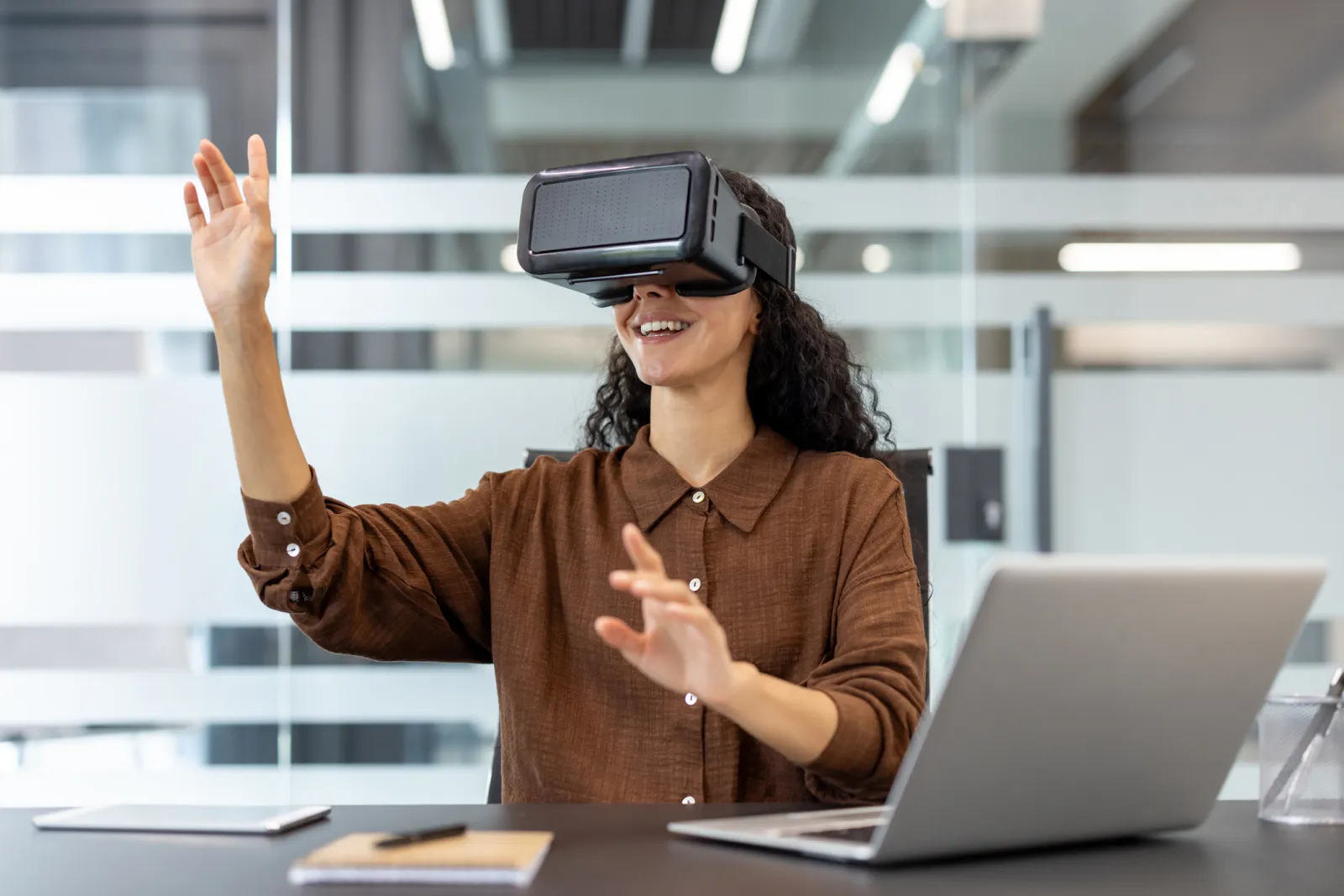
Struggle with remembering all your passwords in an increasingly digital world? Researchers have developed a new “effortless” security system that uses vibrations in the skull to log users into virtual and augmented reality platforms, which could eliminate the need for remembering passwords on such devices.
The new system, a software program known as VitalID, was developed by researchers at Rutgers University, who discovered a new type of biometric in the form of tiny vibrations generated by breathing and heartbeats that resonate through the skull in patterns that are unique to a person’s bone structure and facial tissues.
If adopted commercially, the new technology could allow XR [extended reality] device users to access financial platforms, medical records or other systems within immersive environments without having to physically log in.
Read More on Science
“XR is becoming a gateway to everyday internet services, many of which involve sensitive personal data,” paper author and engineering professor Yingying Chen said in a statement. “We need authentication that works without adding hardware.”
...
“In this work, we introduce the first effortless and inbuilt XR user authentication system by leveraging the harmonics of vibrations excited by users' vital signs,” the research team explained, writing that “the system is transparent to users (no efforts during enrollment and authentication) and requires no additional hardware.”
The study evaluated the vibration patterns of 52 users wearing two popular XR headsets over a period of 10 months.
The study's findings showed that the new security system can “accurately authenticate users with over 95 percent true positive rates and rejects unauthorized users with over 98 percent true negative rates under various XR scenarios, with biometrics remaining consistent over long-term periods,” the researchers said.
Vital signs, such as breathing and heartbeats, naturally generate low-frequency vibrations that cause the skull to vibrate. These vibrations, which travel up through the neck and head, are rich with biometrics associated with the structure and soft tissues of the wearer’s skull, which can be captured by XR motion sensors.
The vibrations change in unique ways as they move through a person’s head, as every skull has a different shape, thickness, and bone structure. Soft tissues in the face, such as muscle and fat, also affect how the vibrations travel.
The researchers also built a filtering system to allow the headsets to focus only on the tiny vibrations in the skull caused by breathing and heartbeats, and remove any interference from extraneous head and body movement.
XR systems, which include virtual reality, augmented reality and mixed reality technologies, extend beyond gaming into various other sectors, such as finance, medicine, education, and remote work, where security has become increasingly paramount.
“Extended reality will play a major role in our future,” Chen concluded. “If immersive systems are going to become woven into daily life, authentication has to be secure, continuous, and effortless.”
Do you have a tip on a science story that Newsweek should be covering? Do you have a question about the biometrics or XR? Let us know via science@newsweek.com.
View 0 Comments
Submit Correction
View Editorial & AI Guidelines