...

By Hannah Millington
Health Reporter
0
Share
Newsweek is a Trust Project member
See more of our trusted coverage when you search.Prefer Newsweek on Googleto see more of our trusted coverage when you search.
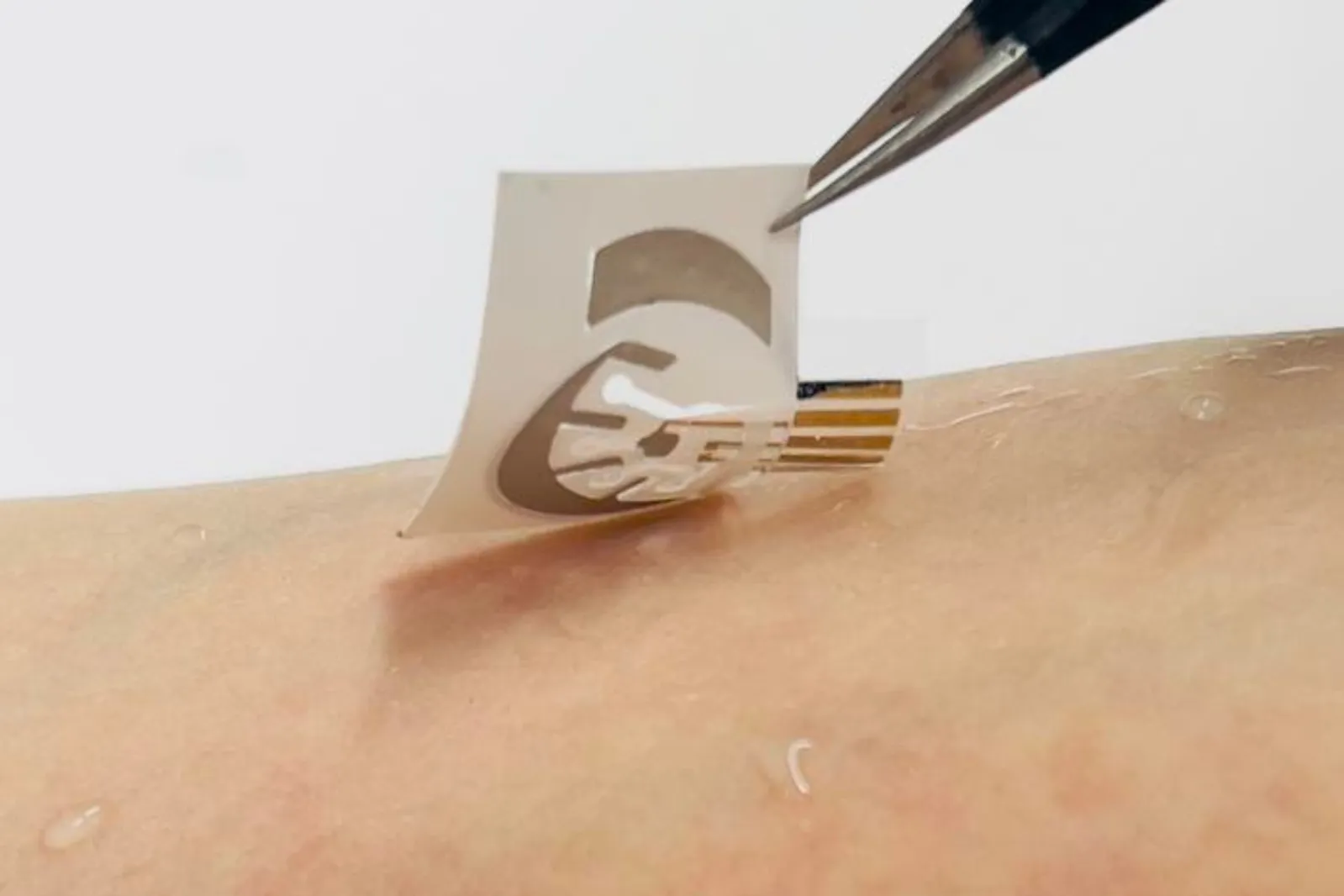
A wearable sensor could make tracking medication levels much easier for people living with bipolar disorder, eliminating the need for blood draws and lab analyses.
The first-of-its-kind device could vastly improve treatment, convenience and drug safety for millions of patients who take lithium—a type of mood stabilizer—for bipolar disorder.
While lithium is highly effective, it must be administered precisely and needs regular monitoring.
Read More
Scientists Reveal How Depression Is Linked to Sunshine5 min read

Semaglutide Study Debunks Mental Health Fears7 min read

Neurodegenerative Disorders Linked to Higher Brain Acidity4 min read

Too low a dose, and the treatment doesn't work—but too high a dose can be toxic to patients, with the potential to cause kidney and thyroid damage, or even death. In addition, the correct dose of lithium depends on the individual.
In their study, the researchers from the University of Southern California (USC) argue that sweat is an easier alternative to blood for lithium tracking because it can both be collected noninvasively and reflect lithium concentrations in real time.
...
Bipolar disorder affects around 5.7 million adult Americans, or about 2.6 percent of the U.S. population aged 18 and older each year, according to the National Institute of Mental Health.
The current method of laboratory-based blood draws for tracking can be time-consuming, inconvenient and painful.
"While past approaches required collecting body fluids for lab testing or using multiple devices—such as stimulating sweat, applying a color-changing lithium sensor, and then photographing it to estimate levels—our wearable simplifies everything," USC electrical and computer engineer professor Yasser Khan told Newsweek.
"It collects sweat and measures lithium levels in one fully integrated, non-invasive device."
The newly designed wearable includes a skin-safe, electrical current-based system to induce sweat without requiring physical exertion. In just minutes, the device can collect the data and transmit it directly to a smartphone app, allowing people to track their lithium levels from home (or wherever they might be).
"It can be used multiple times throughout the day. We haven't done long-term testing, however, these patches should last a week. Then for replacement, you can change only the sensor part that costs a few dollars," said Khan.
The device reduces the need for more invasive tracking, similarly to a glucose monitor reducing the need for people with diabetes to check their blood glucose levels with a finger prick test, though they work slightly differently.
"Unlike continuous glucose monitors (CGMs) that rely on a needle under the skin, our wearable is sweat-based and sticks on the skin like a simple bandage. While CGMs don't require a sample collection step, our device needs to first stimulate sweat before measuring lithium levels, adding one step, but avoiding needles entirely," Khan explained.
The wearable sensor to track lithium has been made possible by the innovative use of something called 'organic electrochemical transistors' (OECTs) specifically designed for lithium detection, according to the researchers.
OECTs are electronic devices that respond to ionic signals in liquid, converting them into readable electronic data. Unlike conventional OECTs, the sensor developed at USC features a fully printed OECT using a new material formulation tailored to detect lithium ions specifically.
"We developed the entire lithium monitoring system—from the OECT-based sensor patch and on-demand sweat induction to the readout electronics and smartphone app—using a simple, scalable and cost-effective fabrication process," said study author and doctoral student Mohammad Shafiqul Islam in a statement.
"Our goal was to make lithium tracking as easy and comfortable for patients as checking a daily fitness tracker."
This makes it the first OECT-based lithium sensor to be entirely printed, which is hoped to pave the way for affordable and scalable production.
In partnership with psychiatrist Adam Frank at Keck School of Medicine, the device has already been tested by those of his patients taking lithium—gaining positive feedback.
Sweat samples were collected using the wearable device and lithium measurements were successfully matched against values derived from bulky commercial sensors.
"We conducted a pilot study with three patients, focusing primarily on showcasing the wearable's development. All participants appreciated the convenience of using a simple at-home device compared to frequent lab visits for blood draws," Khan told Newsweek.
"The wearable measures lithium levels and displays the concentration on a smartphone, making it accessible to both patients and physicians. Over time, patients can better understand what works for them—for example, one participant noted that a concentration around 0.4 mM was effective. This kind of personalized insight is one of the key benefits of wearable technologies."
The new device is hoped to improve safety by allowing for medication dose adjustments that avoid side effects and potential medication toxicity.
Keen to keep the momentum going for those living with bipolar disorder, Khan said: "This is a market-ready technology that now needs to be translated from the lab into a consumer device. To reach widespread adoption, a larger clinical study involving hundreds of patients will be essential."
The team plans to develop more advanced wearable systems powered by AI to automatically adjust lithium dosage and achieve optimal therapeutic benefits without causing lithium toxicity.
Do you have a health story to share with Newsweek? Do you have a question about bipolar disorder? Let us know via health@newsweek.com.
Update 07/29/25, 05:00 a.m. ET: This article was updated to include more information from Yasser Khan.
Reference
Islam, M. S., Kunnel, B. P., Ferdoushi, M., Hassan, M. F., Cha, S., Cai, W., Frank, A., & Khan, Y. (2025). Wearable organic-electrochemical-transistor-based lithium sensor for precision mental health. Device. https://doi.org/10.1016/j.device.2025.100862
View 0 Comments
Submit Correction
View Editorial & AI Guidelines