
By Andrew Whalen
Writer
0
Share
Newsweek is a Trust Project member
See more of our trusted coverage when you search.Prefer Newsweek on Googleto see more of our trusted coverage when you search.
In 2013, the blobfish was voted the world's ugliest animal, but did some far uglier animal get robbed of its just reward?
In response to the question "What is a common misconception about an animal that you would like to dispel forever?" University of Bath marine researcher Russell Arnott disputed the blobfish's ugliness, in a Wednesday tweet that has since racked up viral numbers.
"That the blobfish is ugly," Arnott, who is also a science communicator with Incredible Oceans, said in answer to the question. "You wouldn't look so great either if you'd just undergone a rapid depressurisation of 120 atmospheres."
Read More
Ugliest Animal Ever? Denver Zoo’s Newborn Endangered Aye-aye Lemur Prompts Debate4 min read

Viral Damascus ‘Goat Monster’ Is a Real Goat — You Should See Him in Baby Form2 min read

Zsa Zsa is The World’s Ugliest Dog—Officially3 min read

"To a degree, the blobfish is the victim of a vast bullying campaign!" Arnott told Newsweek in response to an emailed request for comment.
Blobfish is a common name for the family Psychrotidae, which includes about 40 species of toadfish and sculpins. Several of those species, including the gooey pink specimen—the smooth-head blobfish Psychrolutes marcidus—most famously associated with the blobfish name, are residents of deep sea abyssal zones in the Indian and Pacific Oceans, particularly in the waters around Australia and New Zealand.
Living at depths greater than 2,000 feet beneath the ocean's surface, where no light penetrates and species are acclimated to incredible pressure, the environment in which the blobfish lives is very different from those experienced by fish living in shallow water ecosystems.
The podcast Just the Zoo of Us, whose account originally posted the question to which Arnott responded, addressed the effects of such an environment on the blobfish in a 2019 episode.
"Its bones are very soft, to avoid cracking under extreme pressures," host Christian Weatherford said in the 2019 episode. "It's flesh and muscles are very flabby and soft, which is meant to handle the pressures."
This bodily structure has a well-defined shape in the multiple atmosphere pressures where the blobfish maintains a largely neutral buoyancy. But that all changes when it's brought to the ocean's surface, which is what happened to the 11-inch specimen pulled from approximately 3,300 feet of water off the coast of New Zealand in 2003. Affectionately dubbed "Mr. Blobby," the specimen was part of the Australian Museum's Ichthyology Collection in Sydney, suspended in an ethyl-alcohol solution before its famous photo.
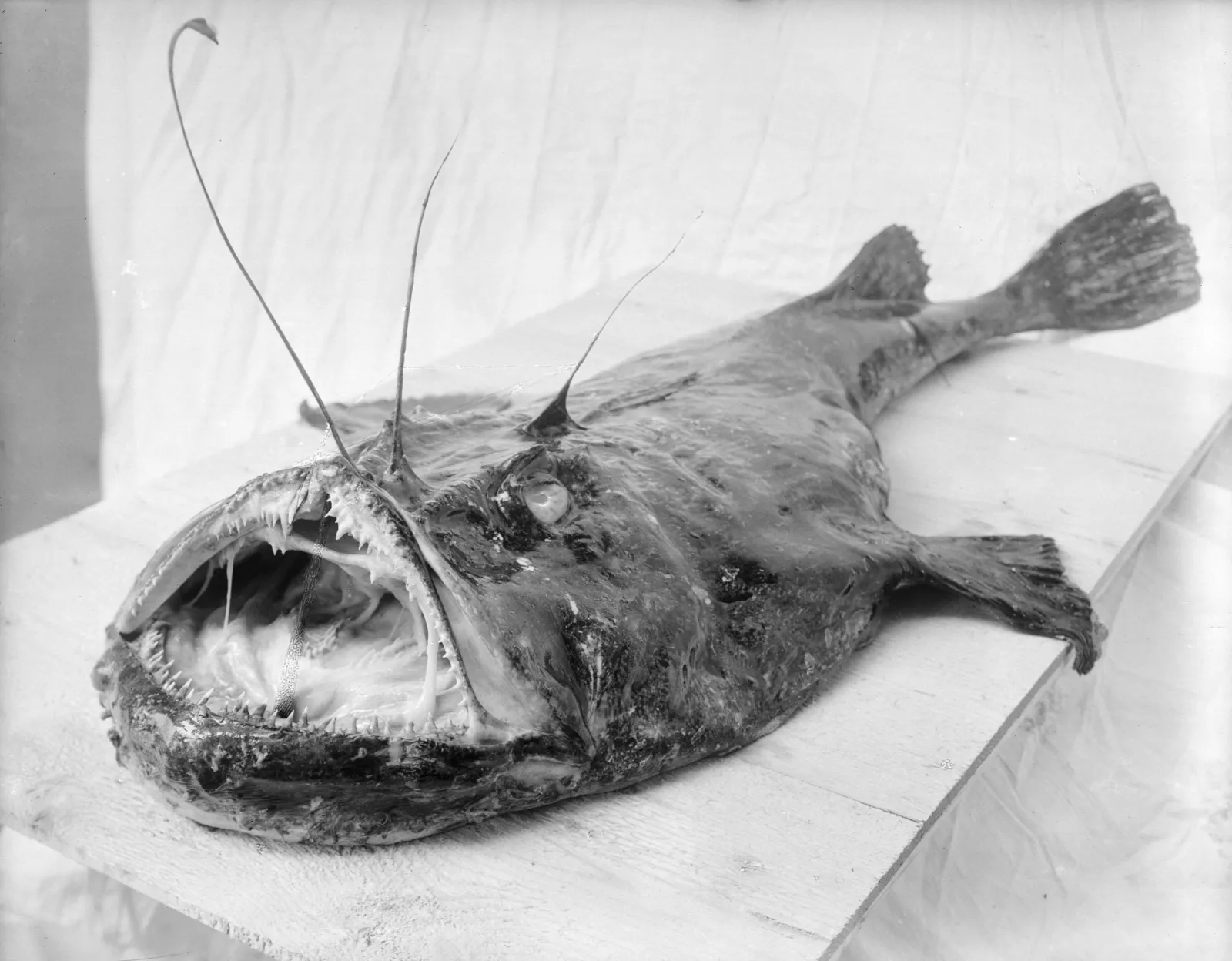
"The infamous picture of the blobfish, Mr. Blobby; it's not good, right?" Weatherford said, inviting comparisons to the Spongebob Squarepants character Squidward by Christian and co-host Ellen Weatherford. "The blobfish in that picture looks the way it does because of damage it took because of the rapid change in pressure. That is not what they look like in their natural habitat. So lots of fish have this problem where, if they are pulled out of the water quickly from a deep depth, they don't have time to react to the change in pressure, biologically, so it causes damage to their bodies."
...
"I think the issue of the blobfish raises a lot of issues; on one hand, it's a great ambassador for the deep ocean – it's totally charismatic and instantly memorable. On the other, it shows how little we understand about the creatures in the deep sea partly because it's such an inhospitable environment to humans," Arnott said. "So while we have deep-sea submersibles and ROVs, unfortunately the most cost effective method to find new organisms in the deep ocean is to trawl them up."
In 2013, the blobfish was named the world's ugliest animal by the Ugly Animal Preservation Society, winning a plurality of approximately 3,000 votes cast in an online competition. Created in 2012 by biologist and science communicator Simon Watt, the Society combines comedy shows and school presentations to draw attention to the conservation needs of less charismatic animals.
"The whole point of the Ugly Animal Preservation Society is that we want people to be less shallow," Watt told Newsweek, in response to an emailed request for comment. "The blobfish won because I think that photo is charismatically hideous."
Watt further described how the blobfish is well-suited to its environment, with its blobby characteristics part of an evolutionary strategy that has served it well for millions of years.
"Often their ugliness is due to an adaptation which makes them perfect for their environment. In the blobfish's case, it's fatty flesh allows it to float with minimal effort," Watt added, dubbing the blobfish "the couch potato of the sea."
Watt is making plans for an International Ugly Animal Day for 2021, to celebrate unique and overlooked animals. Perhaps some other ugly animal will use the opportunity to steal the crown from the unfairly maligned blobfish.
This article has been updated with comment from Russell Arnott.
View 0 Comments
Submit Correction
View Editorial & AI Guidelines