...

By Dan Cody
Digital Media Reporter
0
Share
Newsweek is a Trust Project member
See more of our trusted coverage when you search.Prefer Newsweek on Googleto see more of our trusted coverage when you search.
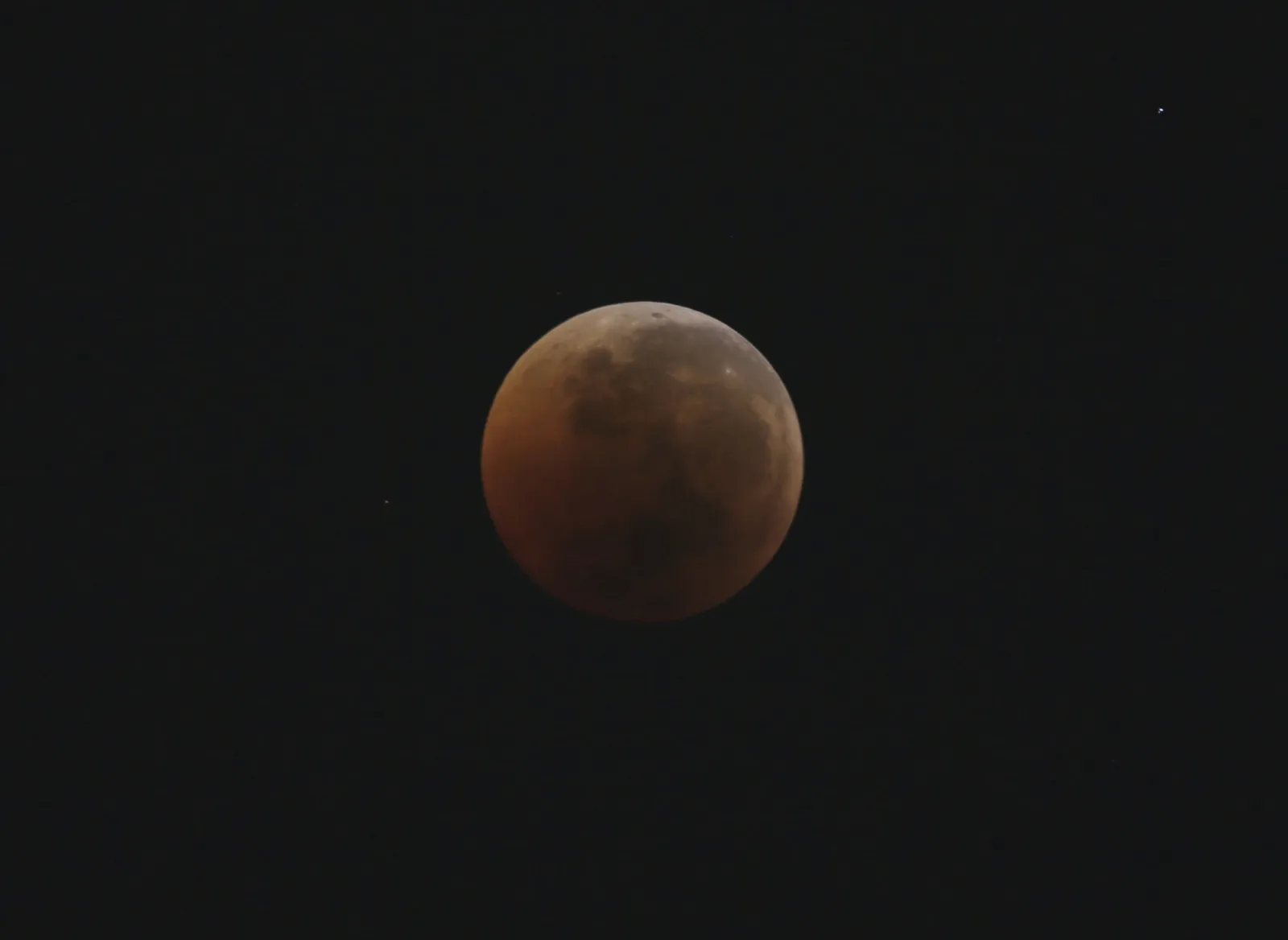
A total lunar eclipse—popularly known as a Blood Moon—will occur on March 13-14, 2025. This will be the only total lunar eclipse of the year, offering skywatchers in North and South America a chance to see the moon turn a deep red hue. The event happens when the Earth moves directly between the sun and the moon, casting a shadow over the lunar surface.
According to NASA, "The Moon will pass into Earth's shadow and appear to turn red on the night of March 13 or early in the morning on March 14, depending on time zone". (NASA)
What Is the Blood Moon?
A Blood Moon occurs during a total lunar eclipse, when the Earth, sun and moon align, and the Moon moves completely into Earth's umbra, or central shadow. Unlike a solar eclipse, which requires eye protection, a lunar eclipse is safe to observe with the naked eye.
Read More on News
NASA explains: "A lunar eclipse occurs when the Sun, Earth, and Moon align so that the Moon passes into Earth's shadow. In a total lunar eclipse, the entire Moon falls within the darkest part of Earth's shadow, called the umbra."
During this phase, the moon turns a red-orange color due to Rayleigh scattering, the same atmospheric effect that makes sunsets appear red. "It's as if all the world's sunrises and sunsets are projected onto the Moon," NASA states.
When Can You See the Blood Moon?
The total lunar eclipse will take place on the night of March 13 into early March 14. The key phases in Eastern Standard Time (EST) are:
- Penumbral Eclipse Begins: 11:57 p.m. EST (March 13)
- Partial Eclipse Begins: 1:09 a.m. EST (March 14)
- Totality Begins: 2:26 a.m. EST (March 14)
- Totality Ends: 3:32 a.m. EST (March 14)
- Partial Eclipse Ends: 4:47 a.m. EST (March 14)
- Penumbral Eclipse Ends: 6:00 a.m. EST (March 14)
While dark skies provide the best stargazing conditions, the Blood Moon will look the same whether viewed from a city or rural area. The most important factor is a clear sky, so checking the weather forecast beforehand is recommended.
For those who want a closer look, binoculars or a telescope can enhance the viewing experience.
How Often Is There a Blood Moon?
Total lunar eclipses can be seen from any given location roughly every two-and-a-half years. The last total lunar eclipse took place in November 2022, and after the 2025 event, the next one visible from North America will not happen until 2028.
What Happens in a Total Lunar Eclipse?
A total lunar eclipse happens when the Earth moves directly between the sun and the moon, casting a shadow that darkens and changes the moon's color. This process happens in several stages.
The eclipse begins with the penumbral phase, when the moon enters Earth's outer shadow, called the penumbra. This phase is subtle, and the moon may only appear slightly dimmer than usual. As the eclipse progresses, the partial eclipse phase begins. At this point, a dark shadow appears on the moon as it moves into the Earth's umbra, the darker inner part of the shadow. It will look like a bite is being taken out of the moon, and this shadow will continue to grow until totality.
During totality, the entire moon is inside Earth's umbra, turning a deep red or orange color. NASA explains that "any sunlight that's not blocked by our planet is filtered through a thick slice of Earth's atmosphere on its way to the lunar surface. It's as if all the world's sunrises and sunsets are projected onto the Moon."
After totality, the moon slowly moves back out of Earth's shadow. The partial eclipse phase reverses, with the dark area shrinking, and finally, the penumbral eclipse phase fades away as the moon returns to normal.
How to Best View the Blood Moon
For those hoping to capture the eclipse in detail, NASA suggests using binoculars or a telescope for a clearer view. To photograph the event, a camera on a tripod with a long exposure setting of at least a few seconds will help bring out the deep red hues of the Moon during totality.
Skywatchers can also visit observatories and local astronomy clubs, many of which sometimes host public viewing events.
View 0 Comments
Submit Correction
View Editorial & AI Guidelines