10
Loading video...

By Andrew Stanton
Reporter
0
Share
Newsweek is a Trust Project member
See more of our trusted coverage when you search.Prefer Newsweek on Googleto see more of our trusted coverage when you search.
U.S. Supreme Court Justice Brett Kavanaugh pressed Department of Justice (DOJ) lawyer Sarah Harris about whether certain religious exemptions may constitute “favor” during arguments in the case St. Mary Catholic Parish v. Roy on Tuesday.
The case centers around the legal question of whether Colorado can exclude a Catholic preschool from a program granting public funding to preschools if it does not comply with nondiscrimination requirements regarding sexual orientation and gender identity.
The conservative-leaning court has sided with religious groups against LGBTQ+ rights in recent cases, including a ruling against Colorado in a legal dispute over a conversion therapy ban. The court's ruling on this case could have implications for LGBTQ+ nondiscrimination laws across the country.
Read More on News
Newsweek reached out to lawyers for the petitioners and respondents for comment via email.
Related Story
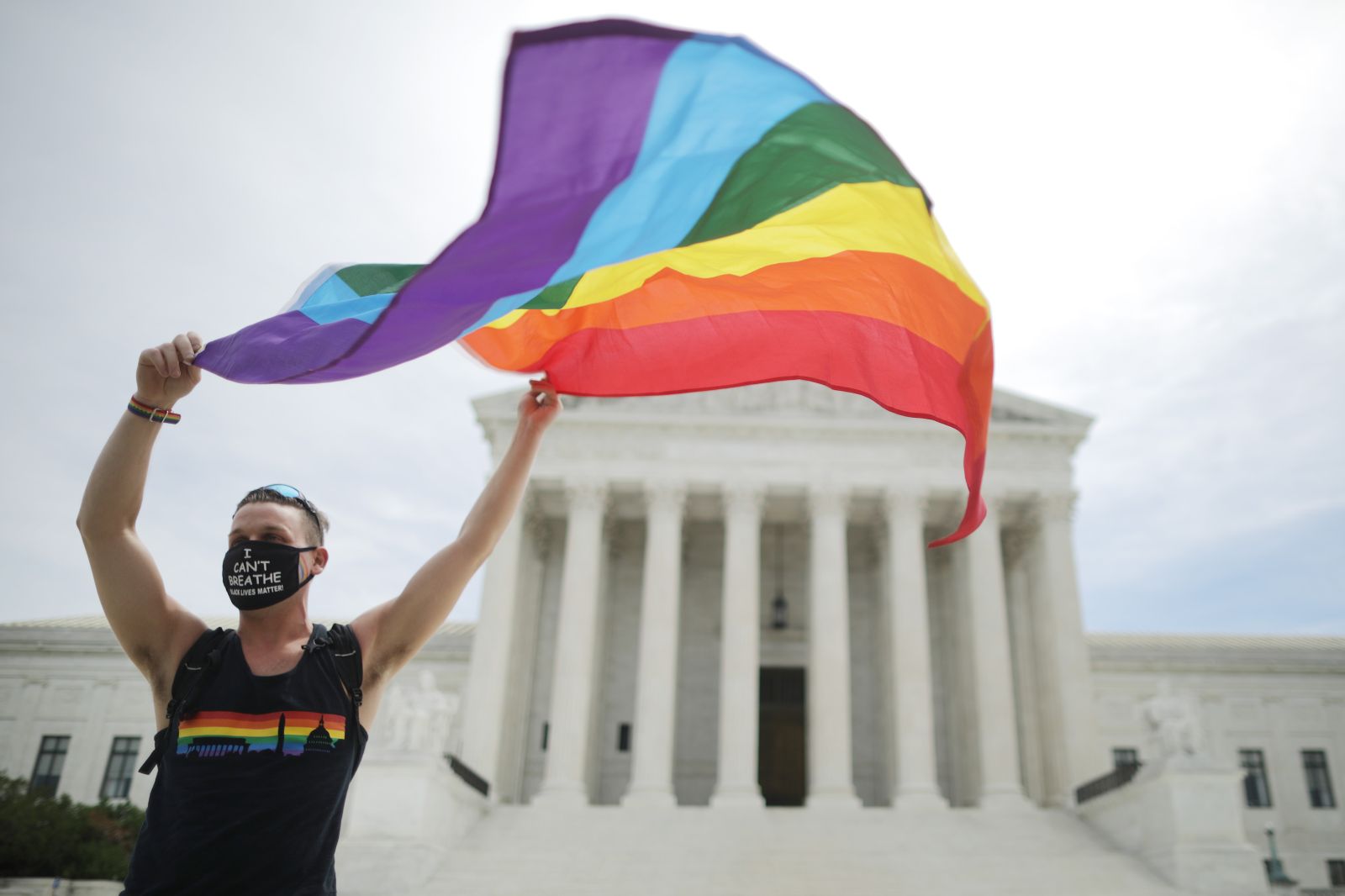
Supreme Court to Hear New Case Tied to Same-Sex Couples
What Is the Case About?
The case involves Catholic preschools and families arguing it is unconstitutional for Colorado to prohibit them from the taxpayer-funded free preschool program because of their admission policies on LGBTQ+ families and children. The program provides families with more than $6,000 to send their children to preschool.
The case was brought by Dan and Lisa Sheley, Catholic parents who have sent their children to school in St. Mary’s Catholic Parish and believe the program should provide their funds to attend that school. They wrote in a statement back in April, when the court agreed to hear the case, that the program has “cut out families like ours because we chose a Catholic education.”
Colorado has said it allows religious schools to participate in the program, but that they must follow nondiscrimination laws.
In their petition to the Supreme Court, petitioners argued the state law requires schools to ensure families have an “equal opportunity” to enroll but has granted numerous exceptions.
“But Colorado excludes Catholic preschools because they admit only families who support Catholic beliefs, including on sex and gender,” the petition reads.
Attorney General Phil Weiser’s office wrote in a filing the universal preschool program “affirmatively welcomes faith-based providers while allowing no exceptions from its equal-opportunity requirements.”
“Because this case involves neither any exceptions nor the discretion to create exceptions, it is not an appropriate vehicle for addressing the question of what sorts of exceptions would render the government’s action not generally applicable,” he wrote.

...
The Legal Questions Facing the Court
The court has been asked to address two questions in the case—whether “proving a lack of general applicability under Employment Division v. Smith requires showing unfettered discretion or categorical exemptions for identical secular conduct,” and whether Carson v. Makin “displaces the rule of Employment Division v. Smith only when the government explicitly excludes religious people and institutions.”
In Smith, the court ruled that governments can enforce laws even if they incidentally burden religious practices. In Carson v. Makin, the justices held that Maine cannot exclude religious schools from a tuition-assistance program because they are religious.
What Both Sides Argued
Nicholas Reaves, senior counsel at the Becket Fund for Religious Liberty, argued on behalf of the petitioners. He said Colorado families have been “denied” the ability to use the funding at Catholic schools because of “this sincere religious exercise.” He also pointed to examples of other schools being able to turn families away.
“Colorado's inconsistent and contradictory arguments further confirm the state's actions are anything but generally applicable. Colorado has flexibly interpreted the mandate to accommodate important secular interests, but it's called the same law a hard limit. When petitioners sought a religious accommodation,” he said.
Colorado has “refused to extend that flexible treatment to petitioners,” Reaves said.
Reaves wrote in a statement on Tuesday, “Colorado’s Catholics-need-not-apply rules make a mockery of our nation’s laws and commitment to religious freedom. The Supreme Court has been crystal clear: Americans don’t have to forfeit their faith to receive public benefits. We are confident that this discrimination won’t stand and that the Court will hand Colorado yet another loss.”
Meanwhile, Helen Norton, Colorado deputy solicitor general, said the state only asks that these schools comply with the same requirements that all publicly funded preschools must meet. The universal preschool program is “neutral” on religion.
“Under this program, faith-based preschools remain free to teach their religious beliefs, including their beliefs about sex or gender or marriage, free to teach them while receiving public funding,” she said.
Norton said the program “does not devalue religion by allowing preschools to remove these barriers.”
What Did Brett Kavanaugh and Other Justices Say?
One of the central arguments the attorneys representing the petitioners faced is whether they believe religious schools have different treatment under the law. Kavanaugh referenced this during his questioning of Harris, the Justice Department’s principal deputy solicitor general.
“There's been some discussion, of is this a favor or is this treating them equally, or providing an accommodation, I guess another way to say it. So, if a Jewish service member is given Saturdays off, is that giving that service member a favor, or is that ensuring equal opportunity for that service member?” he asked.
Harris said that she views it as “ensuring vindication of free exercise rights and something that that person is compelled to do.”
“I don't think it's like a special favor to people to respect a First Amendment right. I disagree with the framing that there's some sort of impermissible thumb on the scale involved,” she said.
Justice Ketanji Brown Jackson raised a similar question, telling Reaves she is “concerned” that these preschools are trying to do something the state determined violates its “principles with respect to discriminating against or excluding a certain group of people.”
“It seems to me you're asking for a special rule for religious schools that when Colorado says anyone who receives these funds has to be open to everyone and can't discriminate what you're asking for in the context of this free exercise claim, is a special rule for religious schools to be able to not follow that condition,” she said.
Reaves, however, said that is not what he is asking, pointing to previous cases in which the court has found that “if there is a sincere religious exercise that's being burdened, the government has to show a really good reason for doing that.”
How the Court Has Ruled on LGBTQ+ Cases
The court has weighed in on several legal matters involving LGBTQ+ rights in recent terms.
In March, liberal justices Sonia Sotomayor and Elena Kagan joined the court’s conservative majority in a ruling in favor of a challenge of Colorado’s law prohibiting conversion therapy for minors.
The court held that the law, when applied to talk therapy provided by Kaley Chiles, who is a licensed counselor in Colorado, regulates speech based on viewpoint. The court said lower courts failed to apply "sufficiently rigorous" First Amendment scrutiny.
It also upheld Tennessee’s ban on gender‑affirming medical care for transgender minors in 2025.
Conservative Justice Clarence Thomas has signaled an openness to revisiting the case that legalized same-sex marriage nationwide, writing in the 2022 case Dobbs v. Jackson Women's Health Organization, "In future cases, we should reconsider all of this Court's substantive due process precedents, including Griswold, Lawrence, and Obergefell."
Conservative Justice Amy Coney Barrett has described marriage rights as “fundamental,” comments legal experts have interpreted to mean she is not inclined to overturn same-sex marriage.
Contact Newsweek editors for this story: Gabe Whisnant and Anthony Murray.
View 0 Comments
Submit Correction
View Editorial & AI Guidelines