
By Kevin Powell
Writer
0
Share
Newsweek is a Trust Project member
See more of our trusted coverage when you search.Prefer Newsweek on Googleto see more of our trusted coverage when you search.
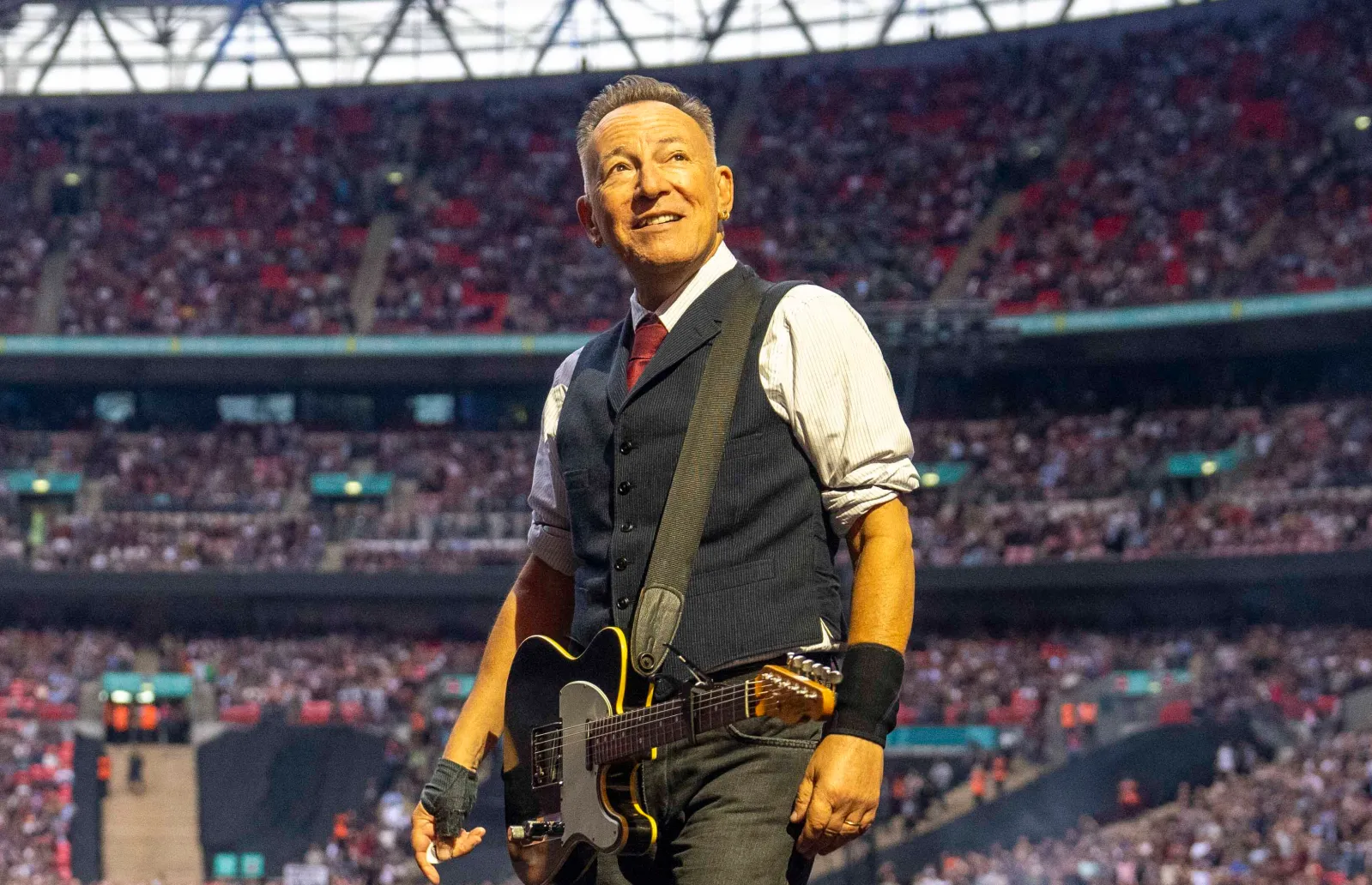
What is a man? What does that word mean when you’ve been wounded, as a male, since childhood? And in a world telling you to suck it up, be tough, not complain, and not cry, ever? It is a confounding question I have been asking myself since a kid, and a conundrum Bruce Springsteen, one of America’s most self-reflective and prolific singers for six decades, has been grappling with as well.
I cannot recall when I first heard Springsteen’s thick-throated soul rush of a voice, or began to pay attention to his Flannery O’Connor-like storytelling, or when I became captivated by his street-news magnetism. But I do know that as I sat in a movie theater absorbing Deliver Me from Nowhere, the hypnotic new film about Springsteen’s struggle to make his now historic Nebraska album in 1982, I became quite affected.

...
Read More on Opinion
That is because Deliver Me from Nowhere, which stars Jeremy Allen White of Hulu’s The Bear, is a method actor’s dream role as the brooding, haunted Springsteen, pre-the mammoth success of Born in the U.S.A. It is less biopic but rather an exploration of an exploration: how 32-year-old Bruce Springsteen, a man-child in the promised land of rock and pop fame and fortune, nearly destroyed himself because of devastating childhood traumas. Deliver Me from Nowhere is not merely a movie. It is a tender and brilliantly honest study of fragile manhood unlike few other films we’ve ever witnessed.
But fast forward for a moment, if you will. Think of the Bruce Springsteen of 2025, recently turned 76, who boldly criticized President Donald Trump while on tour earlier this year, sparking the same sort of mix of applause and outrage as when The Boss publicly pledged his support for the LGBTQ-plus community on more than one occasion, or when he penned a blistering seven-minute opus—“American Skin (41 Shots)”—about police brutality and racial profiling.
Today he is a certified global icon, husband, father and grandfather. How did we go from the Jersey boy whose alcoholic father abused and terrorized him, his mother and their household, to the 30-something Springsteen who contemplated suicide, landing in a therapist’s office, finally, per his memoir and movie, crying as if he had never cried before in his entire life?
Nebraska was the bridge. Arguably his best and most vulnerable work of art, it remains uncomfortable, difficult to listen to, whether the original version or the expanded new box set version, electrified, if you will, and long stored away. This is not purely because acoustic Nebraska was purposely pushed out there by Springsteen, over the objections of his record label, in its raw, organic and wildly imperfect demo form: solely his vocals, a guitar, sometimes a harmonica, another spare instrument or two and echoes here and there.

...
But also because listening to the tales on Nebraska is as if we are eavesdropping on the delicate inner thoughts of, say, Elvis Presley, Janis Joplin, Jimi Hendrix, Donny Hathaway, Amy Winehouse, or Whitney Houston in their most desperate moments, or James Dean before that tragic crash, or Tupac Shakur staring blankly in a random photo during his last car ride.
Fact is Bruce Springsteen has forever been a man of the people, a man in search of his own definition of his maleness and his humanity. But he has also been a voice for America, a voice for the voiceless, for those left behind, dissed, forgotten. So one can only imagine those voices competing with your own voice, to be free, fully free, the severe mental acrobatics of such a life journey. A reluctant poet for the people akin to Bob Dylan’s reluctance to be the mouthpiece for generations.
And while we have certainly made tremendous progress as a nation in the mental health space, we still exist where it is not considered cool for men, for boys, to express what we feel, except through violence, anger, or one addiction or another (think liquor, but also smoking, sex, gambling, more). Most of us are socialized not just to suck it up, never to cry or show emotions, but also to suppress, go silent, hide, run away, act as if there is no agony. Until the heavy load sags and explodes.
This is why Bruce Springsteen matters, and has mattered across eras and trends within multicultural America, to those on the margins as I have been, a working-class boy from Jersey, just like him, who also could only find my way out and forward through the writings I could muster to express the hurt.
Because it does hurt to be a sensitive man, boy, man-child, in any family, in any community, even if you wear the uniform of T-shirts and jeans, as Springsteen did, or a hoodie and Timberlands, as I have for years.
Yet beneath the exterior, as revealed in Deliver Me from Nowhere, as revealed on Nebraska, and much of Springsteen’s music then and presently, is an aching to make sense not just of manhood and his great depression—which is really our great collective depression as a country—but also an aching for true democracy, for true freedom.
It took me several laps around the sun to understand Bruce Springsteen, why he has loved us and cared about us Americans so hard, so breathlessly, so endlessly. Because he has been, forthrightly, also trying to heal himself while trying to heal us.
Kevin Powell is a Grammy-nominated poet, humanitarian, author of 16 books, filmmaker, public speaker, and frequent contributor to Newsweek. He lives in New York City. You can find him on social media platforms by typing poetkevinpowell.
The views expressed in this article are the writer's own.
View 0 Comments
Submit Correction
View Editorial & AI Guidelines