10
Loading video...

By Hugh Cameron
Reporter
0
Share
Newsweek is a Trust Project member
See more of our trusted coverage when you search.Prefer Newsweek on Googleto see more of our trusted coverage when you search.
A new bill in California aims to prevent diaper manufacturers from concealing toxic chemicals that may be present in their products.
Current rules surrounding business confidentiality largely shield companies from having to report on chemicals other than those known to be a significant health risk. But California Assembly Bill 1901 would require them to publicly disclose all intentionally added ingredients, as well as each ingredient’s specific reason for being in the diaper by January 1, 2028 for any diapers manufactured, sold or distributed in the state. A year later, companies would be required to print this information on all product packaging.
"As a new dad, I have a new appreciation for how important it is for parents to make informed decisions when it comes to the health and wellness of their children," said Marc Berman, a Democratic member of California’s State Assembly and the author of the bill.
Read More on News
While opponents have argued that current guidelines around confidential business information strike an appropriate balance between consumer and trade-secret protections, the bill has passed the California Assembly 68-1 and is expected to reach the state Senate floor in a matter of weeks after clearing a series of committee votes with minimal opposition.
Newsweek contacted Berman’s office for further comment on the bill.
What Prompted the Bill?
An article published in the academic journal Environmental Science & Technology found that the average child in the U.S. will go through roughly 7,000 disposable diapers before they are toilet-trained. A number of children will continue using them past typical toilet-training age, as well as many seniors and an estimated 20 million women across the U.S.
As a result, concern over the risk of chemical exposure has intensified, and past reporting suggests diapers may contain several toxic substances including phthalates and PFAS—the group of human-made compounds known as "forever chemicals." These may be added for a number of reasons, such as fragrance, but manufacturers are generally not required to fully disclose all intentionally added ingredients other than in New York.
New York’s S2279C, which took effect in December 2025, covers diapers generally, including reusable products, while AB 1901 focuses on children’s diapers but covers products sold, distributed, or manufactured in California. New York imposes a civil penalty equal to 1 percent of a manufacturer’s annual in-state sales, capped at $1,000 per package or box, whereas the California proposal sets penalties at up to $5,000 for a first violation and $10,000 for subsequent violations, with penalties potentially accruing for each day of a continuing violation.
Most significantly, AB 1901 goes beyond New York’s package-only requirement by requiring manufacturers to publish the full intentionally added ingredient information—including each ingredient’s CAS number and function or purpose—on a publicly accessible webpage, with packaging required to identify the ingredients and provide the website address
"Due to trade-secret laws, the ingredients that make up fragrance formulations don’t need to be listed on packaging in the U.S. That means formulations might contain hundreds of ingredients but just list umbrella terms like ‘fragrance’ and ‘parfum’ on packaging," according to the consumer safety-focused nonprofit Consumer Reports. "Because fragrance ingredients are associated with numerous health effects like allergies, reproductive toxicity, developmental toxicity, and skin sensitization, consumers may be exposed to problematic ingredients without even knowing it."
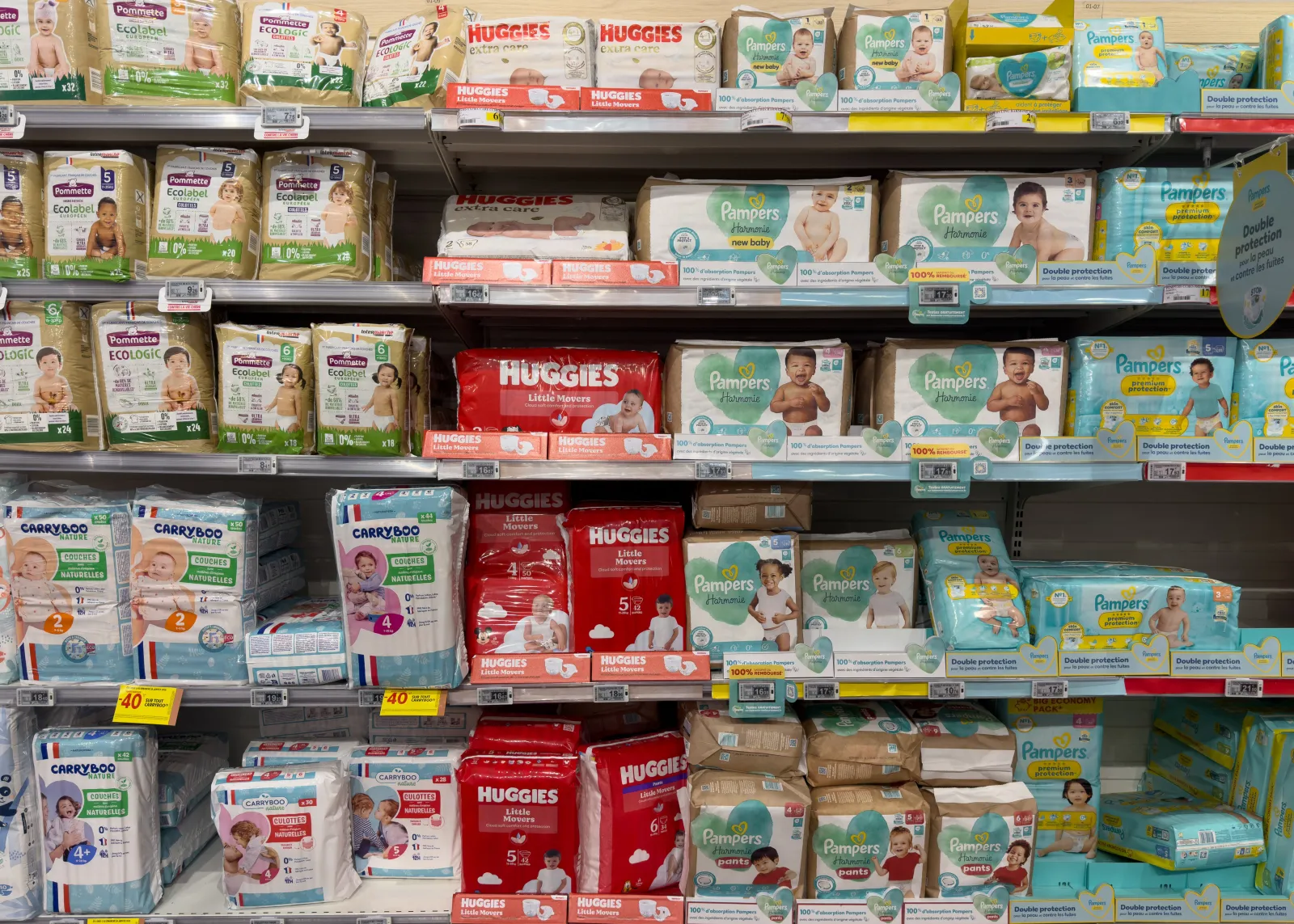
...
"Today, manufacturers can hide dozens of chemicals behind umbrella terms like ‘fragrance’ or ‘colors,’" the Environmental Working Group (EWG) wrote in a recent fact sheet. "These are potentially toxic mystery cocktails that prevent parents from knowing what’s in the products they use on their children every day."
"Parents need to know what is in a product that their infant wears every hour of every day for the first two to three years of their life," Susan Little, California legislative director at EWG, told Newsweek.
"Other than relying on vague manufacturers’ voluntary disclosures, parents have no way of finding out what chemicals and materials are in diaper products. Parents and caregivers need clear and reliable information to make informed choices about what their baby is exposed to."
EWG and Consumer Reports are both co-sponsoring the legislation, which has also received the backing of several groups and individuals like the Consumer Federation of California and the actress Hilary Swank.
We all want the best for our children, but the lack of transparency around diaper ingredients prevents us from knowing what ‘the best’ is when buying the one thing that is touching our baby’s skin every minute of their lives for years," said Assemblymember Berman. "I’m proud to author AB 1901 to give parents greater transparency into what chemicals are in their children’s diapers so that they can make the right choice for their family."
Many groups are in opposition, however, including the California Chamber of Commerce, the California Manufacturers & Technology Association and the Center for Baby and Adult Hygiene Products (BAHP)—the primary trade association representing diaper manufacturers in the U.S.
BAHP told Newsweek it "supports meaningful ingredient transparency and shares the goal of ensuring consumers have clear, accessible information about the products they use."
However, the trade association said it had been working with the bill’s author on amending the bill, given it says several provisions would make "compliance unnecessarily difficult and still not provide additional benefits to consumers."
"As currently drafted, the bill requires manufacturers to disclose ingredient information on retailers' product webpages, even though manufacturers do not control or have the ability to update those websites," BAHP told Newsweek.
The California Chamber of Commerce directed Newsweek to a letter from June, in which it, alongside several groups, voiced an opposition to AB 1901 unless the bill was amended to include provisions safeguarding confidential business information, and to grant more time for compliance and potential ingredient changes.
What Happens Next?
The bill was first introduced in March and passed the Assembly floor in May by 68 to 1 with 11 not voting.
AB 1901 has passed the Senate Environmental Quality Committee with bipartisan votes, and last week unanimously passed the Senate Appropriations Committee, setting it up for a full vote in the California Senate.
An analysis by the Senate Appropriations Committee found that fully implementing the bill would cost at least $535,000 in the 2027 to 2028 fiscal year, rising to $750,000 the year after but falling to $685,000 from then on.
Contact Newsweek editors on this story: Daniel Orton and James Debens
Update 8/18/26 4:22 a.m. ET: this article was updated with additional comments.
View 0 Comments
Submit Correction
View Editorial & AI Guidelines