10
Loading video...

By Anna Skinner
Associate News Editor
0
Share
Newsweek is a Trust Project member
See more of our trusted coverage when you search.Prefer Newsweek on Googleto see more of our trusted coverage when you search.
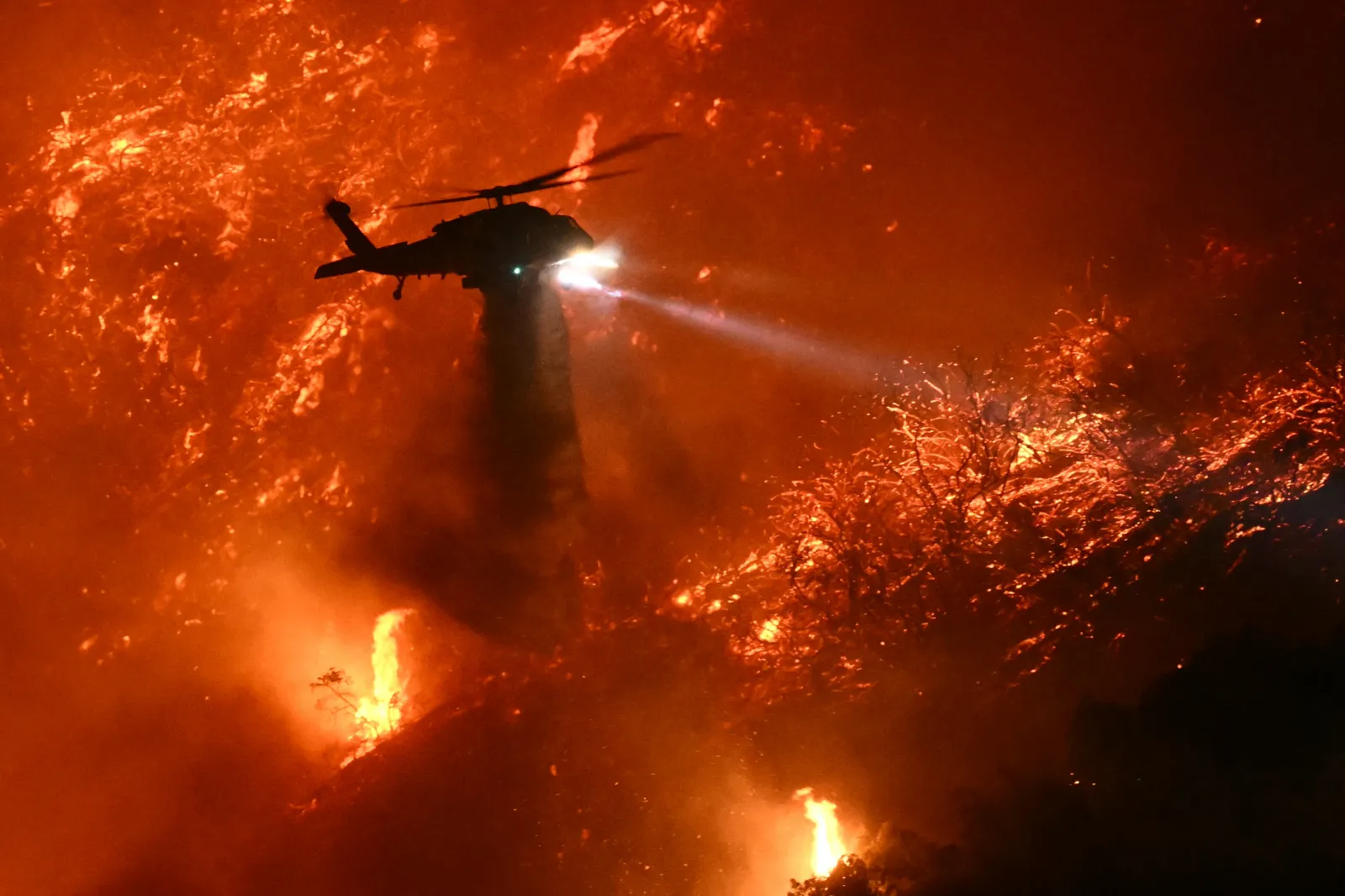
As the Southern California wildfires continue to rage, residents are at risk from more than the fast-spreading flames as strong winds continue to whip through the region. There's also a deadly phenomenon known as a fire tornado.
Why It Matters
Numerous wildfires ignited in California after Santa Ana winds exacerbated favorable fire conditions last week. As of Wednesday, the two largest blazes, the Palisades and Eaton fires, continue to burn in Los Angeles County, totaling more than 37,000 acres.
Read More on U.S.
...
Firefighters have contained 19 percent of the Palisades fire and 45 percent of the Eaton fire. At least 25 people have been killed, and thousands of structures have been destroyed.
What To Know
Wildfires pose various threats, one being what is called a fire tornado.
A fire tornado, also called a firenado, results from a wildfire burning particularly hot during strong winds, which can swirl the flames into a phenomenon that resembles a tornado of flame.
On Wednesday, the Associated Press reported that firefighters battling the wildfires in Southern California could encounter the phenomenon, which killed a firefighter during a 2018 wildfire near Redding. That firenado was the size of three football fields, the AP said.
According to a video captured by CNN, the Palisades fire has already spawned at least one fire tornado.
National Weather Service (NWS) meteorologist Kristan Lund told Newsweek that fire tornadoes aren't particularly rare but they are very brief, so it's uncommon to see one in action. Lund described the fire tornado as a response to the weather rather than its own event.
In addition to spurring flames, fire tornadoes also come with high winds, which can cause damage as well.
Any wind can spread embers from a wildfire, which can then cause the fire to spread rapidly or other fires to ignite, and a fire tornado is no exception. A fire tornado can spread the embers even further, as they often occur during strong winds.
What People Are Saying
Kristan Lund told Newsweek: "With how hot the fire is burning, it heats up the air at the surface, and this causes the air to rapidly move upward. Any little wind that comes into the area can cause it to swirl."
Fire tornadoes, she added, are "not the same as a regular tornado."
What Happens Next
Firefighters continue to battle the wildfires in Southern California. The current red flag warnings in the Los Angeles and San Diego areas are set to expire Wednesday night, although more dry, windy conditions are expected early next week. There's a chance another red flag warning will be issued Monday and Tuesday for both areas.
View 0 Comments
Submit Correction
View Editorial & AI Guidelines