10
Loading video...


By Billal Rahman and Hannah Parry
0
Share
Newsweek is a Trust Project member
See more of our trusted coverage when you search.Prefer Newsweek on Googleto see more of our trusted coverage when you search.
The Supreme Court struck down President Donald Trump’s executive order limiting birthright citizenship on Tuesday, preserving a long-standing interpretation of the 14th Amendment that grants automatic citizenship to nearly anyone born on U.S. soil.
The ruling was led by Chief Justice John Roberts, who wrote the court’s opinion striking down the executive order, with Justices Sonia Sotomayor, Elena Kagan, Amy Coney Barrett and Ketanji Brown Jackson joining his decision.
Writing for the majority, Roberts said children born in the United States “are citizens at birth,” rejecting the administration’s argument that the 14th Amendment does not extend to the children of immigrants without permanent legal status. He added that such children “satisfy both elements of the Citizenship Clause,” concluding that “under the Constitution, they are citizens at birth.”
Read More on News
The ruling marked a major legal defeat for the Trump administration's immigration agenda and reaffirmed the constitutional protections established by the Supreme Court’s 1898 decision in United States v. Wong Kim Ark, which held that children born in the United States are citizens regardless of their parents’ nationality, with narrow exceptions such as children of foreign diplomats.
It is unlikely to end the political and legal effort by conservatives and hardline MAGA loyalists to end birthright citizenship. According to estimates from the nonpartisan thinktank Pew Research Center, about 300,000 babies were born to unauthorized immigrant mothers in the United States in 2023.
...
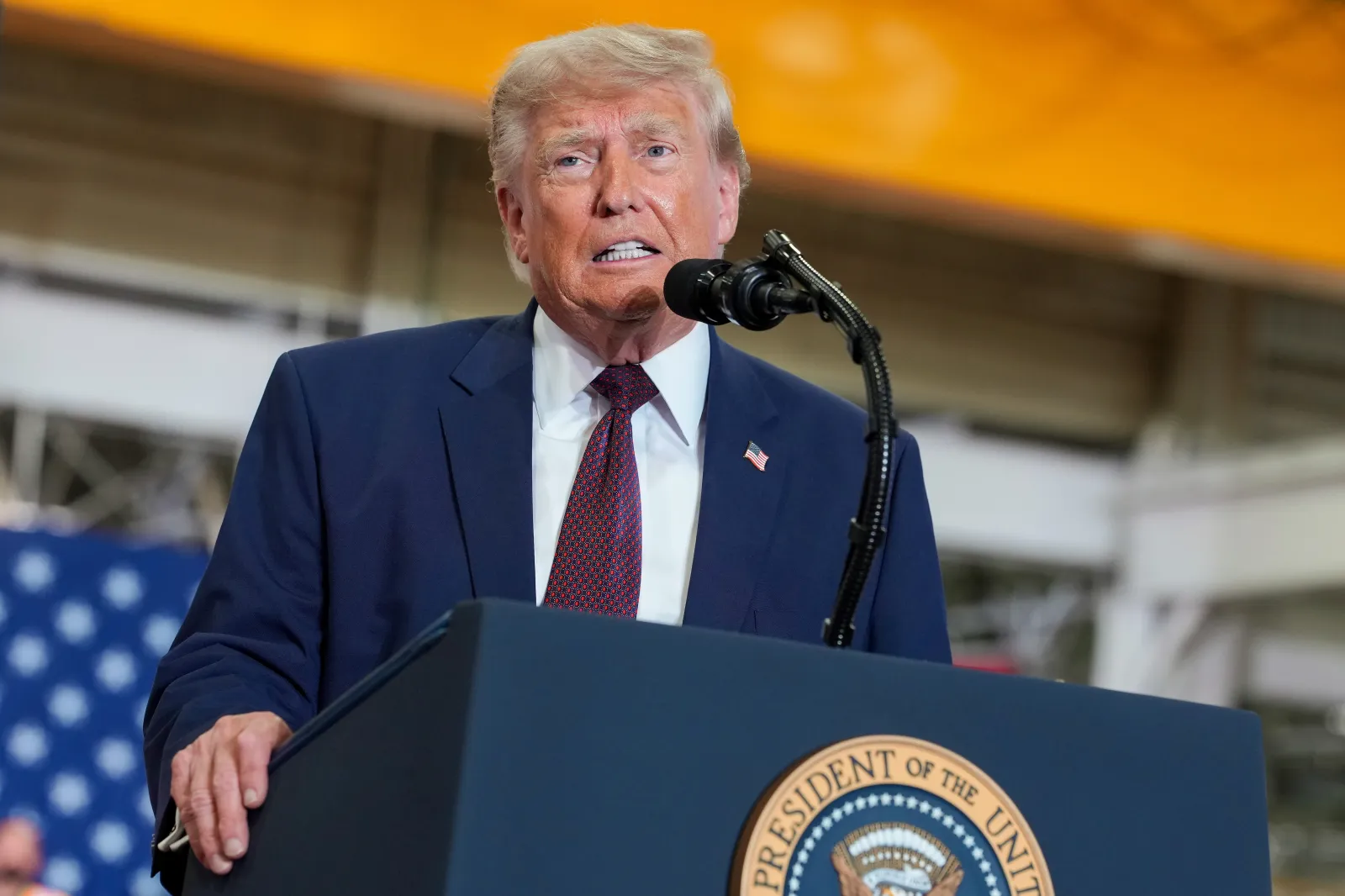
Trump’s executive order, signed on his first day back in office in January 2025, sought to deny automatic citizenship to children born in the United States if their parents were in the country illegally or temporarily on visas, and neither parent was a U.S. citizen or lawful permanent resident. Multiple lower courts blocked the order before the Supreme Court heard arguments this year.
The administration argued that the Constitution’s Citizenship Clause, which grants citizenship to people born in the United States and “subject to the jurisdiction thereof”, does not automatically apply to everyone born in the country. Opponents countered that the order conflicted with both constitutional text and more than a century of legal precedent.
Following the ruling, Trump called for legislation to address the birthright citizenship issue.
The president posted on Truth Social, "The Supreme Court upheld Birthright Citizenship, which is too bad for our Country, but we can easily make it up in Congress through Legislation, with the support of the President, that has now been determined during this process. No long and unwieldy Constitutional Amendment is necessary! Congress should start TODAY to work on ending expensive and unfair to our Country, Birthright Citizenship. They will have my Complete and Total Support!":
In addition to congressional action, several possible avenues remain for future efforts to restrict birthright citizenship.
White House Border Czar Tom Homan threatened to increase immigration enforcement in the wake of the decision.
"I saw the birthright citizenship decision," Homan said on Fox News on Tuesday. "Now, we step up enforcement. Even though we're doing record amounts of enforcement now, we need to do more — and not only that, we need to really buckle down on birth tourism."
Constitutional amendment
The most direct and most difficult path would be amending the Constitution itself.
Most constitutional scholars say the 14th Amendment’s citizenship guarantee is embedded directly in the Constitution and cannot be undone through executive action alone.
The amendment, ratified in 1868 after the Civil War, states that “all persons born or naturalized in the United States, and subject to the jurisdiction thereof, are citizens of the United States.”
Bennett Gershman, a law professor at Pace University, told Newsweek the most direct legal path to ending birthright citizenship would be a constitutional amendment rather than ordinary legislation.
Citing the Supreme Court’s landmark 1803 decision in Marbury v. Madison, Gershman said the Constitution remains “the supreme law of the land” and that laws conflicting with it are “null and void.” He said Congress therefore could not simply override the 14th Amendment through statute alone.
A constitutional amendment would require approval by two-thirds of both the House and Senate and ratification by three-fourths of the states, a threshold widely viewed as politically unrealistic in the current political climate.
"I don’t see any other recourse here. But given Trump’s disdain for being thwarted, he might take actions in contravention of the Court’s ruling, or try to find loopholes, as he did when he lost the tariff case," Gershman said.
"He might order the Justice Department and ICE agents to arrest every non-citizen born in the U.S. and let the immigration courts, and then the civil courts, deal with the cases. It would wreak chaos and confusion but that is Trump’s middle name."
Still, Republican lawmakers have periodically introduced proposals seeking to limit birthright citizenship.
Congress testing the issue
Congress could also attempt to pass legislation redefining who qualifies as “subject to the jurisdiction” of the United States under the 14th Amendment.
Supporters of Trump’s executive order have argued that the phrase was never intended to cover children born to people in the country unlawfully or temporarily. The Trump administration argued in court filings that citizenship historically required a more complete allegiance to the United States.
Many legal scholars disagree, arguing that Congress cannot override constitutional guarantees through ordinary legislation and that Supreme Court precedent strongly favors broad birthright citizenship protections.
Any congressional attempt to narrow citizenship eligibility would almost certainly trigger another major constitutional challenge and could return to the Supreme Court.
Future litigation
Legal analysts say future lawsuits may be the most realistic path for opponents of birthright citizenship.
Although the Supreme Court rejected Trump’s executive order, some conservative legal scholars continue to argue that Wong Kim Ark does not fully address modern immigration categories such as undocumented immigrants or temporary visa holders.
Rather than seeking to eliminate birthright citizenship broadly, future cases could focus on narrower categories, including children born to undocumented immigrants, tourists, or temporary visa holders.
How much room remains for such challenges may depend on the breadth of the Supreme Court’s opinion and whether the justices left unresolved questions about specific immigration categories.
Narrower executive actions
Future administrations could also pursue narrower immigration-related policies tied to citizenship documentation and enforcement rather than directly challenging constitutional citizenship itself.
Potential measures could include stricter passport verification requirements, additional documentation tied to parental immigration status, or increased scrutiny of so-called “birth tourism,” in which foreign nationals travel to the United States to give birth.
The Trump administration repeatedly cited concerns about birth tourism while defending the executive order.
Immigration advocates say such policies could still face legal challenges if they are viewed as indirectly undermining constitutional protections.
Unlikely but possible scenarios
A future Supreme Court with a different ideological balance could revisit prior precedent. Republican-led states also could attempt to test the boundaries of citizenship rules through voting laws, public benefits disputes or administrative policies.
Congress could attempt indirect restrictions tied to immigration classifications rather than citizenship itself.
The Supreme Court’s ruling Tuesday preserved that interpretation for now. But the political fight over immigration, citizenship, and the meaning of the 14th Amendment will continue.
View 0 Comments
Submit Correction
View Editorial & AI Guidelines