...

By Robert Alexander
Senior Crime & Court Reporter
0
Share
Newsweek is a Trust Project member
See more of our trusted coverage when you search.Prefer Newsweek on Googleto see more of our trusted coverage when you search.
Recent political debate over President Joe Biden’s autopen-signed clemency orders has prompted fresh scrutiny of the constitutional foundations of presidential pardoning.
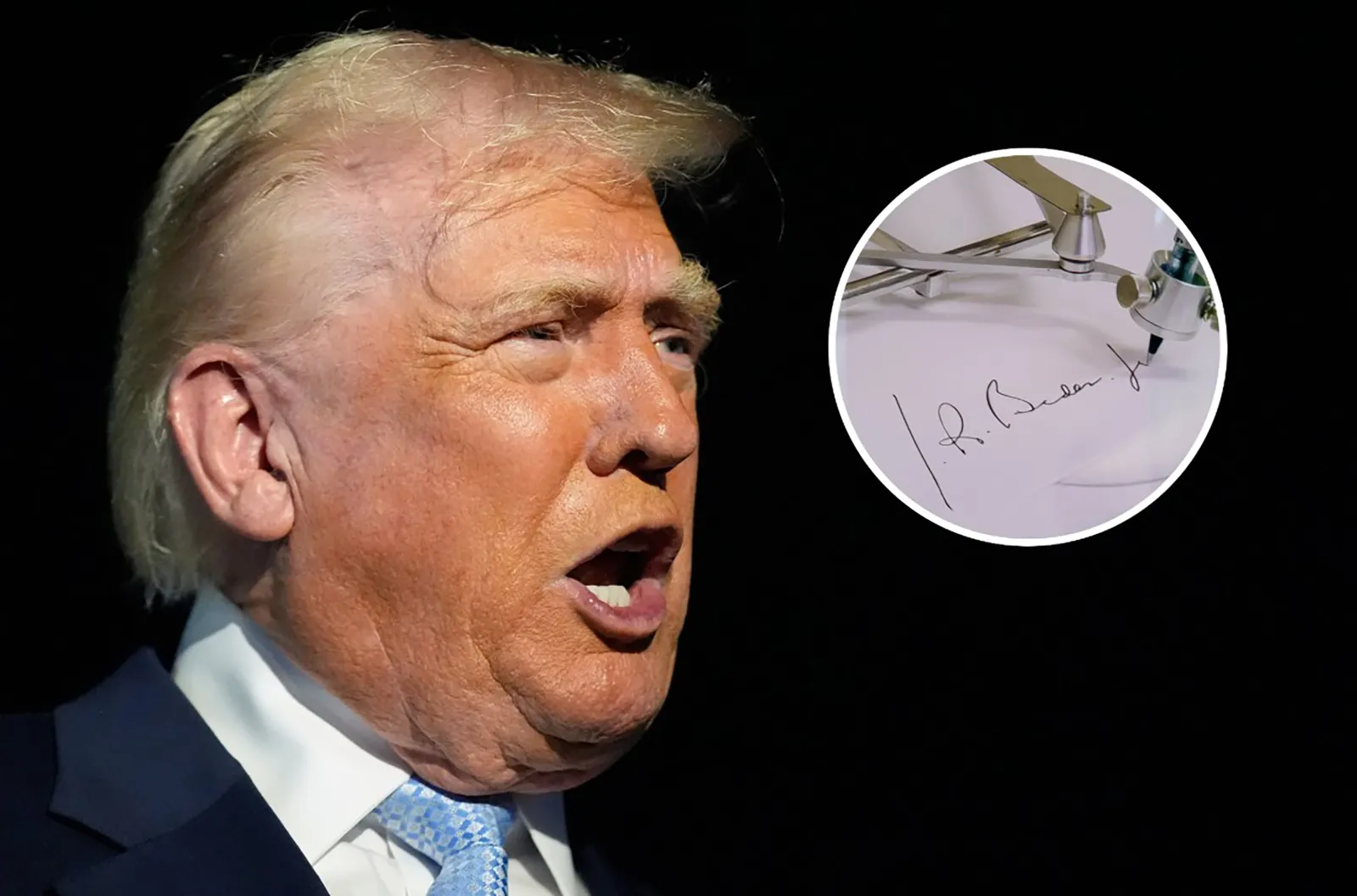
President Donald Trump has claimed such pardons are “VOID, VACANT, AND OF NO FURTHER FORCE OR EFFECT… because they were done by Autopen.”
Newsweek spoke with academic experts about long-standing legal guidance, with all pointing overwhelmingly in another direction.
Read More on U.S.
Why It Matters
The fight over Biden’s autopen-signed pardons matters not because the legal questions are uncertain but because the dispute tests the durability of constitutional powers that have long been considered final.
As scholars and legal studies emphasize, presidential clemency is plenary and historically immune to reversal, and the form of a president’s signature has never determined its validity. The current controversy reflects a growing willingness to weaponize procedural claims to challenge otherwise-legitimate executive acts.
At stake is not merely the status of individual pardons but whether current or future administrations can retroactively rewrite constitutional powers for political ends.
...
What To Know
What The Autopen Is—And What It Cannot Do
The presidential autopen is a mechanical device that replicates the president’s signature, and while it may be used to sign official documents—including legislation and clemency orders—as long as the president has authorized the action, it cannot substitute for the president’s own decision-making or be used to delegate the constitutional authority that must remain personally exercised.
Trump has claimed that Biden’s pardons were void, arguing that Biden “did not know anything about them,” and using that assertion to justify his demand to reverse the clemency decisions.
Clemency Experts Reject Claims Of Invalid Pardons
Rachel E. Barkow is a leading scholar of criminal law and executive clemency, serving as the Charles Seligson professor of law and faculty director of the Zimroth Center on the Administration of Criminal Law at New York University School of Law.
“There is no precedent or basis for a subsequent president to nullify a predecessor's pardons,” she told Newsweek, underscoring that the Constitution provides no mechanism for such retroactive reversal.
Barkow also made clear that procedural objections to Biden’s use of the autopen lack foundation, noting that “there is no requirement that grants of clemency be issued in any particular way.”
She pointed to existing Justice Department guidance authorizing autopen signatures for presidential acts, saying: “I don’t see any reason why, if it can be used for that purpose, it cannot be used for clemency grants.”
Even so, Barkow acknowledged that political motivations may drive attempts to challenge the pardons, observing that an administration intent on testing norms “may try to bring challenges.”
But her conclusion remained firm: “My bet is that they will ultimately be unsuccessful.”

...
Presidential Power And The Constitutional Framework
Paul J. Larkin Jr., senior legal research fellow, Heritage Foundation (Meese Center for Legal & Judicial Studies), and author of Focusing Presidential Clemency Decision-Making, stresses that the Constitution gives the president uniquely broad authority in this area.
As he writes, “the President’s authority is plenary,” limited only by the fact that “the President cannot excuse someone from responsibility for a state offense, nor can he prevent Congress from impeaching and removing a federal official.”
Larkin said that clemency has historically served to correct miscarriages of justice and provide relief where the legal system has imposed “an unduly onerous punishment” but emphasizes that the Constitution “does not tell him when he should feel that way,” underscoring how much discretion is vested in the presidency.
His framework reinforces a core point of consensus among scholars: The validity of clemency turns on presidential judgment and authorization, not on the mechanics of signature.
Minority Concerns Over Mechanical Signatures
Terry Turnipseed, vice president of estate planning & asset protection at Neil Jesani Advisors, whose analysis focuses on autopen use in legislative signing, takes a far more restrictive view of proxy signatures in constitutional practice.
In The President and the Autopen, he argues that “it is unconstitutional for someone or something to sign a bill outside of the President’s presence,” raising structural concerns about separation of powers and the meaning of the term “sign” in Article I.
Turnipseed recounted the controversy surrounding the first use of an autopen to sign a bill into law, noting that it “brought swift criticism from 21 House members,” who questioned whether the president could delegate the physical act.
The first presidential signature-duplicating device was Thomas Jefferson’s 1804 polygraph, but the modern autopen—an automated signature reproducer introduced in the late 1930s—was first used in the White House by President Dwight D. Eisenhower.
Although his critique is directed at bill-signing rather than clemency—which operates under a different constitutional clause—Turnipseed's work illustrates the minority view that mechanical signatures raise unresolved constitutional questions about presidential presence and personal execution of formal acts.
Congressional Oversight And Political Fallout
The House Committee on Oversight has framed the autopen dispute within a broader examination of presidential authority and capacity, noting in its summary materials that “no legal precedent invalidates autopen-issued pardons when the President demonstrates clear authorial intent.”
The Committee highlights that courts traditionally defer to the executive in clemency matters unless there is evidence of “fraud or incapacity,” and it situates current challenges within ongoing congressional inquiries into Biden’s decision-making process and health.
While these investigations carry political significance, the Committee’s own documentation acknowledges that they have no legal effect on the validity of the pardons themselves, underscoring the stability of long-established clemency doctrine even amid escalating partisan scrutiny.
What The Office Of Legal Counsel Already Decided
The 2005 Office of Legal Counsel memorandum concluded that the president “need not personally perform the physical act of affixing his signature” to a bill and may instead direct a subordinate to apply it “for example by autopen,” establishing the modern legal foundation for authorized mechanical presidential signatures.
Disagreement over the use of an autopen reflects political rhetoric rather than a substantive constitutional dispute. As Barkow summarizes, while future administrations “may try to bring challenges…they will ultimately be unsuccessful.”
In the history of presidential clemency scholarship, the form of signature has never been treated as a condition of validity.
The debates now unfolding therefore reiterate a long-standing principle: the clemency power resides in presidential intent, not in the pen that renders it.
What People Are Saying
Terry L. Turnipseed, in his 2012 article The President and the Autopen: “The President’s use of the autopen [or even a human being] to sign a bill outside of the President’s presence is unconstitutional.”
What Happens Next
Biden’s autopen pardons are legally final, leaving opponents with political avenues rather than judicial ones. Congressional inquiries may continue, but they cannot alter the pardons’ validity, and long-standing executive-branch guidance supports their legitimacy.
Any future administration could challenge them only symbolically, making the controversy less a legal fight than a test of how far political actors will push the boundaries of settled presidential authority.
Update 12/08/2025, 09:35 a.m. ET: This article was updated with additional information.
View 0 Comments
Submit Correction
View Editorial & AI Guidelines