...

By Micah McCartney
Reporter
0
Share
Newsweek is a Trust Project member
See more of our trusted coverage when you search.Prefer Newsweek on Googleto see more of our trusted coverage when you search.
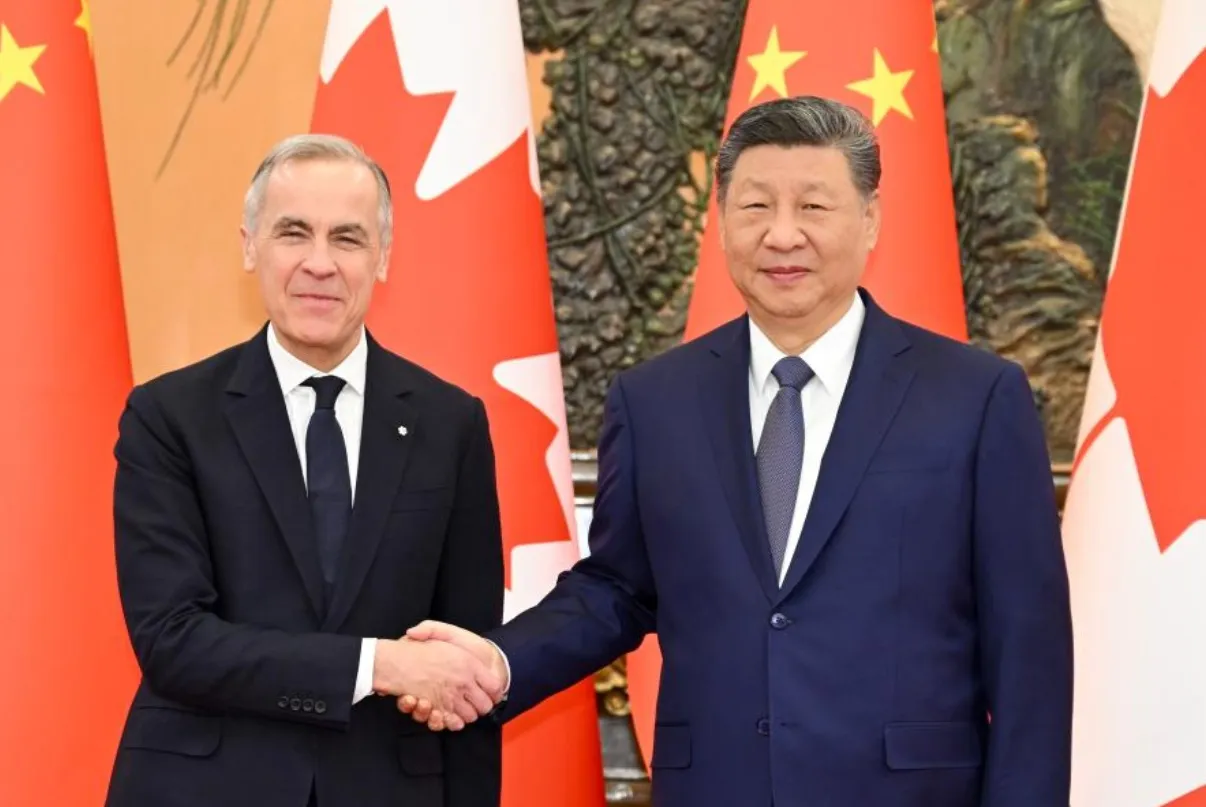
Canadian Prime Minister Mark Carney has hailed a thaw in China ties, telling Chinese President Xi Jinping the renewed engagement had put both countries on a path toward what he called "the new world order."
The Canadian delegation also broke with the U.S. and announced plans to a trade deal, in what policy analysts have suggested may signal a sea change in Ottawa's dealings with the East Asian power and the United States.
Newsweek contacted Carney's office and the Chinese Embassy in Ottawa for comment via email.
Read More on World
Why It Matters
Ottawa has moved largely in lockstep with Washington on China-related sanctions, human rights criticism directed at Beijing and efforts to counter what both governments describe as China-linked security threats.
However, Ottawa's relations with its longtime ally have deteriorated since U.S. President Donald Trump began his second term in January 2025—strained by Trump's tariff threats, accusations over the fentanyl trade and his repeated suggestion that the United States should annex its northern neighbor.
...
What To Know
"Mine is the first visit of a Canadian prime minister to China in nearly a decade. The world has changed much since that last visit. I believe the progress that we have made and the partnership sets us up well for the new world order," Carney told Xi during a meeting attended by top officials from both sides.
"I'm extremely pleased that we are moving ahead with our new strategic partnership," he added. "A partnership founded on five pillars will not only deepen our bilateral ties to the benefit of our peoples but will also, in my judgment, help improve the multilateral system, a system that in recent years has come under great strain."
Xi hailed the progress made since the two leaders met at the Asia-Pacific Economic Cooperation summit in South Korea in October, saying the meeting put Beijing-Ottawa ties on "an upward trajectory."
"I am ready to continue working with you with a sense of responsibility for the history, for the people and for the world, to advance the relationship in a positive direction and bring it on a track of healthy, steady and sustainable development for the benefit of the people of both countries," Xi said.
Carney was accompanied by five Cabinet members—the ministers of foreign affairs, natural resources, industry, agriculture and international trade—and the premier of Saskatchewan.
What People Are Saying
Guy Saint-Jacques, a former Canadian ambassador to Beijing, told NBC News: "The United States used to be a friend and ally. ... [Now] we are treated as an enemy."
He added: "Canadians know also that China is a very difficult partner. We know very well how they can contravene international rules."
Jia Wang, a senior fellow at the University of Alberta's China Institute, wrote in an analysis for the Asia Pacific Foundation of Canada: "In an era marked by growing uncertainty and increasingly unilateral actions by Donald Trump's administration to assert American primacy, Beijing is striving to position itself as a more reliable and responsible global power, one that upholds the international trading system and respects the broader international order."
What Happens Next
The delegation signed multiple agreements on issues such as energy cooperation and trade. Most notable was the commitment both sides made to rolling back the duties that have been in place since 2024.
Carney announced a "preliminary but landmark" deal to import 49,000 Chinese electric vehicles into Canada's market at a most-favored-nation rate of 6.1 percent, down from the 100 percent tariff imposed at Washington's urging in 2024. For its part, China agreed to reduce its 2024 retaliatory tariffs on Canadian canola to about 15 percent from the current 85 percent, according to a readout released by Carney's office.
View 0 Comments
Submit Correction
View Editorial & AI Guidelines