...

By Tom O'Connor
Deputy Editor, National Security and Foreign Policy
0
Share
Newsweek is a Trust Project member
See more of our trusted coverage when you search.Prefer Newsweek on Googleto see more of our trusted coverage when you search.
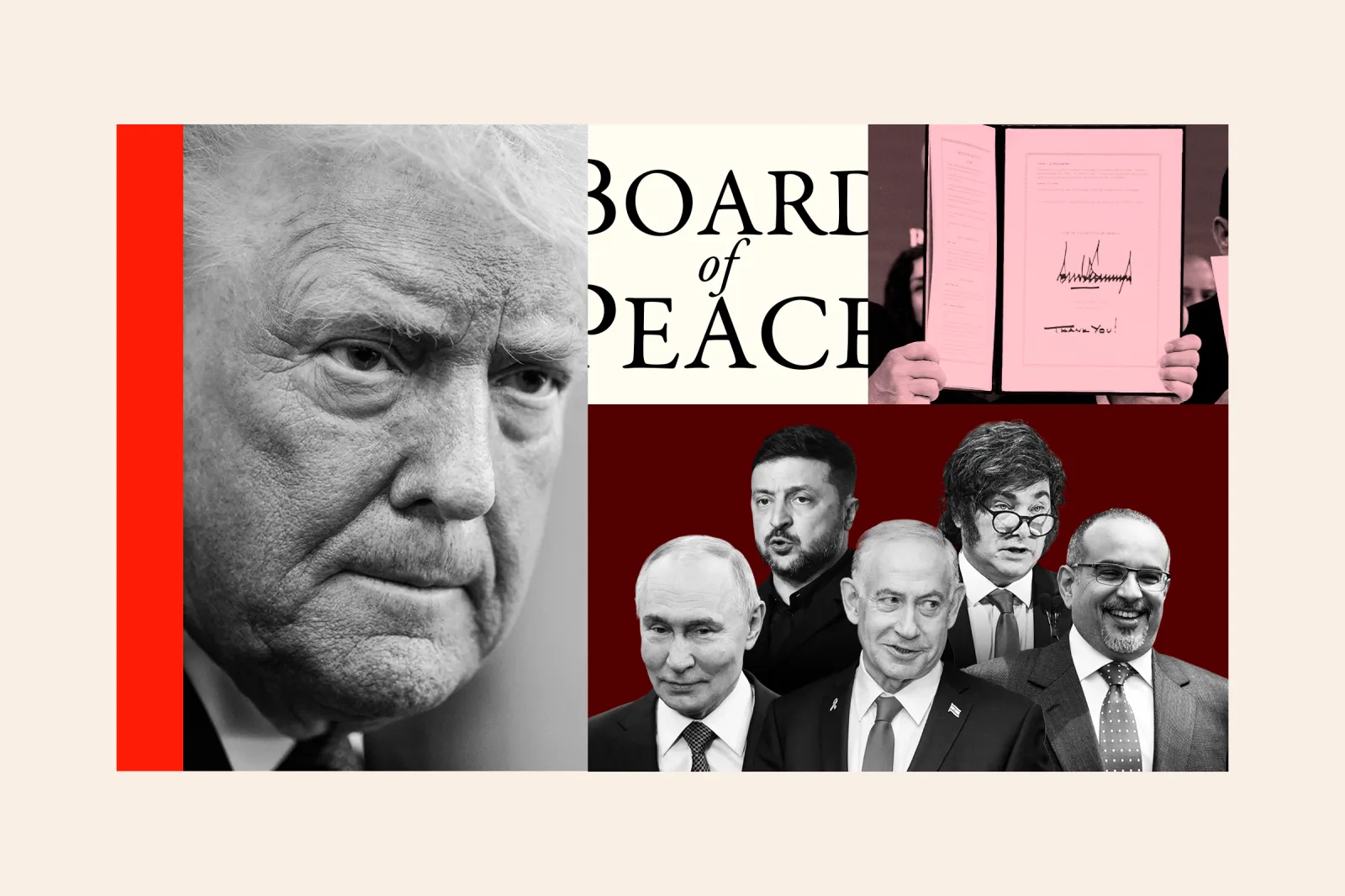
President Donald Trump’s Board of Peace is gaining momentum as a growing list of nations, including some of the world’s largest Arab and Muslim countries, sign on to it. The project was initially geared toward resolving the war in Gaza but is expected to command a broader mandate as its geographic and geopolitical mandate expands.
Its scope has raised questions about the initiative’s potential to serve as a competitor to the United Nations, not least due to Trump’s own comments suggesting it “might” just do so. And while the U.S. leader has more recently expressed the position that the U.N. should continue to exist, he is far from alone in questioning the lasting efficacy of what has stood as the world’s leading multilateral institution since the end of World War II, particularly when it comes to conflict resolution.
“In theory, the Board can be a more flexible, innovative and decisive body than the U.N., which struggles with bureaucracy, legacy practices and need for support for key actors or broad consensus in the Security Council, the U.N. General Assembly or other U.N. entities,” Brett Schaefer, senior fellow at the American Enterprise Institute who previously served on the U.N. Committee on Contributions and as a policy assistant at the Pentagon, told Newsweek.
Read More on Analysis
But the BOP has also proved controversial, in part due to which nations have accepted the invitation to join, which have not and their respective reasons for doing so. Perhaps most contentious of all is the centrality of Trump as its permanent chairman, a position that could bolster his assertion of personal influence on a wide span of global issues in possible contrast with the initial U.N. Security Council mandate backing the project.
...
It comes as the U.S. puts pressure on Iran to sign a new nuclear deal. In late January, Trump issued another warning of possible intervention if Tehran continued its violent crackdown on protests, telling reporters: “We have an armada, we have a massive fleet heading in that direction and maybe we won’t have to use it, we’ll see.”
“The [BOP’s] original proposal—the one endorsed by the U.N. Security Council—was much narrower,” Schaefer said. “If the Board of Peace had remained focused on Gaza, it would be less controversial. The broader mandate obviously raises concerns in other governments, particularly considering the broad authority vested in the chairman.” He continued, “Some governments may decide to join because they have direct interests in Gaza, which will be the immediate priority of the Board, that they want represented.
“Others may join simply because they do not want to get sideways with President Trump or see it as helping to generate goodwill or advance some other policy with the U.S. administration.”
Who's In and Who's Out
The official list of those who have accepted a BOP invitation currently includes around two dozen nations, with some formally joining and others expressing their intention to do so. Muslim nations who have been vocal on the war in Gaza have a particularly sizable showing, with Egypt, Indonesia, Jordan, Pakistan, Qatar, Saudi Arabia, Turkey and the United Arab Emirates signing on in a joint statement on January 21. Also having announced their entry were Bahrain, Kazakhstan, Kuwait, Morocco and Uzbekistan.
Israel has accepted the invite as well, while no apparent invitation was extended to Palestinian leadership nor to that of Iran amid ongoing tensions between the U.S. and the Islamic Republic.
The BOP was first referenced in the 20-point plan drafted in September by the White House as the most comprehensive peace framework to date aimed at resolving the war in Gaza, sparked by a Hamas-led attack on Israel two years earlier. The deal was backed by both warring parties and won the support of a number of regional powers at a summit held the following month in Cairo.
But the growing membership of the BOP extends beyond those countries that may be directly motivated by the situation in Gaza. For example, Azerbaijan, another majority-Muslim nation, joined alongside Armenia, with which it signed a peace deal brokered by Trump in August.
Others include Argentina, Paraguay and El Salvador, three of Trump’s most enthusiastic allies in the Americas, as well as Bulgaria and Hungary, the only two European NATO members to back the initiative. Elsewhere in Europe, Russia’s top ally, Belarus, and the partially recognized state of Kosovo also joined in, with Cambodia, Mongolia and Vietnam signing on from Asia.
China and Russia also received invites, though neither have officially accepted or declined. The Kremlin has expressed its willingness to join but only under the condition that the White House allows it to use assets frozen due to Ukraine war sanctions to front the billion-dollar permanent member fee, while Beijing has yet to offer a substantive reply, instead affirming its commitment to the U.N.
A significant number of America’s traditional allies in Europe, including France, Germany, Italy, Norway, Slovenia, Spain, Sweden and the United Kingdom, have outright rejected the overture. NATO neighbor Canada, meanwhile, appears to be the only country to have had its invitation withdrawn by Trump, who described BOP in a rejection letter as “the most prestigious Board of Leaders ever assembled.” This followed Canadian Prime Minister Mark Carney’s explosive speech during the World Economic Forum in Davos, Switzerland, that appeared to directly challenge the U.S. leader’s efforts to reshape the world order.
Others in Europe and beyond, including Australia, Brazil, India, Japan and South Korea, have yet to announce a decision. Ireland’s leaders expressed hesitance—as did Ukrainian President Volodymyr Zelensky, particularly given Belarus’ inclusion and Russia’s potential entry.
As for the BOP executive board serving under Trump, the seven members at the moment include U.S. Secretary of State Marco Rubio; U.S. Special Envoy for the Middle East Steve Witkoff; Trump’s son-in-law and former senior adviser Jared Kushner; former U.K. Prime Minister Tony Blair; Apollo Global Management CEO Marc Rowan; World Bank Group President Ajay Banga; and the U.S. deputy national security adviser and presidential assistant for policy, Robert Gabriel.
Why Join? Why Not?
Daniel Forti, head of U.N. affairs at the International Crisis Group, said there were varying reasons why individual states may choose to join the BOP, but also saw some common denominators among them.
“Countries face no shortage of interests to balance when debating whether to join the Board of Peace,” Forti told Newsweek. “Some that have little sway in either Washington, D.C. or in established multilateral forums may see the board as an opportunity to boost their diplomatic profile. Some leaders might choose to join the board as an easy route to curry favor with President Trump personally or the U.S. bilaterally.”
“Countries that are invested in backing the Gaza ceasefire deal see the board as the only mechanism through which they can shape American policy towards Palestine, however much they disagree with its Charter or structure,” he said. Other countries, on the other hand, “are likely concerned that the board’s design provides it with an unchecked global remit to make deals that are unmoored by the principles of the U.N. Charter, and some states may feel uncomfortable with joining a formal institution where Trump, in his personal capacity, can exert a unilateral veto over all of its decisions,” Forti argued.

...
Rajan Menon, senior research scholar at Columbia University’s Saltzman Institute of War and Peace Studies and global ethics fellow at the Carnegie Council for Ethics in International Affairs, also outlined some of the motivating factors for nations like those in the Gulf Cooperation Council, including Saudi Arabia, Qatar and the UAE, which have “extensive business ties with the United States and business ties with the Trump family, including Kushner himself, and also Donald Trump, Jr.”
“They have every reason to keep Trump happy,” Menon, who is also a professor at the City College of New York, told Newsweek. “So, they are there as a token of another demonstration that they are credible partners of Trump.”
As for Turkey, Menon argued that President Recep Tayyip Erdogan, who enjoys a close relationship with Trump and has been a vocal critic of Israeli Prime Minister Benjamin Netanyahu, “doesn’t want the Israelis to run riot.” Netanyahu, who initially expressed skepticism of the BOP, later accepted the invitation; likely, according to Menon, because the Israeli premier “wants to make sure that Israel has a very strong voice on the Board of Peace.”
Meanwhile, Pakistan, according to Menon, likely sought to join because “they want to stay on Trump’s good side” at a time when U.S.-India ties were strained over trade policy disputes, prior to Trump lowering reciprocal tariffs for New Delhi.
“That raises another question: Are these a collection of states that have in common, primarily the desire to humor Trump, or do they have some really deep commitment to getting the declared objectives of the Board of Peace Executive Committee accomplished, that is an end to fighting and reconstruction?” Menon asked. “So, if I look at the collection, it’s a group of Trump and his friends who are friends of his for various, complicated reasons.”
Trump has not been shy about highlighting his personal ties to those who supported the initiative. Speaking at the first BOP meeting in Davos in January, he regarded the group of leaders and top officials as “friends of mine” and a “group I like.”
The BOP’s peacemaking focus also speaks to a central theme of Trump’s second presidency, throughout which the U.S. leader has repeatedly touted his efforts to resolve contentious disputes and conflicts across the globe, all while publicly advertising his credentials for a long-sought Nobel Peace Prize.
From the White House’s perspective, nations backing the BOP align themselves with a historic opportunity to build upon this legacy. “The Board of Peace will be the most consequential, prestigious board in history,” White House spokesperson Taylor Rogers told Newsweek. “President Trump has already ended eight wars and saved millions of lives—making the world safer and more stable—and top leaders from around the world want to support his powerful, historic efforts for peace.”
What About the U.N.?
The U.S. is the only permanent, veto-wielding member of the U.N. Security Council on the BOP, though this may change if a deal is worked out to allow Russia’s entry. This could bolster Moscow’s position in ongoing peace talks surrounding the war in Ukraine—one of many global conflicts, including the war in Gaza, where criticism of the U.N. has mounted over its inability to offer solutions due to the differences of member states.

Alex Wong/Getty
“The Board of Peace is a symptom of a fragmenting geopolitical order,” Forti said. “Relations between the Security Council’s veto powers have deteriorated over the past decade, making it harder for them to reach deals to halt armed conflicts. Some of these major powers have become more brazen in their violations of the U.N. Charter, worsening perceptions of the Security Council’s effectiveness and legitimacy.”
“In response to this breakdown, other countries have pursued alternative forums, coalitions and security arrangements to protect their own interests,” he added. “This recalibration has led countries to prioritize more transactional and narrowly motivated deals. The Board of Peace is likely to calcify, if not accelerate, a disruption in the current multilateral order.”
Other multilateral forums that have emerged in the 21st century include BRICS, the bloc founded by Brazil, Russia, India, China and, later, South Africa. It now also includes Egypt, Ethiopia, Indonesia, Iran, Saudi Arabia and the UAE. There is also the Shanghai Cooperation Organization, or SCO, which initially brought together China, Russia, Belarus and Central Asian states and now also includes India, Iran and Pakistan. At least 15 others, including Egypt, Turkey and the UAE, serve as SCO partners.
BRICS and the SCO have largely been framed as economic and security platforms, respectively, and, while they have also taken on geopolitical issues, they have never been viewed as competitors for the U.N., which includes virtually all of the world’s largely recognized 193 states, with the exceptions of the state of Palestine and the Holy See, which are observers.
While few expect the BOP to totally sideline the U.N., Trump has been a frequent critic of the U.N.’s effectiveness in multiple arenas and has demonstrated his willingness to reduce cooperation. Shortly after assuming a second, nonconsecutive term last year, he ordered a review of U.S. participation in U.N. agencies, and he has withdrawn from both the U.N. Human Rights Council and World Health Organization. One Trump administration official told Newsweek that the BOP was not intended to serve as a challenge to the U.N. but rather to work in line with its mandate in a more effective way to achieve progress on peacemaking efforts.
“The Board of Peace is designed to complement the United Nations, not replace it,” the official said. “Under the Charter, it is bound by international law and operates in alignment with U.N. mandates—as it has for Gaza. In practice, the Board helps unlock action when the U.N. process might hit obstacles and stall. The BOP has an incredible mandate to rebuild all of Gaza, the money raised by the BOP will be used directly to accomplish those efforts.”
“Funds will be used to implement the BOP’s mandate, which could include reconstruction, humanitarian aid or other expenses,” the administration official added. “The BOP will operate as a leader in the field in ensuring that virtually every dollar that is raised will be spent directly on the execution of the BOP’s mandate—there will not be exorbitant salaries and massive administrative bloat that plagues many other international organizations.”
Even with uncertainties surrounding the BOP’s scope, future and efficacy, some feel it can only help given the current state of global affairs that has thus far failed to bring peace to Gaza or the broader region.
“There are plenty of open questions about how the Board of Peace will actually function, how its members will collaborate (or not) and what the realm of the possible actually is in Gaza,” Aaron MacLean, senior fellow at the Hudson Institute and former congressional adviser, told Newsweek.
“The one thing that can be stated with confidence, though, is that the U.N. has been an abject failure specifically in Gaza and more broadly in the Middle East,” MacLean said. “It would be a challenge for the new Board do worse.”
View 0 Comments
Submit Correction
View Editorial & AI Guidelines