...

By Hugh Cameron
Reporter
0
Share
Newsweek is a Trust Project member
See more of our trusted coverage when you search.Prefer Newsweek on Googleto see more of our trusted coverage when you search.
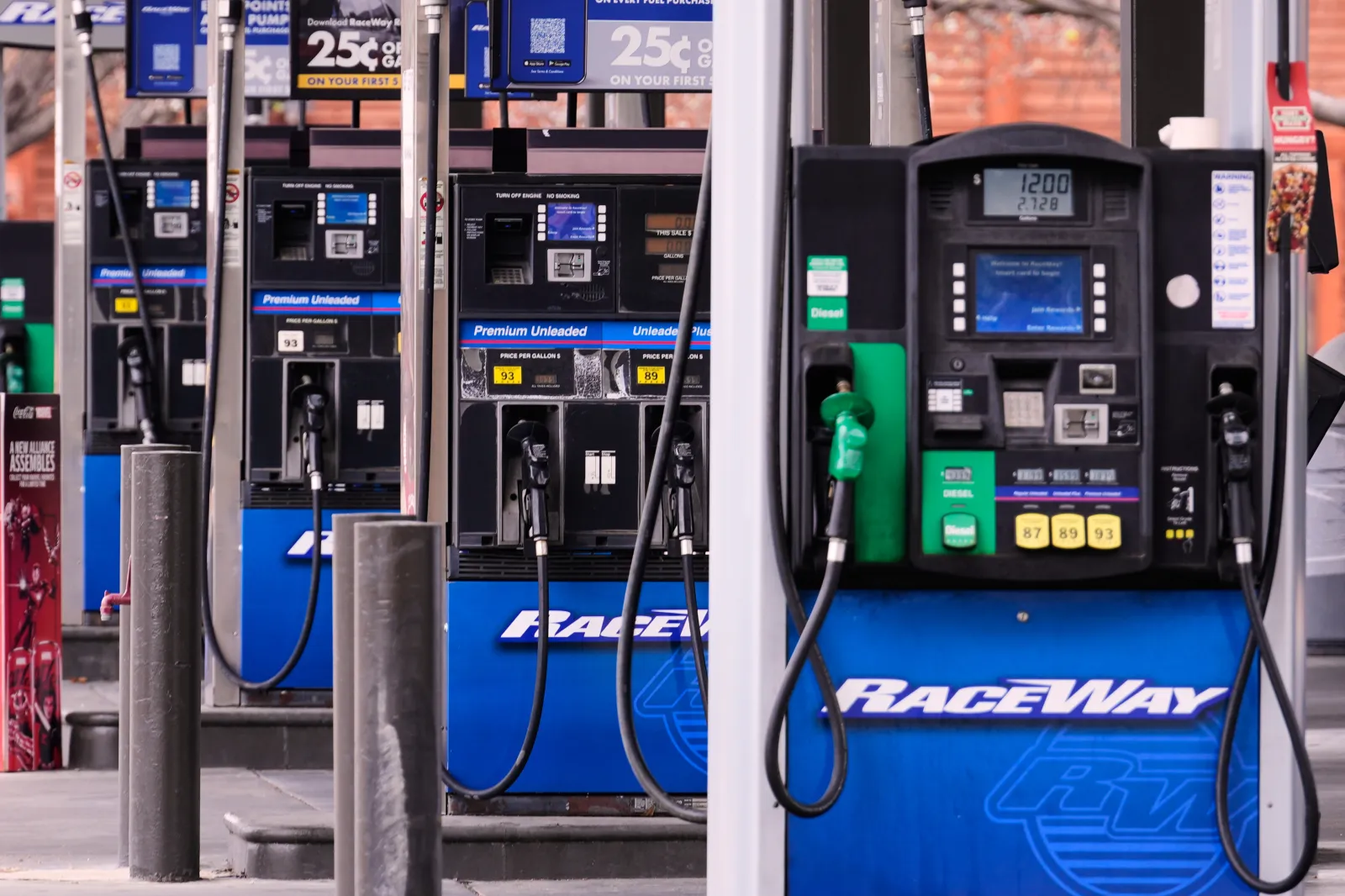
Gas prices are soaring as global oil markets reel from the new conflict in the Middle East, raising concerns that American motorists could be paying $5 at the pump by the end of the month.
According to data from GasBuddy, the average price for regular gas has now risen to $3.46 per gallon, up 51.8 cents compared to last week's average, while AAA puts the figure slightly higher at $3.48.
Experts believe there is further room to grow as brent crude—the international benchmark—continues to climb past $100 a barrel. Mark Zandi, the chief economist at Moody's Analytics, wrote on Sunday that Americans would "soon be paying $4 a gallon for regular unleaded," and an increasing number of Polymarket users are wagering that by the end of March, prices could reach $5 for the first time since 2022—the odds of which stood at 43 percent as of Monday morning.
Read More on News
Why It Matters
Lowering gas prices and energy bills had been one of President Donald Trump's central campaign pledges, and the administration has been eager to tout the gains made in this regard since the beginning of his second term. Prices were previously edging toward the $2 mark, but Operation Epic Fury has reversed this trend, erasing one of the few areas of relief for Americans amid widespread affordability pressures.
What To Know
Since crude oil typically accounts for half the cost of a gallon of gasoline, changes in the price of the former flow proportionately into the latter. As Zandi told Newsweek last week, "a good rule of thumb is that every sustained $10 per barrel increase in oil prices will increase the cost of a gallon of regular unleaded by 25 cents."
With Brent crude prices briefly soaring to almost $120 per barrel on Monday—up from about $73 before the U.S.-Israeli strikes on February 28—experts and industry players are warning that $5 gas is now within sight.
...
Speaking to Barron's, GasBuddy's head of petroleum analysis Patrick De Haan said average prices could reach between $5 and $5.50 if brent tops $150 per barrel. He added that this depended on how long traffic in the Strait of Hormuz remained at a near-standstill.
Jay Young, the founder and CEO of the Dallas-based oil and gas company King Operating Corporation, warned that prices could "climb to $5–$6 per gallon if supply disruptions occur."
The U.S administration maintains that the rise in global oil prices can be contained, with Trump saying the impact will be short-lived and be "a very small price to pay for U.S.A., and World, Safety and Peace."
On Sunday, U.S. Energy Secretary Chris Wright similarly told CNN, "In the worst case, this is a weeks, this is not a months thing."
"You're seeing a little bit of fear premium in the marketplace, but the world is not short of oil today or natural gas," he added.
What People Are Saying
Statistician and political analyst Nate Silver wrote in a recent blog: "Although the United States is less reliant on foreign oil than it once was, the war in Iran could be a perfect storm for gas and energy prices in the U.S. and elsewhere to spike. ... Americans are used to gas price fluctuations, but it's not all that common for prices to go quite this vertical in the span of a month."
Economist Mark Zandi wrote on social media on Sunday: "As long as the Strait of Hormuz remains impassable for tanker traffic, the higher prices will go, and the more economic damage will be wrought. $100-per-barrel oil seems like a real possibility, which would mean Americans will soon be paying $4 a gallon for regular unleaded. Low and middle-income Americans, who spend a larger share of their budgets on gasoline and many of whom have little to no savings, will be forced to make some tough financial choices."
What Happens Next
Reflecting the rising price of oil and gas, inflation expectations have moved sharply higher since the beginning of Operation Epic Fury.
According to a recent report from RBC Economics, assuming brent holds at $100 a barrel, the annual rate will hit 3.7 percent in the second quarter of 2026, up from a previous base case of 2.9 percent.
In a polarized era, the center is dismissed as bland. At Newsweek, ours is different: The Courageous Center—it's not "both sides," it's sharp, challenging and alive with ideas. We follow facts, not factions. If that sounds like the kind of journalism you want to see thrive, we need you.
When you become a Newsweek Member, you support a mission to keep the center strong and vibrant. Members enjoy: Ad-free browsing, exclusive content and editor conversations. Help keep the center courageous. Join today.


View 0 Comments
Submit Correction
View Editorial & AI Guidelines