...

By Jordan King
Reporter
0
Share
Newsweek is a Trust Project member
See more of our trusted coverage when you search.Prefer Newsweek on Googleto see more of our trusted coverage when you search.
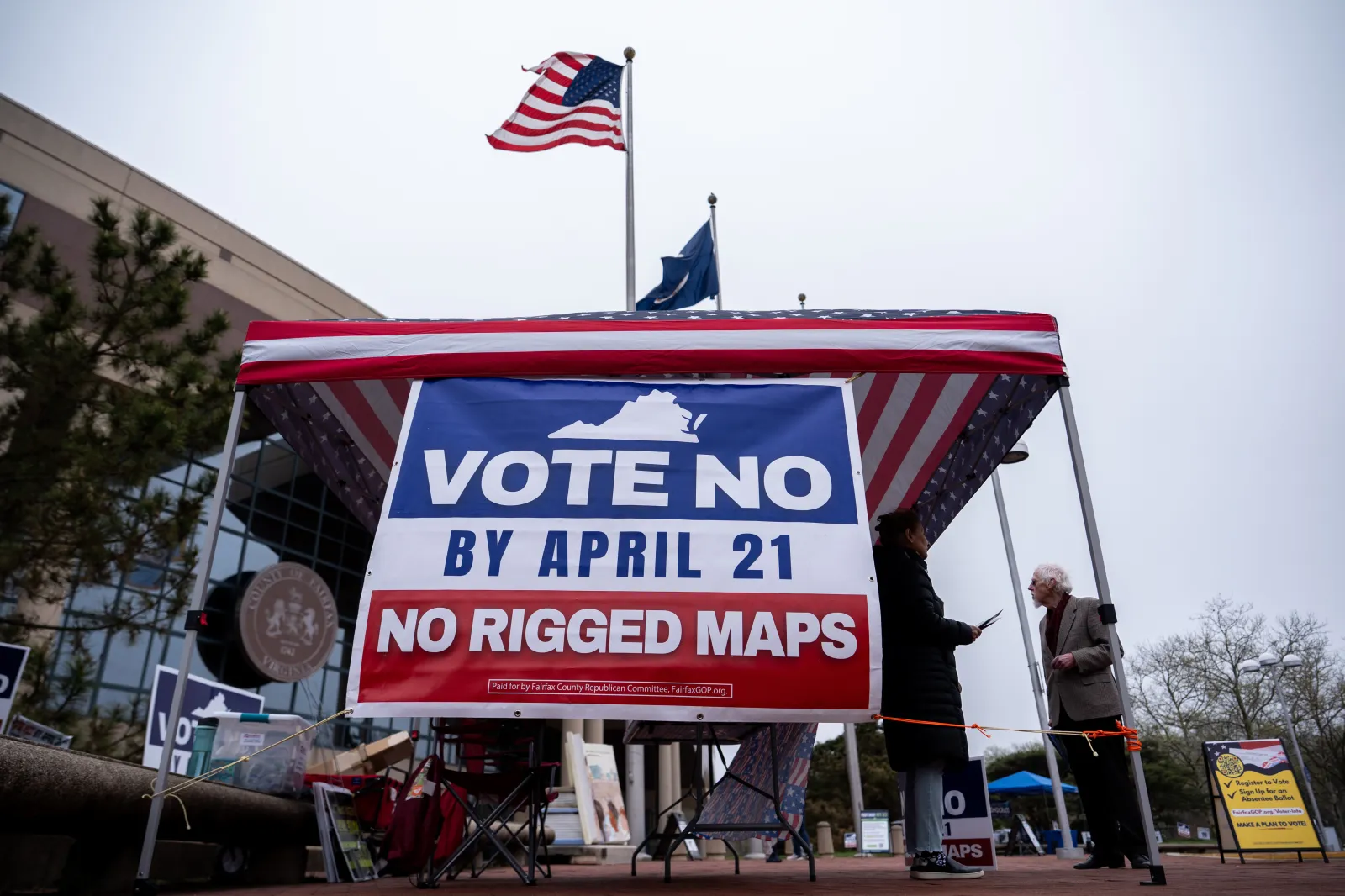
Virginia voters are heading to the polls Tuesday to decide a high-stakes redistricting referendum that could reshape the state’s congressional map ahead of the 2026 midterm elections.
If Tuesday's referendum passes, Democrats could gain up to four additional seats in the House in the midterms.
Polls point to a close vote with tight margins—some surveys, including Quantus Insights and State Navigate, showing a narrow edge for supporters of the measure.
Read More on News
Both parties view Virginia as a key battleground that could determine control of Congress.
Virginia Redistricting Referendum: What's at Stake
The referendum is the latest development in an escalating national push by both parties during President Donald Trump's second term to redraw congressional districts mid-decade.
Virginia Democrats have framed the move as a response to Republican-led redistricting efforts in other states—it started when Trump—successfully—urged Texas Republicans to redraw congressional districts in their favor last year. Other Republican-led redistricting drives took place in Missouri, North Carolina and Ohio.
The Virginia redistricting plan is "pushing back against what other states have done in trying to stack the deck for Donald Trump in those congressional elections,” Democratic Governor Abigail Spanberger said during an online rally, according to The Associated Press.
Republicans have sharply criticized the proposal, arguing it represents partisan overreach. Former Virginia Governor Glenn Youngkin called the plan “dishonest” and “brazenly deceptive.”
The stakes are significant. Democrats currently hold six of Virginia’s 11 House seats, but the proposed map could increase that number to as many as 10, according to The AP.
But the vote also comes with legal uncertainty—as the state Supreme Court is reviewing challenges that could invalidate the referendum results regardless of the outcome.
...
Latest Polls
Recent polling paints a picture of a tightly contested referendum with a slight advantage for supporters, but no clear consensus.
The Quantus Insights survey found 51 percent backing the measure and 47 percent opposed. It surveyed 1,121 likely voters on April 15. The results have a +/- 3.3-percentage point margin of error.
Similarly, a Washington Post-George Mason University poll showed a similar 52 percent to 47 percent split in favor of passage after surveying 1,101 likely voters from March 26-31. Pollsters disclaim a +/- 3.4-percentage point margin of error.
Polls that indicate more skepticism include one from the Neighborhood Research Corporation, carried out among 319 likely voters between April 1 and 3, that shows 46 percent saying they do not support the measure with 45 percent saying they do. There is a “theoretical” +/- 5.5-percentage point margin of error.
A February poll shows a more significant lack of support—Roanoke College, which questioned 800 adults between February 9 and 16, found that 52 percent were against redistricting and 44 percent were for it. Pollsters disclaim a +/- 4.43percentage point margin of error.
What Will Be the Impact if Virginia Redistricting Referendum Passes
If approved, the referendum could significantly alter the balance of power in Virginia’s congressional delegation and potentially in the U.S. House as several Republican-held districts would be redrawn to favor Democratic candidates, including areas that were previously considered safely Republican.
Other states like Texas, California and North Carolina have redrawn maps to gain an advantage ahead of the midterms. In Florida, the Republican-led legislature is to convene April 28 for a special session that could result in a more favorable map for the GOP, The AP reported.
What happens next may also depend on the courts. Even if voters approve the referendum in Virginia, ongoing legal challenges could determine whether the new maps take effect before the midterm elections.
View 0 Comments
Submit Correction
View Editorial & AI Guidelines