...

By Micah McCartney
Reporter
0
Share
Newsweek is a Trust Project member
See more of our trusted coverage when you search.Prefer Newsweek on Googleto see more of our trusted coverage when you search.
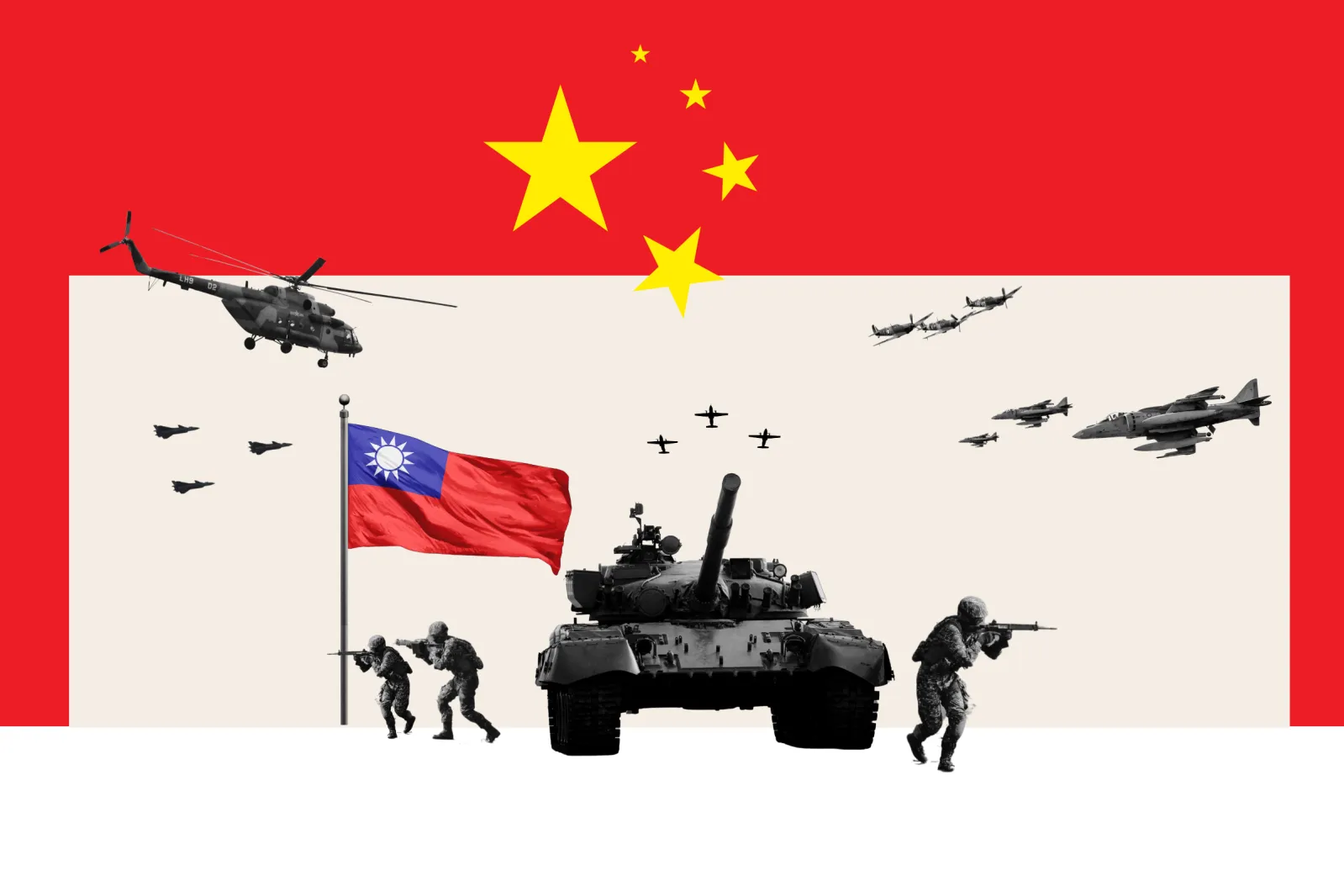
A hypothetical Chinese invasion was again in the spotlight last month with the People's Liberation Army's drills meant to punish Taiwan after it inaugurated President Lai Ching-te.
Analysts have said China is likely to keep piling pressure on the Beijing-skeptic administration, but raising the risk of regime-destabilizing failure may keep President Xi Jinping from pulling the trigger.
"Those separatists recently made fanatical statements that show their betrayal of the Chinese nation and their ancestors. They will be nailed to the pillar of shame in history," Defense Minister Dong Jun said in a fiery speech in Singapore on Sunday at the Shangri-La Dialogue, Asia's premier defense summit.
Read More on World
The People's Republic of China claims Taiwan as its territory, despite never having governed there. Xi has said unification is inevitable, through force if necessary. U.S. officials believe he has directed his forces to be capable of an invasion by 2027. However, this does not necessarily mean this or any other year has been chosen for the undertaking.
Newsweek contacted the U.S. Department of State and the Chinese embassy in the U.S. outside office hours. The Taiwan Foreign Ministry did not immediately respond to a written request for comment.
Raising the Cost of Failure for Xi
"Whether China invades Taiwan depends on Xi Jinping's will," Hung Tzu-Chieh, associate research at Taiwan's premier think tank, the Institute for National Defense and Security Research (INDSR), told Newsweek. A key factor in his decision is whether the difficult maritime invasion would strengthen his grip on power or fail and risk the downfall of his regime.
Xi's confidence in the PLA is also at play, Hung said, pointing to Xi's removal last year of several high-ranking defense officials, including five from the Rocket Force and then-Defense Minister Li Shangfu amid suspected corruption.
"Given the current situation, it remains difficult to assess whether or when China might invade Taiwan," Hung said.
"However, if Taiwan's defense capabilities are strengthened, including the willingness of other countries to increase military cooperation with Taiwan, it will help to increase Taiwan's deterrence capabilities."
In his address on Sunday, Defense Minister Dong faulted "separatists for Taiwan Independence" and unnamed foreign forces for chipping away at peaceful unification as an option.
He pledged the PLA would "take resolute actions to curb Taiwan independence and ensure such a plot never succeeds. Any party that attempts to keep the two sides of the strait apart would face "self-destruction," Dong said.
While Beijing characterizes opponents of unification as a fringe group in Taiwan, polling in recent years has shown only around 10 percent of Taiwanese support unification.
Beijing maintains that the Taiwanese administration's recognition of the so-called "1992 Consensus" is a prerequisite for resuming dialogue across the Taiwan Strait, the Chinese embassy in the U.S. reaffirmed in a previous statement to Newsweek.
The term, coined years later, referred to a meeting where Chinese and Taiwan officials agreed there is only "one China," with the question of which side represented the real China left open to interpretation. The government of the Republic of China (Taiwan's official name) fled to Taiwan in 1949 after its defeat in the Chinese Civil War.
"Influence Warfare"
"Taiwan is more fortunate than Ukraine in that amphibious operations are very difficult and easy to defeat," INDSR research fellow Su Tzu-yun told Newsweek.
Su predicted that in the near term, Beijing's cross-strait strategy will be centered on "influence warfare."
This combination of cognitive warfare, economic coercion, and gray zone operations—or quasi-military moves that fall short of war—is geared to "influence the hearts and minds of the Taiwanese people and to create a collective Stockholm syndrome," he stated.
He added that open support by democratic countries for Taiwanese democracy would go a long way toward countering China's influence operations efforts in Taiwan.
...
Under its 2005 Anti-Secession Law, China claims the authority to go to war if Taiwan declares official independence.
Taiwanese President Lai and Tsai Ing-wen before him have studiously avoided an outright declaration of independence, instead characterizing Taiwan as an already independent nation.
Though the U.S. is Taiwan's main arms supplier, Washington has maintained a careful decades-old policy of ambiguity on whether it would commit its forces to defend Taiwan in the event of a Chinese attack.
View 0 Comments
Submit Correction
View Editorial & AI Guidelines