...

By Micah McCartney
Reporter
0
Share
Newsweek is a Trust Project member
See more of our trusted coverage when you search.Prefer Newsweek on Googleto see more of our trusted coverage when you search.
China has leveled fresh criticism of the U.S.-Israeli war against Iran following a string of strikes on nuclear facilities, saying the attacks breach international legal norms and risk undermining the global nonproliferation regime.
"The attacks deal a heavy blow to the authority of the Non-Proliferation Treaty, undermine the international efforts to uphold the nuclear nonproliferation regime, and could bring serious consequences to regional peace, security and stability," Foreign Ministry spokesperson Mao Ning said at a regular briefing on Tuesday.
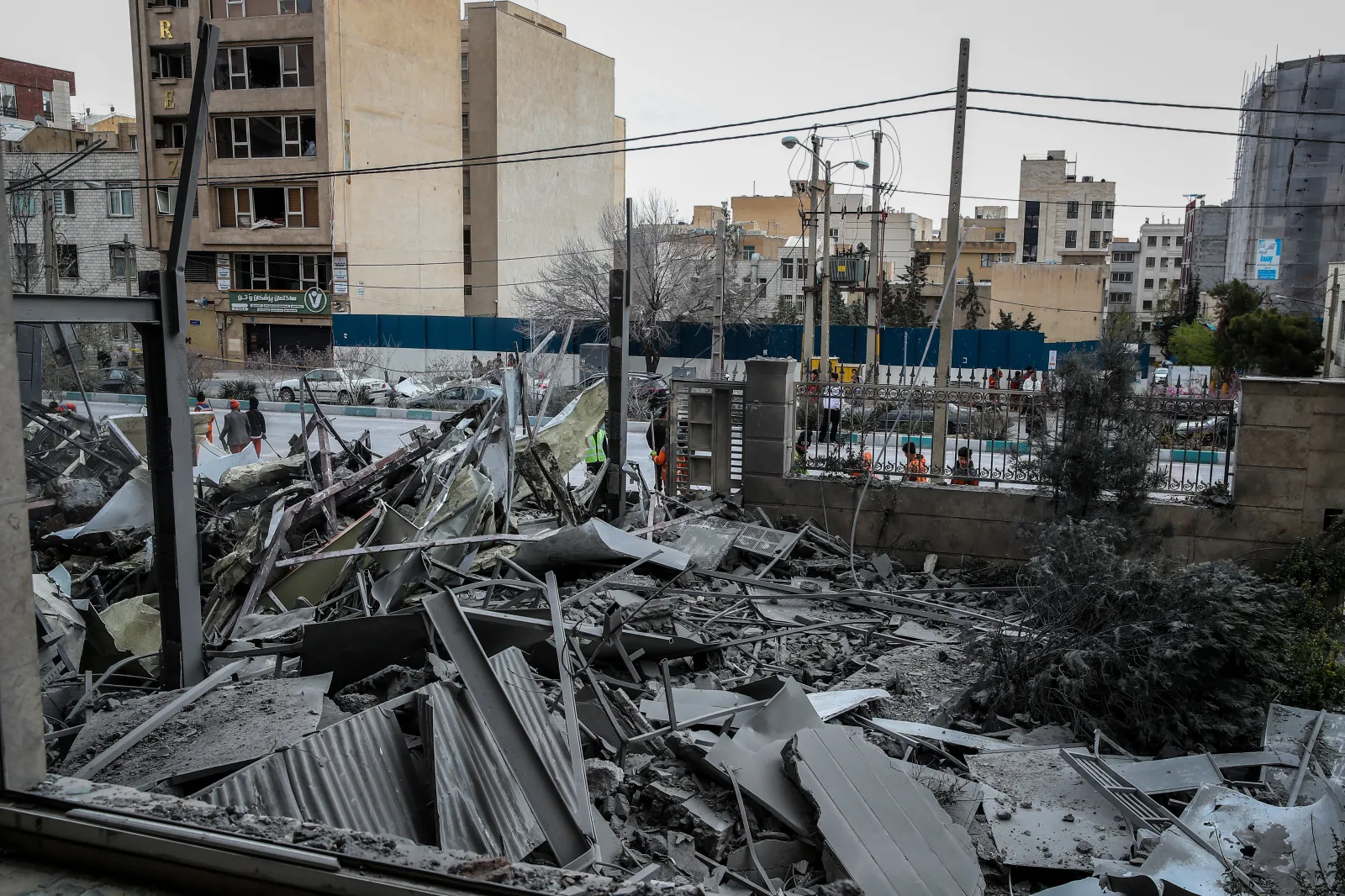
The comments come as U.S. and Israeli forces continue targeting Iranian military and nuclear-linked infrastructure. While the campaign has degraded parts of Iran's capabilities, it has also hit civilian infrastructure and caused significant casualties. Iran says more than 2,000 people have been killed.
Read More on World
Late last week saw attacks on the nuclear power facility in Bushehr, a yellowcake production site in Yazd province, and a heavy water facility in Khondab, according to statements from the International Atomic Energy Agency. The agency said only the Bushehr site involved radioactive material and that no off-site release was detected, but renewed calls for restraint to avoid a nuclear incident.
Newsweek has contacted the White House and the Israeli and Iranian foreign ministries for comment.
"Attacks against peaceful nuclear facilities under the safeguards and monitoring of the International Atomic Energy Agency violate the purpose and principles of the U.N. Charter, international law and the Statute of the IAEA," Mao said, adding, "China firmly opposes such attacks and advocates the peaceful settlement of the Iranian nuclear issue through political and diplomatic means."
Her remarks come weeks ahead of a scheduled meeting on the Non-Proliferation Treaty, where member states are set to review compliance and the broader state of the regime. Mao said China was prepared to work with all parties to pursue a diplomatic resolution to the Iran nuclear issue and safeguard the nonproliferation framework.
The conflict has also fueled debate inside Iran over its continued participation in the treaty. Ebrahim Rezaei, a spokesperson for the parliament's national security commission, wrote on X that remaining in the NPT would be "meaningless" because it hadn't benefited the country.
"The United States has withdrawn from 60 international organizations and conventions, and now if we want to exit the NPT, we will probably face surprise and opposition from the West," he added.
...
U.S. President Donald Trump and Israeli Prime Minister Benjamin Netanyahu have both cited preventing Iran from developing nuclear weapons as a central justification for launching the war on February 28. Iran has consistently denied it is pursuing a nuclear weapons program.
The conflict has also disrupted global energy markets. Shipping through the Strait of Hormuz—a conduit for roughly a quarter of the world's seaborne oil and over 40 percent of China's—has slowed to a trickle.
Mao said three additional Chinese vessels had recently transited the strait. "The Strait of Hormuz and waters nearby are an important route for international goods and energy trade. China calls for an immediate end to hostilities to restore peace and stability in the Gulf," she said.
Iran has introduced a vetting system that allows ships linked to countries it does not consider hostile to pass through its waters under controlled conditions.
In a Truth Social post on Tuesday, Trump urged countries facing fuel shortages due to the disruption to either purchase supplies from the U.S. or "build up some delayed courage, go to the Strait, and just take it."
View 0 Comments
Submit Correction
View Editorial & AI Guidelines