...

By Micah McCartney
Reporter
0
Share
Newsweek is a Trust Project member
See more of our trusted coverage when you search.Prefer Newsweek on Googleto see more of our trusted coverage when you search.
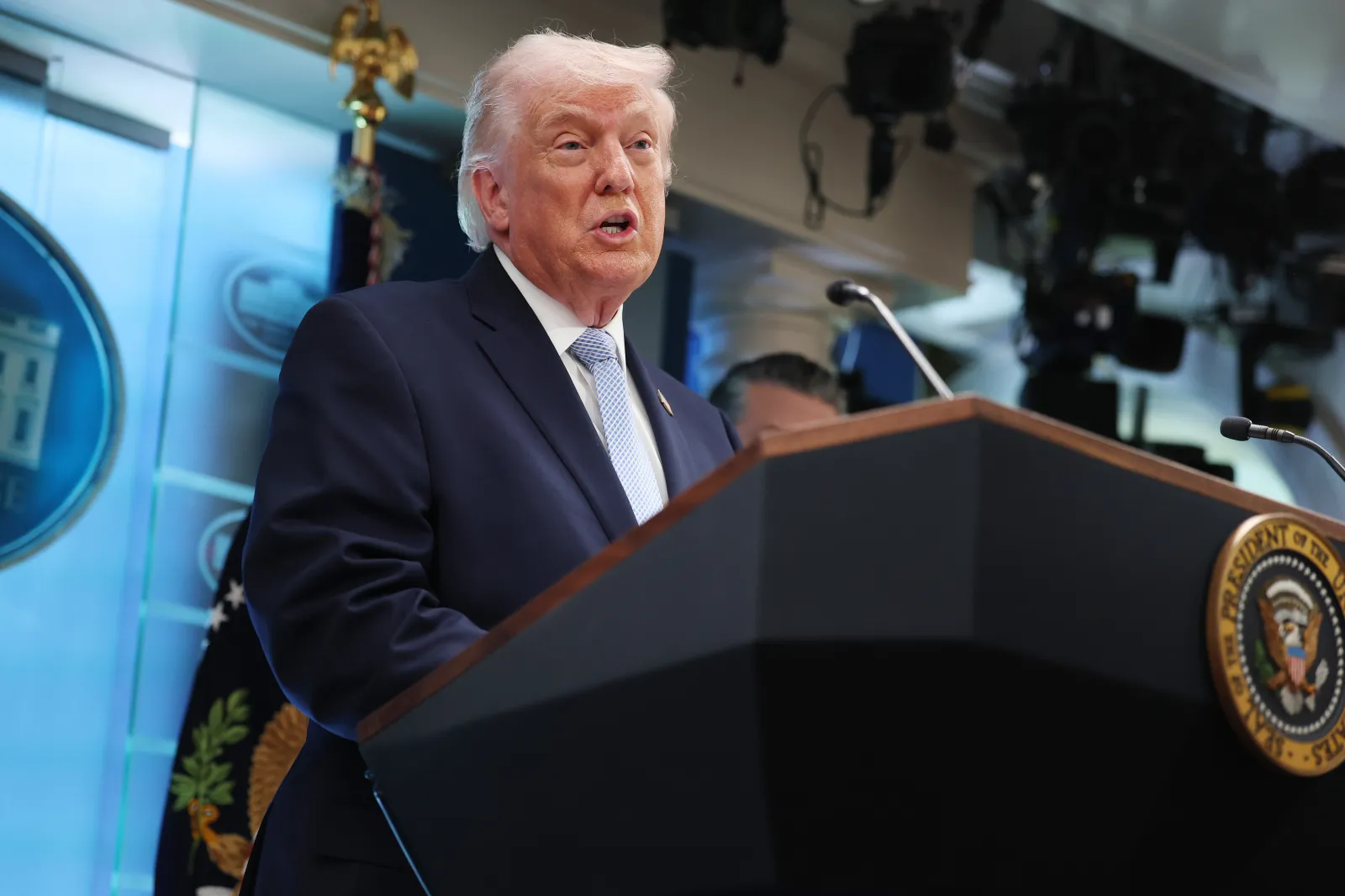
Beijing on Tuesday warned of wide-ranging consequences of the American-Israeli war against Iran after U.S. President Donald Trump set a new deadline for the Islamic Republic to strike a deal or live "in Hell."
"As we speak, the situation in the Middle East continues to worsen and the military conflict is still escalating, hitting the world economy and energy security and drawing deep concerns from the international community," Chinese Foreign Ministry spokesperson Mao Ning told the press when asked to comment on the threat.
In an expletive-ridden Truth Social post on Sunday, Trump threatened to dramatically increase attacks on civilian infrastructure if Tehran did not cut a deal by Tuesday.
Read More on World
"Tuesday will be Power Plant Day, and Bridge Day, all wrapped up in one, in Iran. There will be nothing like it," the U.S. president wrote. In a follow-up post almost five hours later, he specified the deadline as 8 p.m. Eastern time.
...
Trump's threat appeared to be an extension of a previous 10-day deadline that expired on Monday. Iranian officials said they would accept only a ceasefire that came with guarantees the country would not again be attacked.
Newsweek contacted the Iranian Foreign Ministry with a request for comment by email.
The Strait of Hormuz serves as a conduit for as much as one-quarter of seaborne oil. Tehran began blocking the strait shortly after the U.S. and Israel launched strikes against Iran on February 28. Shipping traffic through the 21-mile choke point has been ground to a near halt by the conflict, now in its sixth week.
Iran has introduced a strict vetting system to allow through ships it deems unaffiliated with hostile states. Countries such as China—a long-standing partner and top buyer of Iran's sanctioned crude—and more recently U.S. treaty ally the Philippines have been granted safe passage for their vessels through the strait.
Trump appears increasingly frustrated that other countries have rebuffed his pleas to dispatch naval forces to help open the strait.
During a White House news conference on Monday, the president lashed out at NATO, which he called a "paper tiger." He also suggested that Pacific allies Japan and South Korea were ungrateful, citing the tens of thousands of troops the U.S. stations in each country to "protect them" from North Korea.
Mao, the Foreign Ministry spokesperson, said China had maintained an "objective, just and balanced position" throughout the conflict and was working toward a ceasefire. Mao said the root cause of the conflict was the U.S. and Israel's move to launch their offensive against Iran "in violation of international law."
Wang Yi, China's top diplomat, has engaged in a flurry of diplomatic outreach, making 26 phone calls with his counterparts in countries such as Iran, Israel and Russia, according to the Foreign Ministry.
Last week, China and Pakistan jointly issued a five-point peace plan to end the conflict. Neither Washington nor Tehran have publicly responded to the road map.
Washington has made various demands in addition to Iran reopening the strait, including that the Islamic Republic permanently cease its uranium enrichment, hand over its enriched uranium to the International Atomic Energy Agency and completely dismantle all uranium enrichment capabilities.
Iran maintains that its enrichment is for peaceful purposes and denies Trump administration and Israeli claims that it is seeking a nuclear weapon.
Trump's rhetoric about threatening civilian infrastructure has raised alarm bells at the United Nations.
Stephane Dujarric, the chief spokesperson for Secretary-General Antonio Guterres, said during Monday's news conference, "Whether something is a crime or not a crime would have to be decided by a court, but any attack on civilian infrastructure is a violation of international law and a very clear one."
The White House has pushed back, pointing to the rights record of Iran's own government.
“The Iranian regime has committed egregious human rights abuses against its own citizens for 47 years, just murdered tens of thousands of protestors in January, and has indiscriminately targeted civilians across the region in order to cause as much death as possible throughout this conflict, Deputy Press Secretary Anna Kelly told Newsweek.
The president will always stand with innocent civilians while annihilating the terrorists responsible for threatening our country and the entire world with a nuclear weapon."
Update 4/9/26 1:53 p.m. This article has been updated with a comment from Anna Kelly.
View 0 Comments
Submit Correction
View Editorial & AI Guidelines